The room seemed to go silent when my husband appeared at the charity gala with another woman on his arm. He walked straight into a crowd of executives, clients, and people who had watched us build a life together, as though there was nothing to hide. And for one terrible second, I wondered whether I was the only person there who still believed our marriage deserved protecting.
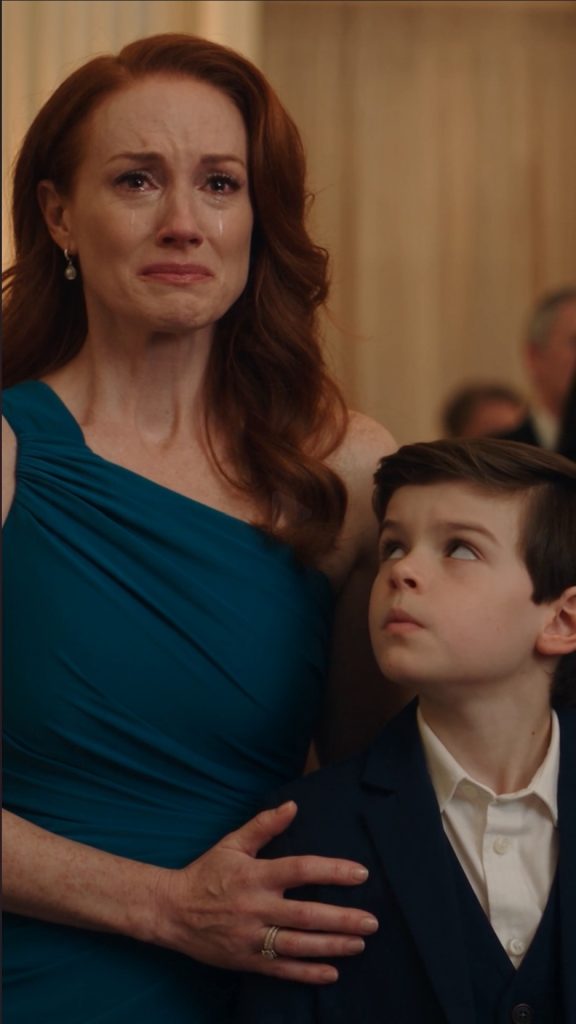
Beside me, my son tightened his grip on my hand.
“Mom, don’t cry,” Leo whispered. “Just look at me.”
I turned toward him. His voice was steady, but his fingers were trembling, and that almost undid me more than the sight of his father across the room. A child should never have to tell his mother how to survive a moment like that.
I wanted to ask my husband what he thought he was doing. I wanted to know how he could stand beneath those lights with another woman while I stood only a few steps away, holding our son’s hand.
But I said nothing. Instead, I reached into my purse and felt the edge of the letter my lawyer had prepared. The paper was folded neatly. My hands weren’t nearly as steady.
Four days earlier, I had still been trying to explain away the distance between us.
There had been late nights, distracted conversations, and a kind of absence that didn’t end when he came home. I had told myself that work was demanding, that marriages went through quiet seasons, that there had to be an innocent reason he seemed to have so little of himself left for us.
Then a friend sent me a photograph.
He was sitting across from a woman at an upscale restaurant. Her hand covered his on the table. He was smiling at her with a softness I recognized immediately, because I remembered what it felt like to be on the receiving end of it.
I stared at that smile longer than I stared at her face.
That night, after the house had settled, I opened his laptop. Part of me hoped I would find nothing. Another part already knew how much it would hurt to discover that I had been right.
The messages went back months.
Affectionate words. Dinner plans. Playlists shared back and forth. Small things she liked, little details he had remembered without being asked.
I read slowly, as though giving each sentence enough time might somehow change its meaning.
What broke me wasn’t only that he had made room for someone else. It was realizing how carefully he had paid attention to her while I had spent so long trying to get him to look up when I spoke.
By morning, I had barely slept.
Leo was sitting across the kitchen island when he looked at me with an expression I couldn’t place. He didn’t ask whether I was all right. He didn’t ask why I was quiet.
“You know,” he said.
The words landed between us. I couldn’t imagine how he knew what I’d discovered, or how long he’d been carrying that knowledge alone.
Then he reached into his backpack and pulled out a black spiral notebook.
He set it on the island and opened it. Page after page held dates and locations, matched to nights his father had told us he was working late.
My chest tightened. This wasn’t a child guessing that something was wrong. He had been paying attention while I was doing everything I could not to.
“How long have you been writing this down?” I asked.
Leo swallowed. His hand hovered over the pages before he turned toward the back.
“Mom…” His voice caught. “That’s not everything.”
I leaned closer as he carefully opened the pages he’d been keeping from me.
And when my eyes reached the first line, I understood why he had been so afraid to show me. 👇
At the top of the page, in Leo’s small, careful handwriting, were eight words: “Dad says if I tell, we lose everything.”
Below them was a date from six weeks earlier.
I looked at my son. He was staring at the countertop, rubbing his thumb against a loose thread on his sleeve.
“He knows you found out?” I whispered.
Leo shook his head. “Not about the notebook. But he caught me looking at something from his office. He said if you found out what was happening, you’d leave him. And then he said we’d lose the house because of me.”
The kitchen suddenly felt too small.
“What were you looking at?”
Leo opened the back cover. Tucked beneath it were several folded photographs of documents, taken with his phone and printed at school.
They were company expense records.
Hotel suites. Restaurant bills. Weekend travel. Payments to a consulting business whose name appeared beside several entries marked as charitable event expenses.
The woman’s name was on the paperwork.
“I found them when his printer jammed,” Leo said. “I wasn’t trying to spy. I just thought something was wrong.”
I examined the dates. Several matched evenings my husband had claimed he was meeting clients or working on preparations for the charity gala.
“Dad said you wouldn’t understand,” Leo continued. “He told me not to make our family fall apart over something that wasn’t my business.”
His voice cracked on the final words.
I moved around the island and wrapped my arms around him. For a moment, he stood perfectly still. Then his shoulders began to shake.
“Listen to me,” I said against his hair. “Whatever happens to this family, none of it is because of you.”
“But what if we really lose everything?”
I couldn’t promise him that nothing would change. I had already learned what happened when people built their lives around comforting lies.
“I don’t know exactly what happens next,” I told him. “But you will never have to protect me from your father’s choices again.”
That afternoon, I contacted my lawyer.
Over the following days, we preserved the messages and photographs, reviewed the expense records, and notified the company’s independent audit committee. My lawyer explained that the financial documents raised serious questions but required proper investigation.
She also prepared the separation letter I had spent years believing I would never need.
I didn’t tell Leo that I was frightened.
He knew anyway.
And now, four days later, we stood inside the gala ballroom while my husband moved through the crowd with the woman from the photograph.
He spotted us near the silent-auction tables.
For the briefest moment, his smile disappeared.
Then he recovered, leaned toward his companion, and walked directly toward us.
“There you are,” he said casually. “I was wondering where you’d disappeared to.”
I looked at the woman beside him. She held a small evening bag against her waist, her expression carefully pleasant.
My husband gestured toward her.
“She helped coordinate some of tonight’s arrangements.”
I recognized her name from the invoices.
“I’m aware,” I said.
Something shifted in his face.
He glanced at Leo, then at my handbag.
“Can we talk privately?”
We moved into a quiet corridor beyond the ballroom. Through the closed doors came the muffled sound of applause and the faint clinking of glasses.
My husband turned toward me.
“Whatever you think you know, this isn’t the place.”
“Then where was the place?” I asked. “At home, when you came back from those dinners and asked about my day?”
His companion lowered her eyes.
He exhaled sharply.
“We’ve been unhappy for a long time.”
“I was unhappy because you stopped being honest with me. I didn’t know that meant our marriage was over.”
He rubbed his forehead.
“Please don’t make a scene in front of everyone.”
I almost laughed.
He had brought another woman into a room full of people who knew us, yet somehow my reaction was the embarrassment he feared.
Then his gaze settled on Leo.
“Son, go back inside.”
Leo didn’t move.
“Leo,” his father repeated, harder this time.
My son lifted his head.
“You told me she’d lose the house.”
The corridor went silent.
My husband’s eyes widened.
“What are you talking about?”
“You told me if I said anything, it would be my fault.”
“That’s not what I meant.”
“Then why did you say it?”
My husband opened his mouth, but no words came.
For the first time that evening, the woman stepped away from his arm.
“You told your son about us?” she asked quietly.
He ignored her.
“Leo, you don’t understand adult relationships.”
“No,” I said, moving closer to my son. “He shouldn’t have had to.”
Behind us, the corridor door opened.
The chair of the company’s board stepped outside, carrying a slim folder. She had already received the documents through the audit committee, and earlier that evening she had asked to speak with my husband privately.
Her expression was grave.
“We need to discuss the expense approvals,” she told him.
My husband stiffened.
“This is a charity gala.”
“Yes,” she answered. “Which makes the nature of those expenses especially concerning.”
He looked at me.
“You went to the board?”
“I gave them the records,” I said. “They decide what the records mean.”
The chair explained that the preliminary review had identified payments for personal hotel stays and travel, billed through company accounts as business and fundraising-related costs. Several lacked the supporting records required for approval.
My husband immediately insisted they were legitimate consulting expenses.
The woman beside him looked up.
“You told me those invoices had already been approved by finance.”
He turned toward her.
“Don’t start.”
Her face hardened.
“You asked me to submit them under the event budget. I have the emails.”
He said nothing.
She looked between us, finally understanding how much of his story had been manufactured.
“You told me your marriage was already over,” she whispered.
I watched her step farther away from him. She had participated in choices she would now have to explain, but I could see that she, too, had believed some of his lies.
The board chair closed the folder.
“You’ll need to cooperate fully with the independent investigation. Until then, we’re asking you to step aside from your executive responsibilities.”
His eyes moved from one face to another.
None of us offered him a way out.
Then he turned to me.
“You’re really going to destroy everything we’ve built?”
I took the folded letter from my purse.
“No,” I said quietly. “I’m finally going to stop pretending you haven’t been destroying it yourself.”
I handed him the envelope.
He unfolded the first page, and his face lost its color.
It was a formal notice of separation.
He read several lines before looking toward Leo.
“Please,” he said. “Don’t let your mother do this.”
My son flinched.
I stepped between them.
“You will not ask him to carry another one of your decisions.”
My husband stared at me, perhaps waiting for the familiar version of his wife to appear—the woman who softened arguments, protected appearances, and found excuses when he disappointed us.
She wasn’t coming.
We left the gala without another word.
Outside, rain shimmered across the pavement beneath the entrance lights. Leo walked beside me to the car, his hand resting lightly against my elbow.
Halfway home, he spoke.
“Mom?”
“Yes?”
“Are you disappointed in me because I didn’t tell you sooner?”
I pulled into a quiet parking space and turned off the engine.
“No, sweetheart.”
“But I knew.”
“You were a kid trying to figure out something the adults should have handled. You should never have been put in that position.”
He stared through the windshield.
“I kept thinking if I wrote everything down, eventually it would make sense.”
I reached across the console.
“I know.”
He took my hand.
This time, neither of us tried to hide our tears.
The months that followed were difficult, but the truth never went back into hiding.
The independent investigation confirmed deliberate misuse of company funds and falsified expense descriptions. My husband was removed as chief executive, required to repay the improper expenditures, and faced legal proceedings over the financial misconduct.
The woman cooperated with investigators and faced scrutiny for her own role in submitting the invoices. She eventually sent me a brief apology. I accepted that she had told the truth when it mattered, but I didn’t feel obliged to comfort her.
My friend, whose photograph had started everything, stayed close. She brought dinner when I couldn’t face cooking and sat beside me during the quiet evenings when grief arrived without warning.
Our divorce was finalized after financial disclosures and careful negotiations. Leo and I remained in our home, with arrangements protecting his needs and future.
His father wrote several apologies.
Leo wasn’t ready to see him, and for once, his wishes were respected. With a counselor’s help, he slowly began to understand that loving a parent didn’t mean excusing what that parent had done.
Some evenings he missed his father.
Other evenings he was furious.
I let him feel both.
One Sunday afternoon, while clearing the kitchen island, I found the black spiral notebook beneath a stack of school papers.
It fell open near the beginning.
And there, in handwriting I recognized, was something I hadn’t noticed before.
The earliest pages weren’t about his father at all.
They were about me.
“Mom came to my game even though it was raining.”
“Mom remembered I hate tomatoes in my sandwich.”
“Mom stayed awake helping me finish my project.”
There were dozens of entries, written before Leo had begun recording his father’s absences.
At the very front, beneath a crossed-out birthday greeting, he’d written:
“Things Mom Does That She Think Nobody Notices.”
I sat down.
All those weeks, I had thought the notebook was simply evidence of what we’d lost.
But it had begun as a record of love.
Leo appeared in the doorway and saw what I was holding.
He looked embarrassed.
“That was supposed to be your birthday present,” he admitted. “I started writing things down because you always say you’re not doing enough.”
I couldn’t speak.
“Then stuff with Dad started happening, and I used the empty pages for that.”
He came closer.
“I didn’t want you to think the bad things were the only things I noticed.”
I opened my arms.
He crossed the kitchen and folded himself into them.
We stayed that way for a long time, surrounded by the ordinary sounds of our home—the refrigerator humming, rain brushing the windows, a neighbor’s dog barking somewhere down the street.
Eventually, Leo pulled away.
“Can we make pancakes for dinner?”
I smiled through my tears.
“Absolutely.”
He reached for the mixing bowl while I found the flour. We worked beside each other, arguing gently about how much chocolate belonged in pancake batter.
Later, we sat at the kitchen island beneath the warm yellow light, eating slightly burned pancakes and laughing when Leo accused me of deliberately ruining the first batch.
The notebook rested closed at the far end of the counter.
For months, I had measured our lives by what had been taken from us.
That evening, I finally understood what Leo had been trying to show me.
A family wasn’t held together by keeping its secrets hidden. It was held together by the people who kept showing up, even when everything became difficult.
Leo reached across the island and took my hand.
Not because I was falling apart.
Not because he needed to save me.
Simply because he wanted to.
Outside, the rain gradually stopped. And inside our quiet kitchen, with two empty plates between us and my son’s warm hand resting in mine, I realized that the home I’d been so frightened of losing had been sitting beside me all along.