The chair slid away just as I lowered myself toward it. Eight months pregnant, I caught the edge of the banquet table, making a water glass tremble in front of the executives who worked for the company my father had built. Behind me, my husband was carrying the last empty chair to another woman.
My back had been aching for nearly two hours. I’d stood through Ethan’s company gala, smiling at investors and directors while the crowded ballroom offered nowhere to rest. When I finally spotted a seat beside his table, I’d felt a small rush of relief.
For one foolish second, I thought Ethan was moving the chair to help me.
“Vanessa’s been standing all evening,” he said.
She wore red satin and held a champagne glass. She worked for an outside firm involved in the event, and Ethan had spent months insisting they were merely professional acquaintances. Yet I’d seen the private smiles, his hand lingering at her elbow, the way both of them changed when I approached.
I had kept silent. This was his biggest company event of the year, and I didn’t want to embarrass him.
“Sit down, babe,” Ethan told her.
The word landed harder than the near fall. Vanessa glanced at my stomach, smoothed her dress, and took the chair. Across the table, conversation faded; several executives suddenly became fascinated by their plates.
“I’m eight months pregnant,” I said.
Ethan looked at my belly. “So?”
“My back is killing me.”
“Then maybe you should leave.”
I remembered him crying when we first heard our baby’s heartbeat. Now he watched me as though the child we were expecting had become an inconvenience.
“These events matter,” he murmured. “You look exhausted. That dress barely fits. People are noticing.”
Vanessa hid a smile behind her glass.
“I’m your wife,” I whispered.
“Exactly. And right now, you don’t belong at events like this.”
Silence settled over the table.
My father had founded this company. I’d grown up doing homework in its conference rooms while he worked late, and I’d defended Ethan when board members doubted he was ready to become CEO. Now, surrounded by my father’s legacy, my husband was telling me I had no place there.
For months I’d excused the missed prenatal appointments, the late nights with supposed investors, the new password he blamed on confidential work. Under those chandeliers, with Vanessa sitting comfortably where I should have been, the excuses finally sounded hollow.
I nodded once. “All right.”
Ethan relaxed, certain I was going home.
He didn’t know about the email.
At 8:17 that morning, my attorney had sent confirmation that the transfer of my father’s substantial block of company shares was complete. During my father’s declining health, an arrangement involving those shares had helped secure Ethan’s position as CEO. The final registration had taken months.
I’d planned to tell Ethan after the gala, privately, and celebrate what I thought was our future.
Instead, I reached into my purse.
“Going home?” Vanessa asked sweetly.
“No. I’m speaking with the board.”
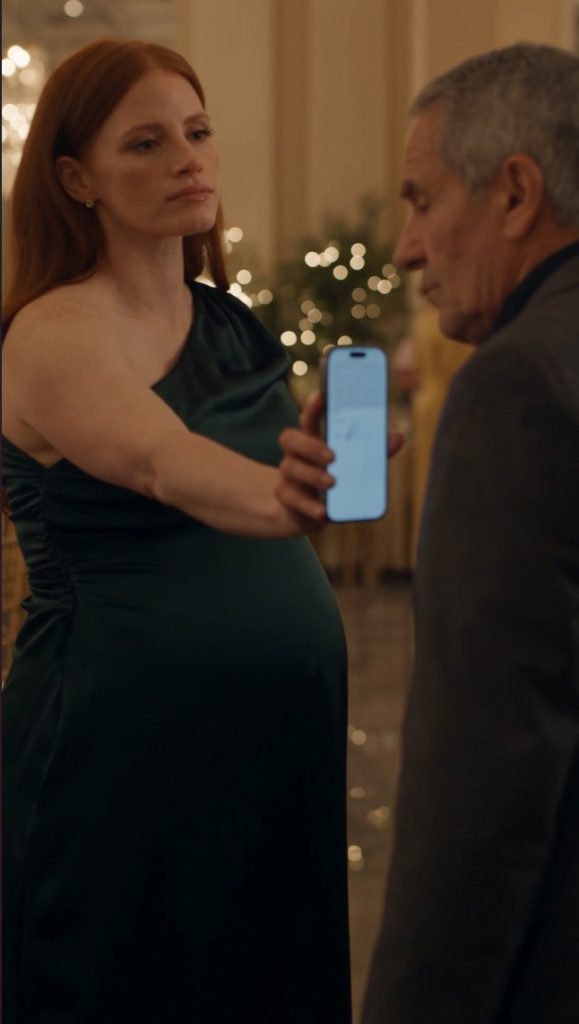
Ethan stiffened as I approached Mr. Callahan, one of the company’s longest-serving directors, and asked for a private word. I showed him the email. His expression changed before he even looked up.
“What did she show you?” Ethan demanded.
“This was completed today?” Mr. Callahan asked me.
“At 8:17.”
“And your attorney confirmed registration?”
“Yes.”
Ethan moved closer. “Give me the phone.”
I locked the screen. “No.”
For the first time that evening, he looked afraid.
Mr. Callahan stood. “We should continue this conversation upstairs.”
Ethan stared at the phone in my hand, suddenly desperate to know what I owned—and what it meant for him.
He was no longer embarrassed by me. He was afraid of what I might say upstairs.
And we hadn’t even reached that room yet. 👇
Ethan stepped into my path before we reached the elevators.
“Whatever you’re doing,” he whispered, “stop it.”
His voice was controlled, but his eyes kept moving between my face and Mr. Callahan. Behind us, the gala continued, music drifting over the soft clinking of silverware.
“Move, Ethan.”
“You’re making a scene.”
I looked past him toward Vanessa, still sitting at his table.
“No,” I said quietly. “I think you already did.”
Mr. Callahan pressed the elevator button.
Ethan followed us inside without being invited.
Nobody spoke during the ride. I could see our reflections in the polished doors: my husband adjusting his cufflinks, Mr. Callahan watching the illuminated numbers, and me with one hand resting over our unborn child.
Upstairs, Mr. Callahan unlocked a small boardroom.
He immediately pulled out a chair for me.
It was such a simple gesture that I nearly cried.
Ethan noticed.
“Can someone please explain what’s happening?”
Mr. Callahan placed my phone on the table after reviewing the documents again.
“The transfer is registered. Your wife now holds the shares previously governed by her father’s arrangement.”
Ethan’s face drained.
“That doesn’t change my position.”
“Not automatically,” Mr. Callahan replied. “But it changes who has the right to question it.”
Ethan turned toward me.
“You knew about this?”
“Since this morning.”
“And you didn’t tell me?”
I studied his expression. Somehow, he seemed more wounded by my silence over a financial document than by the humiliation he’d inflicted on me downstairs.
“I was going to tell you tonight,” I said. “I thought we’d celebrate.”
He opened his mouth, then closed it.
For several seconds, the only sound was the ventilation humming above us.
Then Mr. Callahan folded his hands.
“Ethan, there’s another matter we need to discuss.”
My husband went completely still.
“Finance has raised concerns about payments authorized to Vanessa’s consulting firm.”
Ethan gave a short, incredulous laugh.
“Are you seriously bringing up vendor invoices because my wife is upset about a chair?”
“No,” Mr. Callahan said. “I’m bringing them up because the payments began months before the gala contract, and the supporting descriptions have not been adequately explained.”
I slowly turned toward Ethan.
Months.
The late dinners. The canceled appointments. The meetings that supposedly couldn’t be postponed.
“What payments?” I asked.
Ethan wouldn’t look at me.
Mr. Callahan explained that Vanessa’s firm had received recurring consulting fees authorized directly by Ethan, separate from its legitimate work on the event. Finance had requested additional documentation, and a review was already being considered.
Nothing had yet established that the payments were improper.
But Ethan’s reaction frightened me more than the figures.
“Those services were necessary,” he snapped.
“Then documenting them should be straightforward,” Mr. Callahan answered.
Ethan looked at me.
“You’re not going to let him turn our marriage into a corporate investigation, are you?”
Our marriage.
He hadn’t called it that when he told me I didn’t belong downstairs.
Before I could answer, someone knocked.
Vanessa stood outside the door, holding her phone.
“Ethan? You told me to come up.”
His expression shifted immediately.
“Not now.”
She looked from him to Mr. Callahan, then to me.
“What’s going on?”
“Nothing,” Ethan said sharply. “Go downstairs.”
Vanessa didn’t move.
“You said we’d talk about the contract tonight.”
Ethan’s jaw tightened.
“Vanessa. Leave.”
Something in his voice made her straighten.
“Don’t speak to me like that.”
He stepped toward her.
“I’m trying to protect you.”
“No,” she answered, looking suddenly exhausted. “You’re trying to protect yourself.”
The room became painfully quiet.
Mr. Callahan asked Vanessa whether she had documents supporting the consulting work. She hesitated, then looked at Ethan.
He shook his head almost imperceptibly.
I saw it.
So did she.
“I was told to describe certain hours as executive strategy support,” she said. “But some of those hours were personal time with Ethan. I should never have approved those descriptions.”
Ethan’s face hardened.
“That’s not what happened.”
Vanessa stared at him.
“You told me nobody would examine the invoices.”
I felt my stomach tighten.
Not from the baby.
From the realization that the woman in the red dress knew a version of my husband I had never met.
“How long?” I asked.
Neither answered.
I looked directly at Vanessa.
“How long have you been together?”
She lowered her eyes.
“Since the spring.”
Spring.
The month Ethan missed our first detailed ultrasound because an investor supposedly flew in unexpectedly.
I remembered sitting alone in the examination room, watching the technician move the probe over my stomach, wishing he could see our child’s tiny hands.
I had sent him a photograph afterward.
He’d replied with a heart emoji.
I gripped the edge of the table.
Ethan approached me.
“Listen, I made mistakes, but don’t let this destroy everything we’ve built.”
I pulled my hand away before he could touch it.
“What did we build, Ethan?”
He had no answer.
Mr. Callahan spoke carefully.
“The board needs an independent review. We can convene an emergency meeting tomorrow morning. Until then, I recommend preserving the relevant financial records.”
Ethan turned toward him.
“You can’t remove me because of a personal disagreement.”
“Any decision about your position will be made through the proper board process,” Mr. Callahan replied. “And on the evidence.”
Then he looked at me.
“Your father trusted you to make your own decisions. What would you like to do?”
For a moment, I wanted to say nothing.
I wanted to return to the morning before the gala, when I still believed I had a husband who loved me.
Then our baby moved beneath my palm.
I took a breath.
“Investigate everything.”
Ethan stared at me.
“Please.”
It was the first time he’d said that word all evening.
I looked at the man I had once defended against an entire board of directors.
“I won’t lie for you anymore.”
The next morning, the independent directors approved his temporary suspension while the review proceeded.
Within two weeks, the investigation confirmed undisclosed personal conflicts, inaccurate descriptions supporting several consulting invoices, and repeated failures to follow company approval procedures.
Ethan was given an opportunity to respond.
The evidence remained.
The board voted to terminate his employment for cause, following the company’s governing procedures. His executive authority, salary, and access to company systems ended.
The firm’s lawyers pursued recovery of the improperly charged funds. Vanessa’s company canceled its remaining engagement, and she was removed from the account.
I wasn’t present when Ethan left the executive office for the final time.
Mr. Callahan told me afterward that he had stood for a long while beside the window, holding a cardboard box.
Before leaving, he’d asked whether I would take his call.
I didn’t.
That evening, Ethan came home.
He found me sitting on the nursery floor, folding tiny cotton clothes into a drawer.
His suitcase was already beside the front door.
He stared at it.
“So that’s it?”
I kept folding.
“I spoke with an attorney about our separation.”
He lowered himself onto the edge of the bed.
“I never meant for us to end like this.”
I held a small white sleeper in my hands.
“You had so many chances to choose differently.”
He rubbed his face.
“I still love you.”
The words should have hurt.
Instead, they sounded unfamiliar.
I looked toward the crib we’d assembled together months earlier, back when he still came home early enough to talk about baby names.
“You may love the life we had,” I said. “But you stopped treating me like someone inside it.”
He began crying.
I had seen those tears before, at our wedding and at that first heartbeat appointment.
This time, I didn’t move toward him.
“We’ll work out how you can be a father,” I said. “But I can’t be your wife anymore.”
He stood beside the suitcase for several seconds.
Then he picked it up.
When the front door closed, I rested my forehead against the nursery wall and finally let myself cry.
Not because I wanted him back.
Because the life I had imagined was gone, and I needed to mourn it before I could begin another.
Over the following months, the divorce proceedings moved forward, and our attorneys helped establish clear arrangements for our child’s care.
Ethan accepted the financial settlement and the consequences of his dismissal. His apologies eventually became less frequent, and our conversations narrowed to the responsibilities we still shared.
I never tried to erase him from our child’s life.
I simply refused to let his failures decide what mine would become.
At the company, the board appointed an interim CEO while conducting a search for a permanent leader. Mr. Callahan helped strengthen oversight of executive spending, and the employees who had raised concerns were formally thanked.
I attended some meetings by video as my pregnancy progressed.
For the first time, I asked questions without apologizing for asking them.
One afternoon, Mr. Callahan called.
“Your father would have been proud of the way you handled this.”
I looked down at the notes scattered across my kitchen table.
“I wish he were here.”
“So do I,” he said.
Then his voice softened.
“There’s something your attorney has been keeping for you, at your father’s request.”
The following week, a small envelope arrived.
Inside was a folded letter and a yellowing sheet of paper.
I recognized the drawing immediately.
A long conference table. Two badly drawn figures. A little girl sitting beside a much taller man.
I’d made it when I was nine years old, during one of those evenings when Dad worked late and let me do my homework beside him.
Across the top, in crooked blue letters, I’d written:
Dad And Me At Work.
I pressed my fingers over the faded crayon.
On the back, in my father’s handwriting, were words I’d never seen.
She thinks she’s only keeping me company. She doesn’t know these are the happiest hours of my working life.
My vision blurred.
I unfolded the letter.
He had written it when his health was failing, shortly before establishing the arrangement for his shares.
He explained that he had spent so much of his life trying to build something secure for me that he sometimes feared he’d confused providing for me with spending time beside me.
Then came the sentence that made me cover my mouth.
I hope that when these shares are finally yours, you’ll remember that the company was never the most important thing I built. The most important thing was getting to be your father.
I read the letter three times.
My father had remembered those evenings exactly as I did.
The sound of the copier. The cold conference room. The vending-machine snacks he brought me when we both stayed too late.
All those years, I’d thought he was allowing me into his world.
He had considered me the best part of it.
Six weeks later, my daughter was born.
I named her Clara, a name Ethan and I had chosen before everything fell apart.
She arrived crying fiercely, with a full head of dark hair and impossibly small fingers.
When the nurse placed her against my chest, the room seemed to grow quieter.
I touched her cheek.
“Hello, sweetheart.”
Her fingers curled around mine.
For the first time in months, I wasn’t thinking about board meetings, lawyers, contracts, or betrayal.
I was thinking about how warm she felt.
How her breathing changed when I spoke.
How someone so small could make a room feel so full.
Ethan met her later through the arrangements we’d established. He held her carefully and cried. I hoped he would learn to give her the steadiness he had failed to give me.
But I knew that hope was no longer a responsibility I had to carry for him.
Three months after Clara’s birth, I visited the company with her for the first time.
The office looked almost exactly as it had during my childhood. The same broad windows. The same polished floors. The familiar smell of coffee drifting down the hallway.
Mr. Callahan met us outside the old conference room.
He smiled at Clara.
“Your grandfather used to bring your mother here.”
I laughed softly.
“She practically grew up in this building.”
Mr. Callahan opened the door.
Inside, the long conference table was still there.
But beside it stood a small, comfortable chair, placed near the window.
“I thought you might need somewhere to sit when you visit,” he said.
For a moment, I couldn’t speak.
Then I settled into the chair with Clara asleep in my arms.
Sunlight stretched across the table where I had once spread my homework. I could almost hear my father’s voice asking whether I wanted another snack before we went home.
Mr. Callahan quietly closed the door, leaving us together.
I looked down at my daughter.
Her tiny hand rested against my chest.
One day, I would tell her about her grandfather.
About the business he built, the hours he worked, and the little drawing he saved for decades.
I would tell her that love shouldn’t require someone to make themselves smaller.
That respect matters more than appearances.
And that no matter where life took her, she would never have to earn her place beside me.
Clara stirred, opened her eyes for a moment, then fell asleep again.
I kissed her forehead and leaned back into the sunlight.
For years, I’d believed my father had left me a company.
Now I understood that he had left me something far more important.
The certainty that I had always belonged.
And as my daughter slept against my heart, in the room where my father and I had spent so many ordinary, beautiful evenings, I finally felt at home.