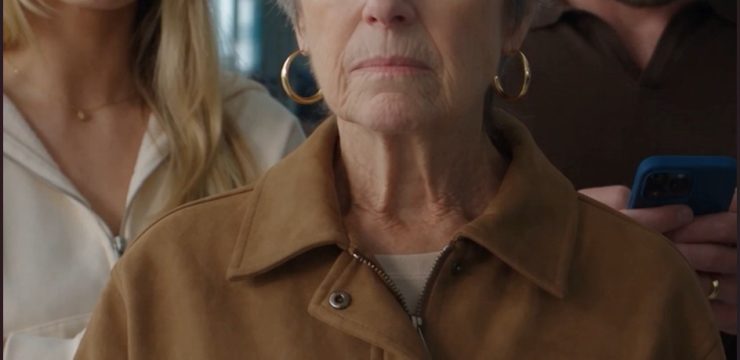
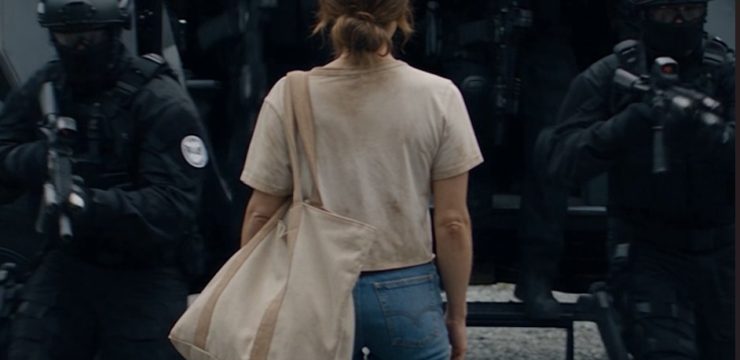
She stood at the edge of the sidewalk like someone who had rehearsed this moment a thousand times in her sleep — and still wasn’t ready for it to be real.
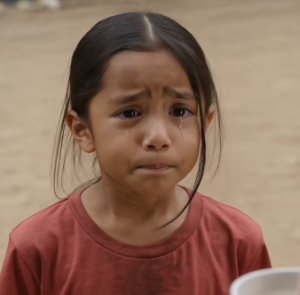
The old vendor didn’t notice her at first. He was busy with his cart, wiping down the edges the way he always had, slow and careful, the way a man does when a simple routine has become the only anchor he has left in the world. The afternoon sun sat low behind the buildings, casting long shadows across the cracked pavement, and everything about the scene looked ordinary.
But nothing about this day was ordinary.
She was dressed well. Composed. The kind of woman who had clearly built something out of nothing, who carried herself with the quiet authority of someone who had survived things most people couldn’t name. Beside her stood a man in a dark suit, holding a folder, saying nothing.
She stepped forward.
The vendor looked up.
And then she held out the photograph.
His eyes dropped to it slowly. It was old. Creased. Faded by time in the way that only truly precious things get worn down — not by carelessness, but by being held too long, too tightly, too often in the dark.
But he recognized the street immediately. His cart. The sidewalk. The broken wall behind it.
And there, blurred in the background, stood a man watching from across the road.
The vendor’s face changed. Very slowly.
“I remember him,” he said.
The woman’s voice shook when she answered.
“He was the last person I saw before I disappeared.”
The air seemed to leave the street all at once.
The suited man opened the folder, but the woman kept speaking, her voice low and steady the way a river is steady — not because it’s calm, but because it has already carved through stone.
“I was taken that night,” she said. “Not far. Not for long. But long enough to understand that no one was coming for me.”
The old man’s hands began to tremble.
“I tried to tell people later,” she whispered. “But I was a poor child from a forgotten street. No one listened.”
He looked sick. Not because he had done something wrong — but because he suddenly understood how close he had been standing to a nightmare he never once saw coming. How many cups of lemonade had he poured while the world around him quietly shattered?
The woman stepped closer.
“The only reason I ever found my way back,” she said, “was because I never forgot this place.”
She looked at the cart. Then at him.
“I never forgot the hand on my shoulder.”
The old vendor covered his mouth. Tears filled his eyes without warning, the kind that don’t ask permission, the kind that come from somewhere too deep to be stopped.
The suited man set another document on the cart.
“The case was reopened two years ago,” he said quietly. “The company she built funded the entire investigation.”
The vendor stared.
The woman gave a small, painful smile — the kind that costs something to give.
“Yes,” she said simply. “I bought this street.”
He frowned, confused.
She glanced slowly around the block. At the buildings. At the corner. At every ordinary detail that had never been ordinary to her.
“At first, I told myself it was business,” she said.
A pause that carried years inside it.
“Then I found the photo.”
He looked down again at the image. The man across the street. The shadow standing perfectly still. The face no one had ever thought to notice.
Then she said the words that nearly brought him to his knees.
“That man was my father.”
Silence fell over the block like a heavy coat.
The vendor’s eyes widened in slow, dawning horror.
She nodded once, tears slipping freely down her face now — no longer trying to hold them back, no longer needing to.
“He had been searching for me for weeks. He came that day to bring me home.”
The old man could barely find breath.
“But before he crossed the street,” she said softly, “someone else took me first.”
His face crumpled the way old things do when they’ve been holding too much for too long.
“He spent the rest of his life searching for me,” she whispered. “And he died believing he had failed.”
The vendor broke open. Because in that moment, a single cup of lemonade was no longer just a small act of kindness passed between strangers on a warm afternoon. It was the last moment she had ever felt safe. The last gentle thing before her entire world was taken from her.
She reached into the folder and placed a key on the cart.
Then the deed papers.
Then she looked at him — really looked at him — and said the words she had been carrying for decades.
“I didn’t come back for revenge.”
He looked up through tears that would not stop.
She took a slow, shaking breath.
“I came back because you were the last kind face from the life they stole from me.”
Some stories don’t end with justice. Some don’t end with answers. Some end quietly, on a sidewalk, with two people standing across a cart that has seen too much — one who gave a child a moment of warmth without ever knowing how much it would matter, and one who never forgot it.
Kindness is rarely loud. It rarely knows its own name. But it stays. Long after the cruelty fades, long after the grief softens at the edges — kindness is the thing the lost carry home.
And sometimes, after a very long time, they come back to say so.