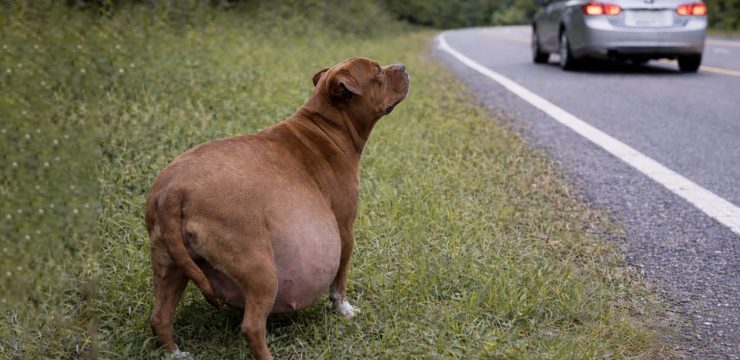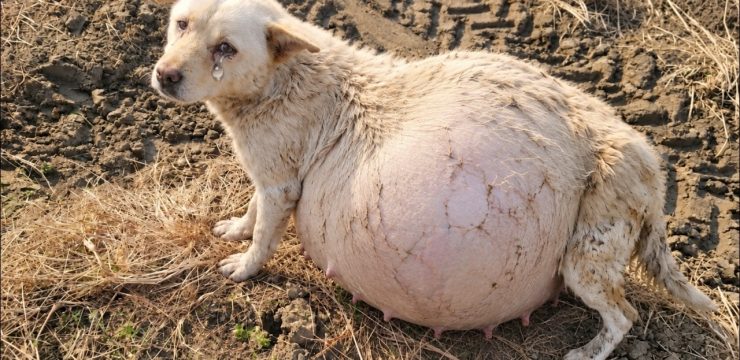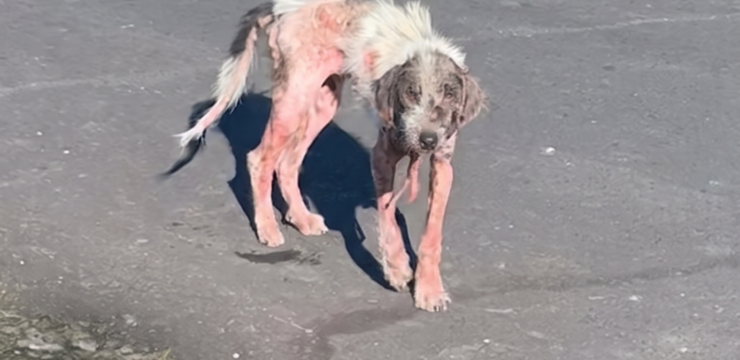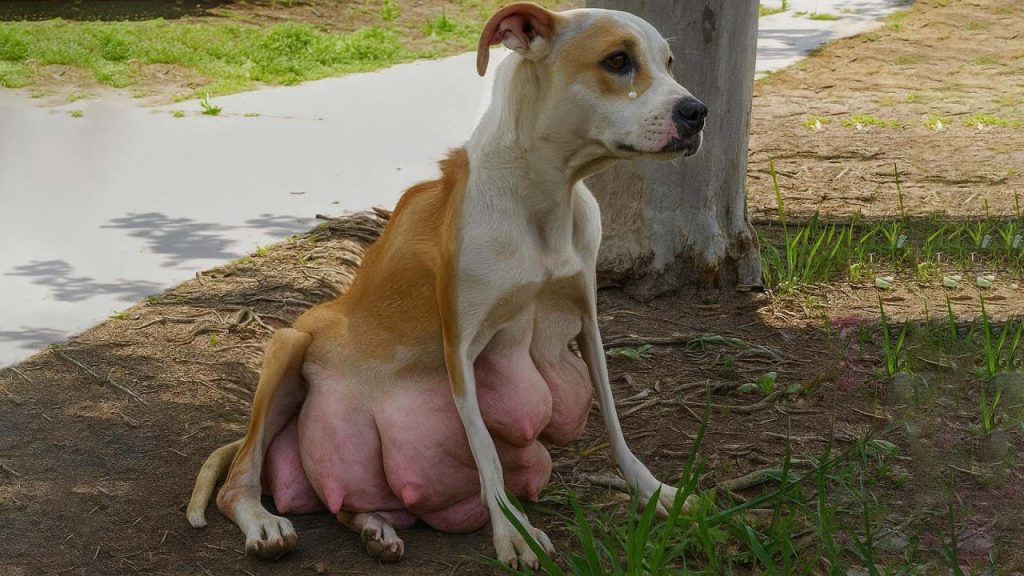
Her name was Betty.
Her condition offered little reassurance. She was severely malnourished, her body painfully thin and weak. There were signs of possible past abuse, and her fear of people was unmistakable. Anyone hoping to approach her faced a difficult truth: Betty needed help, but the very people who could offer it were the ones she struggled to trust.
She had already become a mother under circumstances no animal should have to endure. Somewhere beyond the roads where she wandered, her newborn puppies were waiting. Their location remained a mystery to everyone who had noticed her. Even those who knew she had given birth could not say where the little family was sheltering.
For Betty, staying away from human hands had become a powerful habit. For the rescue team, that fear created a painful dilemma. Leaving her on the streets meant leaving a weakened mother exposed to further hardship. Bringing her to safety, however, meant finding a way past the terror that made her so difficult to catch.
The rescuers chose patience.
They worked to guide Betty into a trap, knowing her fear could not be overcome by force. She was clever and wary, and their efforts were far from easy. The challenge was considerable. But the team persisted, determined to give her a chance she could not find alone.
At last, Betty entered the trap.
It was an important success, though hardly the end of the rescue. She could finally be taken off the streets and brought to a temporary care facility, where her needs could receive attention in a safer setting. Yet the question that had troubled everyone from the beginning remained unanswered.
Where were her babies?
A mother dog cannot explain the place she has chosen for her litter. She cannot tell a rescuer which turn to take or which hiding place to search. Betty had been found, but the ten puppies were still somewhere beyond the team’s reach. The rescuers faced the unusual challenge of protecting the mother while also finding a way to reunite her with the little ones she had been protecting.
Inside the temporary shelter, something began to change.
Betty gradually grew less afraid. The dog who had treated human attention as a threat started to respond to her caregivers with a wagging tail. It was a small gesture, but not a small achievement. A tail wag did not erase the hardship she had experienced. It did, however, show that her world was beginning to hold something besides fear.
The people caring for her understood that this new trust was precious. They also knew it was not enough simply to see Betty resting in safety while her puppies remained missing. Her recovery mattered, but so did the lives she had brought into the world. Every effort to reach her had another purpose now: helping her lead them to her family.
The rescuers tried an unusual approach. They played the cries of puppies on a phone, hoping the sound would stir Betty’s maternal instincts. Perhaps the familiar calls would help her understand what they were asking. Perhaps they could encourage her to reveal the location that had remained hidden from everyone else.
There was no simple way to know whether it would work. A recording could not tell the team where to go. Only Betty could do that.
What finally made the difference was the trust the rescuers had worked so patiently to build. The terrified mother who once resisted human contact allowed them into her world. And then she did something extraordinary: Betty led them directly to the secret place where she had hidden her puppies.
There they were.
Ten little puppies, alive because their mother had continued caring for them despite her own desperate condition. The same dog who had looked so frail on the streets had been protecting an entire litter through hunger, exposure, and the dangers around her. Her weakness had been visible to everyone. Her determination had been hidden, just like her babies.
The discovery changed the meaning of the rescue. What had begun as an effort to save one frightened dog became the rescue of an entire family of eleven. Betty was no longer separated from the puppies people had feared they might never find. And the little ones, whose safety had depended on their struggling mother, could finally receive the care they needed.
It is difficult to imagine a more moving contrast. On the roads near Fresno, Betty had been a shadow of the healthy, secure mother she deserved to be. She was hungry, afraid, and unable to trust the people around her. In the care of rescuers, that same mother learned that human hands could bring protection rather than harm.
Her puppies were given that chance, too.
All eleven members of the family received care and support as they recovered. Their story did not end with a successful search or a temporary place of safety. It continued toward something more lasting: homes where they could be wanted, protected, and loved.
Betty and all ten of her puppies eventually found forever homes. Her devotion had finally been met with kindness.
A mother who had once struggled to survive on the streets was no longer facing the world alone. Every puppy she had protected had a future beyond the hiding place where its life began.
Sometimes rescue starts with a trap, a difficult search, or a simple sound played from a phone. What carries it forward is patience strong enough to wait for trust. Betty could not ask for help in words. Once she felt safe enough, she showed her rescuers exactly where love was needed most.