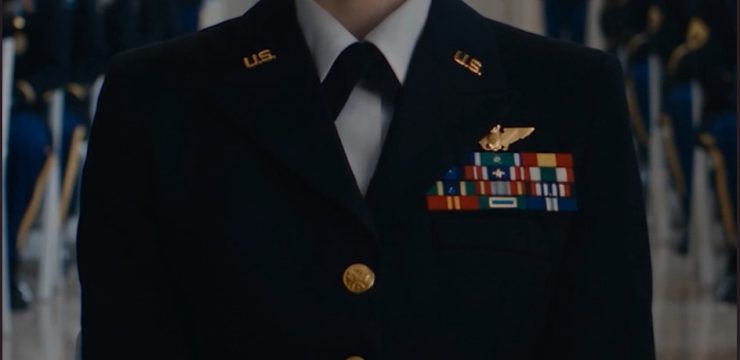
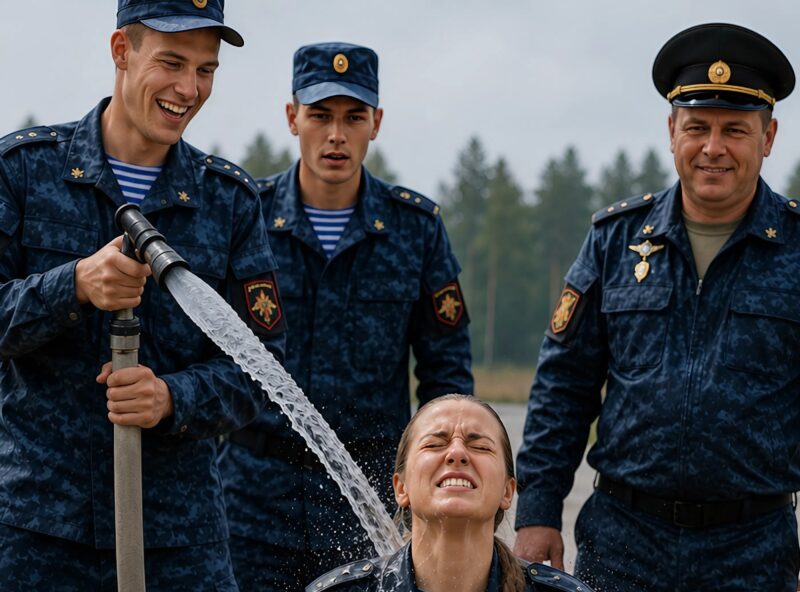
The sky had been heavy and gray since before sunrise. A night of relentless rain had soaked the military base to its bones, leaving the parade ground slick with cold water and the kind of bitter wind that cuts right through a uniform. Soldiers moved between buildings with their heads down, officers clustered near headquarters exchanging quiet words, and somewhere in the middle of it all, a young woman knelt on the wet concrete while freezing water slammed into her chest and face from a fire hose.
Her name was Alice. And not a single person on that base truly knew who she was.
Alice had arrived only a few weeks earlier. She was quiet, composed, and impossible to rattle — qualities that, in a place like this, made certain people deeply uncomfortable. She never complained when tasks were unfair. She never flinched when other soldiers tried to get under her skin. She simply did her work and kept her eyes open.
What unsettled the captain most was that she refused to be afraid of him.
He was the kind of man who had built his entire identity around being feared. Experienced contract soldiers lowered their eyes when he walked past. New recruits practically trembled during his inspections. He had a talent for finding the weakest moment in a person and applying maximum pressure — publicly, loudly, and without mercy. Women, in particular, were his favorite targets. He believed humiliation was a management tool.
Alice believed something different entirely.
The conflict between them had been building quietly from her first day. She followed orders. She performed her duties. But when the captain issued commands that violated the established rules, she didn’t pretend otherwise. She didn’t make a scene — she simply, calmly, pointed to what the actual regulations said.
That kind of quiet defiance drove him absolutely crazy.
Everything came to a head the evening before, when the captain ordered Alice to clean the old warehouse alone through the night — a punishment with no legitimate basis, issued in front of the entire unit. When Alice calmly asked why none of the other soldiers had received the same assignment, the captain smirked the way men smirk when they think the conversation is already over.
“Because I decide who does what here,” he said.
Alice looked him directly in the eyes — no anger, no trembling — and replied with perfect steadiness: “The rules apply equally to everyone.”
The parade ground went silent. Soldiers exchanged nervous glances. No one had ever spoken to him in that tone. No one had ever made it feel so simple.
The captain leaned in close, close enough that no one else could hear, and said quietly, “So you’ve decided to show some attitude.”
He spent the night planning her public lesson.
The following morning, he ordered the entire unit to assemble. He brought Alice forward. He walked around her slowly, performing for his audience, letting the tension build before announcing to everyone present: “Anyone who forgets their place will end up like this.”
Then he nodded toward a soldier stationed beside the fire hose.
The blast of freezing water hit Alice full in the face and chest. She staggered from the impact, her soaked hair plastered flat against her skin, her uniform drenched within seconds. Around the parade ground, soldiers began to laugh. Several pulled out their phones and started filming. The captain stood back and watched with the satisfied expression of a man who believed he had just won something.
“Well?” he called out. “Still got that attitude?”
Alice breathed hard from the cold. She didn’t answer.
He stepped forward and shoved her roughly in the shoulder. “Answer when a superior officer speaks to you.”
More laughter rippled through the crowd. Someone whispered, “She’s about to start crying.”
But Alice slowly raised her head. Her eyes were calm — unnervingly calm. And when she finally spoke, her voice was quiet and completely steady.
“You’re going to regret this.”
Even the soldier holding the hose paused for half a second.
The captain laughed it off, but something about the way she looked at him didn’t sit right. There was no bravado in her words. No desperation. Just an observation delivered with the quiet certainty of someone who already knew exactly how a story ends.
That same evening, everything changed.
Several unmarked black vehicles arrived at the base without warning. Military prosecutors stepped out alongside officers from the security services. Within minutes, the entire base was placed on heightened alert. Soldiers gathered in nervous clusters, whispering. Officers stood rigid, their faces unreadable.
The captain tried to keep his composure. He even managed a small smile as the newcomers were directed toward headquarters — until one of the arriving officers held up a tablet and pressed play.
Footage from that morning’s parade ground filled the screen. A young woman on her knees. Freezing water. Laughter. Phones recording.
The smile left his face slowly, like color draining from skin.
Months earlier, Alice had been deliberately transferred to the base under a false surname. She was not simply a soldier. She was part of a long-running internal investigation into credible, documented reports of misconduct — systematic abuse, unauthorized punishments, and the targeted humiliation of soldiers under command. Military leadership had been quietly building a case for months, and they had placed someone inside to finish it.
Alice had been that person. Every incident, every witness, every detail had been carefully documented and passed up the chain of command. What happened that morning on the parade ground was not a breaking point — it was the final, undeniable piece of a completed case.
As cold rain fell over the base, the captain was escorted out of headquarters in front of the same soldiers who had laughed that morning. No uniform. No rank. Just a pale man with his eyes fixed on the ground, unable to find a single word.
Alice stood near the vehicles and watched in silence.
She didn’t gloat. She didn’t smile. She simply stood in the rain, steady as she had been from the very first day, and let justice finish what she had quietly started.
Some lessons aren’t learned in a classroom. Some truths only come out in the rain, in front of everyone, when it’s already far too late to take back what you’ve done.