There are places in this world where the rules are never written down, never explained, and never handed to you in a welcome packet. You learn them the hard way — through watching, through suffering, or through something far worse. A women’s correctional facility is exactly that kind of place. And on one ordinary afternoon, in the middle of a concrete yard surrounded by chain-link fences and watchful eyes, an ordinary pair of white sneakers became the spark that changed everything.

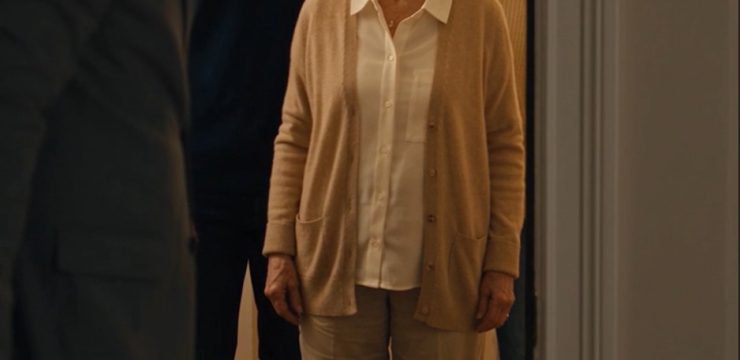
Her name was Kate. She came in quietly, the way most people do when they’ve already made peace with whatever brought them there. She went through intake without complaint — signed her paperwork, accepted her uniform, her bedding, and a brand-new pair of white sneakers that the facility handed out to every new arrival. She didn’t speak unless spoken to. She didn’t make eye contact unless necessary. To most of the women already serving time there, she was invisible. Just another face. Just another body moving through the system.
But not everyone missed her.
Vanessa had spent years building the kind of reputation that people in closed spaces both fear and quietly depend on. She was a large, imposing woman with a temper that had been sharpened by years behind bars. She had claimed her place at the top of the informal hierarchy through intimidation, force, and an absolute refusal to back down. Other inmates handed over food, favors, and personal belongings without being asked twice. Even some of the female corrections officers found it easier to look the other way than to engage with her directly. Vanessa didn’t just occupy space — she owned it.
And on the afternoon Kate stepped into the recreation yard for the first time, Vanessa noticed the sneakers.
The yard was loud with the usual noise — conversations, laughter, the distant sound of a basketball hitting pavement. But the moment Vanessa began moving toward the new girl, things grew quiet in that particular way that only happens when people sense something is coming and no one wants to be caught in the middle of it.
“Nice sneakers,” Vanessa said, the words dripping with the kind of casual cruelty that comes from years of never being challenged. She stopped just a few feet away, arms crossed, voice loud enough for everyone nearby to hear. “I don’t think you’ll be needing those. Take them off. They’re mine now.”
The yard went still.
Kate looked up at her. She didn’t flinch. She didn’t apologize. She didn’t reach down toward her shoes. She simply said, in a voice that was calm and completely steady:
“No.”
A murmur rippled through the crowd. Women exchanged glances. Some pulled out hidden phones, hoping to capture what everyone assumed was about to be a very one-sided confrontation. Others simply watched, their expressions a mixture of pity and morbid curiosity. This was how things went. Someone new would push back, Vanessa would escalate, and within minutes it would all be over.
Vanessa stepped forward and shoved Kate hard in the shoulder, repeating the demand louder this time. She turned to the growing crowd and laughed, playing to the audience the way people do when they’re absolutely certain of the outcome. Her words were harsh, deliberate, designed to strip away every last bit of dignity the new girl had walked in with.
Then she bent down and grabbed at Kate’s foot, fully intending to pull the sneaker off right there in front of everyone.
What happened in the next three seconds defied everything those women thought they understood.
Kate moved with a speed and precision that seemed completely at odds with the quiet, unremarkable woman they had watched walk into that yard. In one fluid motion, she pulled her foot back, secured Vanessa’s arm at the wrist, shifted her weight with a single deliberate step, and brought the much larger woman down — face-first onto the concrete — with a controlled, practiced force that pinned her completely. It was over before the crowd even had time to gasp.
The yard fell silent in a way it never had before.
Vanessa struggled to get up, but each attempt only made her position worse. The technique holding her down was not the kind learned in a street fight. It was trained. It was surgical. It was the kind of thing taught only to people who spend years learning how to neutralize threats much larger than themselves without hesitation.
Corrections officers were already running across the yard. The shift supervisor arrived, took one look at the situation, exhaled slowly, and turned to his staff with a tired expression that carried the weight of someone who had given a warning that went unheeded.
“I told everyone not to let anyone start trouble with the new one,” he said.
The women nearby stared at each other.
That morning, before Kate had even set foot in the yard, prison administration had received her full background file. Before her arrest, she had worked for over a decade as a certified instructor for special forces units — training soldiers and operatives in close-quarters restraint techniques, teaching them how to subdue opponents significantly larger and stronger than themselves. The warden had personally briefed staff upon her arrival, quietly requesting that no one allow any provocation to escalate.
The warning simply hadn’t reached the right ears in time.
After that afternoon, Vanessa never reached for another inmate’s belongings again. The shift in the yard’s atmosphere was subtle at first, then unmistakable. The invisible hierarchy hadn’t just been challenged — it had been dismantled in under five seconds on a concrete floor in front of dozens of witnesses.
Among the women, a new saying began to circulate through the cellblocks, passed quietly from bunk to bunk like all the most important truths in that place:
Never judge a person by how small they seem, especially when they’re the ones staying quiet.
Because silence, as it turns out, is sometimes the loudest warning of all. And the people who never feel the need to announce themselves are often the ones you should be paying the most careful attention to. Kate never asked for respect. She never demanded it. She simply arrived, stood her ground when it mattered, and let the rest speak for itself.
Some lessons, once learned, don’t need to be repeated.