“Pack Your Things And Get Out Of My House.”
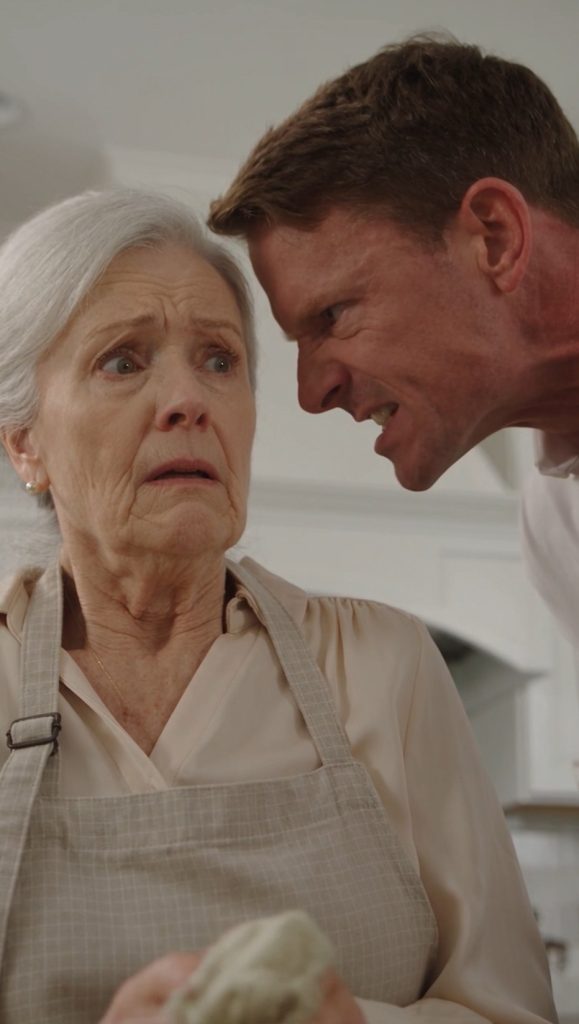
The words landed harder than Catherine Montgomery expected. Her hands stayed beneath the cold dishwater, soap bubbles clinging to her fingers while the dinner she had cooked sat untouched behind her.
She turned toward her son. “Your house?”
David stood in the kitchen doorway, strangely calm. “If you won’t move into assisted living, Mom, then you can’t stay here.”
Behind him, Emily leaned against the frame in a cream sweater, glossy red nails tapping against her arm. She didn’t look shocked.
She looked relieved.
That hurt more than Catherine wanted either of them to see.
David’s name might have been on the deed, but Catherine’s life savings were everywhere. Her money had renovated the kitchen, built the porch, and paid for the staircase runner Emily proudly called her “personal design.”
Three years earlier, after Albert died, David had begged Catherine to leave the Queens apartment where she and her husband had spent most of their marriage.
“You’re family, Mom. We’ll take care of each other.”
She believed him.
Catherine sold the apartment and handed David nearly everything she had saved during thirty-two years of sewing wedding dresses. He called the house a family investment.
She called it home.
Slowly, helping became serving.
She cooked every meal, cleaned the house, ironed David’s shirts, and cared for Peter and Alice whenever Emily wanted to shop or travel. Catherine never resented the children.
But gratitude disappeared.
Then her jewelry did too.
Her grandmother’s pearl brooch. The amber necklace. A silver bracelet. An amethyst ring.
“You probably misplaced them,” David said without looking up from his phone.
Emily smiled softly. “At your age, memory slips happen.”
Six months later, Catherine saw photographs from Emily’s Cancun vacation.
There, wrapped around Emily’s wrist, was the missing silver bracelet.
Catherine stared until the screen went dark.
She said nothing.
She had stopped arguing.
She had started watching.
Then she overheard Emily laughing on the phone.
“Just a few more months. Then she’ll be in assisted living, and I can turn that depressing room into my walk-in closet.”
A pause.
“She still thinks David’s a good son.”
Something inside Catherine changed.
Not into anger.
Into clarity.
So when David ordered her out that evening, she understood this had begun long before tonight.
Emily waited for tears. David seemed ready for resistance.
Catherine gave them neither.
“All right, David.”
Upstairs, she opened an old leather suitcase. A few clothes went inside, followed by photographs of Albert, David as a newborn, and her mother.
Her fingers rested on Albert’s picture.
For one dangerous second, grief nearly broke through.
Then she closed the suitcase.
Downstairs, Emily was barely hiding her satisfaction when the doorbell rang.
Outside waited a black limousine.
Henry Montgomery stepped onto the walkway—Albert’s former business partner, his closest friend, and one of the wealthiest men in the state.
“Henry?” David whispered.
Henry walked straight past him.
“Are you ready?” he asked Catherine.
“Yes.”
David stared between them. “What is this?”
Catherine lifted her suitcase.
“The house is all yours now.”
Then she walked away.
The following morning, Henry escorted Catherine into a Midtown law firm. Attorney Oliver Samson led them into a private conference room where a blue folder waited on the polished table.
Inside was Albert’s notarized will.
Then shareholder records.
A power of attorney.
Transfer documents.
Catherine turned another page—and froze.
Her signature was at the bottom.
Except she had never signed it.
The imitation was careful.
Almost perfect.
“These documents authorized several transfers,” Oliver said quietly.
Suddenly the stolen jewelry, Emily’s comments about her memory, the assisted-living pressure, and David’s increasing control over paperwork no longer seemed like separate acts of cruelty.
They formed a pattern.
Oliver touched one line.
“This is where David made his mistake.”
Then he removed the final document.
Catherine read the first lines.
Her breath caught.
“What exactly did my son try to transfer?”
Oliver placed his finger beside David’s name.
“Your controlling interest in Montgomery Textiles.”
Catherine stared at him.
Albert had told her the company shares would provide security if anything happened to him. What he had never explained was how much the business had grown.
Henry leaned forward.
“Albert left fifty-one percent to you.”
Catherine’s lips parted.
Oliver continued. “David attempted to transfer those shares using your forged authorization.”
The room became completely still.
“How much?”
Henry answered quietly.
“Your interest is worth approximately eighteen million dollars.”
Catherine looked down at the forged signature.
For months, David and Emily had encouraged her to question her memory. They had treated her as though she were becoming incapable of managing her own life.
Now she understood why.
Oliver closed the folder.
“We can challenge every transfer. But I need your permission.”
Catherine thought of Peter.
Alice.
David as a newborn in the photograph inside her suitcase.
Her voice almost failed her.
Then she remembered Emily wearing the bracelet.
She remembered the walk-in closet.
And finally, her son telling her to leave the home her money had helped create.
“Do it.”
David arrived at the law office that afternoon.
Emily came with him.
His confidence disappeared when Oliver placed copies of the forged documents across the table.
“Mom, I can explain.”
Catherine looked at him for a long moment.
“Then explain my signature.”
David said nothing.
Emily reached for his arm, but he pulled away.
That small movement told Catherine more than any confession could.
Oliver informed them that the disputed transfers had been frozen and the evidence would be referred for legal investigation.
Emily’s face drained of color.
“What about the house?”
Henry finally spoke.
“The house purchased substantially with Catherine’s funds?”
Silence.
David looked at his mother.
For the first time in years, Catherine saw fear in her son’s face instead of entitlement.
“Mom, please.”
She had imagined that moment differently. She thought justice might feel like triumph.
It didn’t.
It felt like mourning someone who was still alive.
“I would have given you almost anything,” Catherine whispered. “That’s the part you never understood.”
David lowered his eyes.
Catherine stood.
She did not shout.
She did not threaten him.
She simply walked out.
The forged transfers were later invalidated. Catherine regained control of Albert’s shares and recovered a substantial portion of the money tied to the house.
Her missing jewelry was returned too.
But she never moved back.
Instead, Catherine bought a sunlit apartment overlooking the Hudson, with wide windows and a small sewing room.
Months later, Peter and Alice visited.
Alice ran into Catherine’s arms so hard she nearly knocked them both backward.
Peter stood quietly by the door.
“Grandma?”
“Yes?”
“Are we still allowed to come here?”
Catherine’s face crumpled before she could stop it.
She pulled him close.
“You never needed permission.”
That evening, they baked chocolate cake together.
Henry arrived carrying flowers. Oliver sent over the final documents confirming Catherine’s ownership had been fully restored.
But there was one more envelope.
Inside was a handwritten letter Albert had left with Henry years earlier, intended for Catherine if anyone ever challenged her control of the company.
Her hands trembled as she unfolded it.
Albert had written only a few lines.
He told her the shares had never been merely an inheritance.
They were his acknowledgment of something everyone else had overlooked.
During the difficult early years of the company, Catherine’s sewing income had quietly paid their household bills while Albert reinvested everything he earned into the business.
Without her, he wrote, there would have been no company to inherit.
Catherine pressed the letter against her chest.
For years, she had believed Albert had left her his success.
Only now did she understand.
He had been returning something that had always partly belonged to her.
From the kitchen came Alice’s laughter.
“Grandma! Peter ate the frosting!”
“I did not!”
Catherine wiped her eyes and walked toward them.
On the table sat Albert’s photograph beside the recovered pearl brooch. Beyond the windows, evening light stretched across the Hudson.
Catherine looked once at her husband’s smiling face.
Then she joined her grandchildren at the table.
This time, she wasn’t a guest in someone else’s home.
She was home.