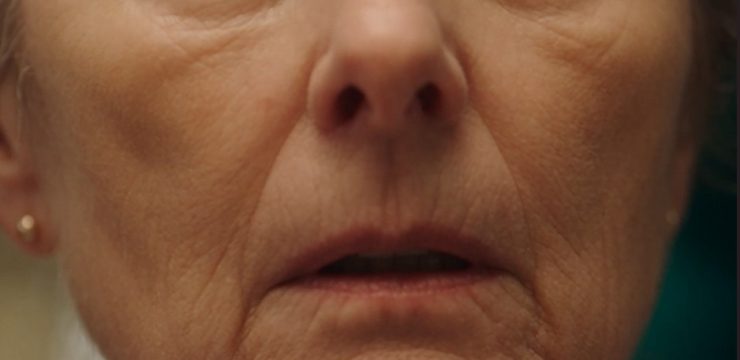
“Mom, you can’t stay here tonight.” Eric said it from the porch of my lake cabin while his wife stood behind him holding my spare key.
For a moment, I thought I had misheard him.
Then Jessica pointed toward the highway. “We booked you a room in town, Linda. It’s already paid for, so please don’t make this uncomfortable.”
Behind them, people were laughing inside my house. I could smell barbecue from my kitchen. Through the screen door, I saw a young man I didn’t recognize stretched across my sofa with his shoes on the cushions.
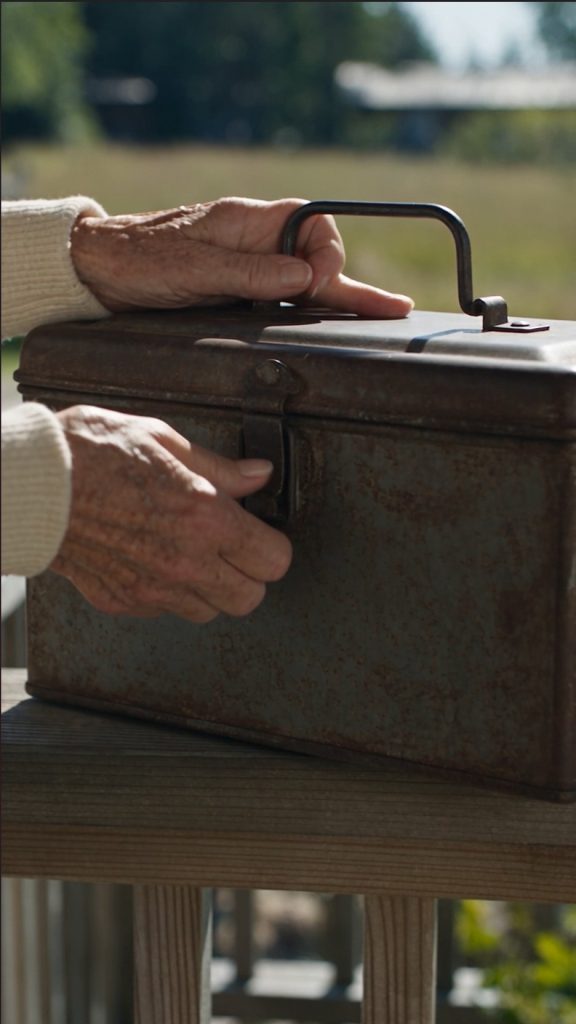
In one hand I carried an overnight bag. In the other, Frank’s battered tackle box.
Eric had called three days earlier and said, “Mom, bring Dad’s fishing things. Mason wants you to teach him Grandpa’s knot.”
That was why I came. I had actually believed the weekend might bring us closer.
“Move, Eric.”
He didn’t.
“Mom, listen.”
“I’m listening.”
Jessica stepped forward with the careful smile she used when she wanted to sound reasonable in front of other people. “We had to adjust the sleeping arrangements. My parents need the upstairs bedroom, my sister’s family has the guest room, and the younger ones are using the sofa. There simply isn’t space.”
“There seems to be space for everyone except me.”
“They arrived when we asked them to.”
That hurt more than the motel.
“You asked them?”
Silence.
“And you didn’t ask me?”
Eric rubbed the back of his neck. “We sent everything in the family chat.”
“The one Jessica removed me from?”
“We made a smaller planning thread,” Jessica said. “It was easier.”
I stared at my son.
After Frank died, Eric had begged me not to sell this place. “Dad would hate that,” he had said. “This is where Mason should learn to fish.”
So I kept paying the taxes. I replaced the roof. I repaired the dock after the spring storm. Every Memorial Day, I stocked the refrigerator before Eric arrived because he still liked the same mustard his father used to buy.
I never called those things sacrifices.
They were what family did.
Now my son was blocking me from the front door because his wife’s relatives had arrived first.
“Who is sleeping in my room?”
“My parents,” Jessica said.
“The guest room?”
“My sister’s family.”
“The sofa?”
“Tyler and his girlfriend.”
I looked inside. “Who is Tyler?”
“My brother’s stepson.”
Several conversations behind the screen had stopped.
Eric lowered his voice. “Mom, it’s one weekend.”
“One weekend where?”
He frowned. “Don’t do this.”
“At the house your father and I bought when you were nine?”
Jessica crossed her arms. “Linda, owning the property doesn’t mean every decision has to revolve around you.”
The porch went still.
Then I noticed something missing.
Frank’s recliner.
The brown leather chair had sat beside the stone fireplace for nineteen years. Frank had watched ball games from it, fallen asleep in it, and held Mason there the first summer our grandson was old enough to visit.
“Where is Frank’s chair?”
Eric’s face changed.
Jessica answered. “We moved it to the shed.”
I felt the tackle box grow heavier.
“You put his chair in the shed?”
“We needed that corner for the drink station.”
Through the doorway, I saw a folding table covered with bottles where my husband used to sit every evening.
My voice shook. “Eric.”
“I know, Mom.”
“Do you?”
Jessica exhaled. “It is a chair.”
Eric flinched.
So did someone inside.
“That chair belonged to your father.”
“No one is throwing it away,” Jessica said. “We’re trying to make the cabin comfortable for the family.”
“For the family,” I repeated.
“This weekend isn’t about you.”
Then the screen door opened.
My grandson Mason stepped onto the porch barefoot. His eyes moved from my suitcase to the tackle box.
“Grandma?”
Jessica turned sharply. “Mason, go inside.”
He ignored her.
“You came.”
“Of course I came.”
His face crumpled. “I thought maybe you changed your mind.”
“About what?”
“Staying here.”
I slowly looked at Jessica.
She spoke too quickly. “I told him you might prefer the motel because of your knees.”
Mason shook his head. “No, you didn’t.”
“Mason.”
“You said Grandma didn’t want to be here.”
Eric closed his eyes.
Jessica’s face flushed. “Mason, enough.”
But he kept going.
“You said she was making Dad take care of this place until it became ours anyway.”
Every sound inside the cabin stopped.
I looked at Eric.
He had gone pale.
Then Diane, Jessica’s mother, appeared behind the screen holding one of my wineglasses.
“Jessica,” she said quietly, “you told us Linda had already given you the cabin.”
There it was.
Not a misunderstanding. Not concern for my knees.
Jessica had not merely found me a motel. She had prepared everyone else to believe I had already stepped aside.
A story had been told about me before I ever arrived.
I looked at the spare key in Jessica’s hand, then at my son.
“Eric, did you tell these people this house belongs to you?”
He opened his mouth.
Nothing came out.
Jessica stepped between us. “This is getting completely out of proportion.”
“No,” I said. “I think I finally understand the proportion.”
I bent down and opened Frank’s tackle box.
Mason watched me lift the top tray of hooks and sinkers.
Underneath was the brown envelope I had brought that morning.
Eric saw it.
Whatever excuse he had been preparing disappeared from his face.
Jessica stared at the envelope. “What is that?”
Three days earlier, I had planned to give Eric what was inside.
Standing on that porch, I realized how close I had come to making the biggest mistake of my life.
I pulled the envelope free.
“Before anyone opens another bottle in my kitchen,” I said, “Eric is going to explain why his wife believes I already gave him my house.”
For the first time that afternoon, my son looked afraid to answer.
Eric’s eyes stayed on the envelope.
The screen door creaked behind him, but nobody moved. Only the soft slap of lake water against the pilings broke the silence.
“I didn’t tell them you gave me the cabin,” he said at last.
Jessica turned sharply. “Eric.”
He looked at her, then at me. “I told her you were getting your papers in order. I guessed you might be putting the place in my name.”
My fingers tightened around the envelope. “You guessed.”
“And I told Jessica what I thought.”
Diane stepped through the screen door, still holding my wineglass. “That is not what she told us.”
Jessica’s face changed.
Diane set the glass on the rail. “You said Linda had already signed the cabin over. You told your father and me this was your first holiday here as the owners.”
Eric stared at his wife.
Then Diane added, “You also said that was why you needed money for a new refrigerator.”
“What money?” Eric asked.
Jessica’s mouth opened, then closed.
The silence answered for her.
I crouched beside Frank’s tackle box and opened the brown envelope. The papers inside made a dry, crisp sound.
“These are transfer documents my attorney prepared,” I said. “I was going to review them with you this weekend. If everything still felt right, I was going to sign them next week.”
Eric’s face drained.
“Mom…”
“I was going to give you the cabin.”
Jessica inhaled sharply.
I looked down at the pages. “I thought I was passing you a home. I didn’t know you had already started treating it like an inheritance you were waiting for me to leave.”
“I didn’t,” Eric whispered.
“You stood in front of my door.”
He flinched.
“You let your father’s chair be put in a shed.”
His eyes dropped.
“And you let Mason believe I didn’t want to stay with him.”
Eric sat heavily on the porch step and covered his mouth.
Jessica folded her arms. “So now you’re going to punish him because one weekend got messy?”
I slid the papers back into the envelope.
“No. I’m going to stop confusing love with surrender.”
“You can’t take this away over a misunderstanding.”
Diane’s voice was quiet. “You cannot take away something she never gave you.”
Jessica turned on her mother. “Whose side are you on?”
Diane stared at her for a long moment.
“I’m on the side of the woman whose house I walked into because my daughter lied to me.”
Something in Jessica’s expression cracked.
I held out my hand.
“Key.”
She didn’t move.
Eric stood. “Jessica. Give my mother her key.”
For several seconds, Mason’s breathing was the only sound I could hear.
Then Jessica dropped the key into my palm.
It weighed almost nothing.
Still, the moment it touched my skin, her control over that porch was gone.
I looked through the doorway. “Everyone needs to leave.”
Inside, chairs scraped. A cabinet shut. Someone turned off the music.
Tyler appeared at the screen door, suddenly looking embarrassed.
“Mrs. Linda, I’m sorry about the shoes.”
“Thank you, Tyler.”
He glanced toward the shed. “I can help bring the chair back.”
Diane’s husband joined him.
Minutes later, Frank’s recliner came through the doorway between them, awkward and heavy. One leg caught on the threshold exactly the way it had when Frank and I first brought it into the cabin.
I pressed my fingers to my lips.
They set it beside the fireplace.
The drink table disappeared.
The room looked like mine again.
One by one, the guests carried their bags outside. Nobody argued. Nobody looked at Jessica for permission.
That was the moment her power broke.
Before Diane left, she stopped in front of me with empty hands.
“I’m sorry,” she said. “I should have asked you.”
“Yes,” I said. “You should have.”
Her eyes filled, but she nodded and accepted the answer.
Jessica waited beside the SUV.
Mason stood close to me.
“I want to fish with Grandma,” he said.
“Mason, get in,” Jessica snapped.
Eric looked at her.
“No.”
She froze.
“He came because he wanted time with her,” Eric said. “He gets that time.”
“You’re choosing her over me?”
“No. I’m refusing to make Mason choose between people he loves because we couldn’t tell the truth.”
Jessica stared at him, then climbed into the SUV and drove away alone.
Eric watched until the taillights disappeared through the trees.
He did not ask me to forgive him.
Instead, he looked toward the shed.
“Tell me what needs fixing first.”
“The lock.”
He nodded.
By sunset, it was replaced.
The weeks afterward were not easy.
Eric called. Sometimes I answered. Sometimes I didn’t.
He came twice in June to repair the dock with lumber he bought himself. He never used a spare key. He knocked every time.
By September, he had moved into a small apartment.
He told me he and Jessica were separating.
“I kept calling it keeping the peace,” he said one morning. “But mostly I was making other people pay for my silence.”
I touched his wrist.
It was not complete forgiveness.
But it was a beginning.
By spring, the divorce was final. Jessica never gave me the apology I once thought I needed, but she stopped telling Mason stories about me, and she never again entered the cabin without an invitation.
One Saturday in May, Mason carried Frank’s tackle box down to the dock.
“Grandma,” he said, “you still owe me Grandpa’s knot.”
Mist floated above the water. I opened the box between us.
Mason lifted the tray of hooks and sinkers, then frowned.
“There’s something under here.”
Beneath the thin felt lining was a folded piece of paper.
I knew Frank’s handwriting immediately.
My hands began to tremble.
The note was short.
Linda—
If Mason ever asks about my fishing knot, tell him the truth. You taught it to me on our third date because I was too proud to admit I didn’t know how. I only called it Grandpa’s knot because it made me sound impressive.
Teach him yourself.
And make sure he knows the best things in this cabin came from you.
—Frank
For several seconds, the lake blurred.
Mason leaned against my shoulder.
“Grandpa stole your knot?”
A laugh slipped out through my tears.
“Apparently he did.”
Eric had come down the path behind us. I handed him the note.
He read it twice.
Then he sat beside me on the dock.
“I spent a long time acting like Dad was the reason this place mattered,” he said.
I looked at him.
“He wasn’t the only reason.”
That summer, I met with my attorney again.
I did not give Eric the cabin.
I placed it in a family trust that kept it mine for the rest of my life and protected it for Mason after I was gone. Eric could care for it, but he could never treat it as something already owed to him.
When I told him, he simply nodded.
“Good.”
That word healed something in me.
The next Memorial Day, Eric arrived carrying groceries. Mason stood behind him with two fishing poles.
They knocked.
I opened the door.
Frank’s recliner sat beside the fireplace, worn and stubborn and exactly where it belonged.
Eric held up a jar of mustard.
“The right kind.”
I smiled and stepped aside.
That evening, the three of us ate on the porch while the lake turned gold beyond the trees. Nobody claimed a room that wasn’t offered. Nobody held my key but me.
Later, Mason sat at my feet with Frank’s tackle box open between us.
“Again,” he said.
I guided the line through his fingers.
“Loop it here. Pull slowly. Don’t force it.”
He worked carefully until the knot tightened.
Then he held it up like treasure.
Eric looked at me from Frank’s chair.
For a moment, none of us spoke.
The light was warm. The door was open. Frank’s old tackle box rested between my feet, and my grandson’s newly tied knot lay in my palm.
For the first time in a long time, the cabin felt exactly like what it had always been meant to be.
Home.