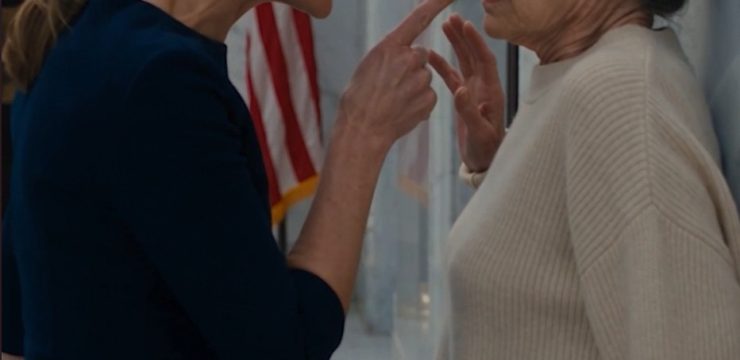
By the time the third elderly woman tested positive for pregnancy, fear had settled over the prison like a second set of bars. The doors were locked, the cameras never stopped recording, and the women lived alone—yet somehow, something impossible was happening inside those isolation cells.
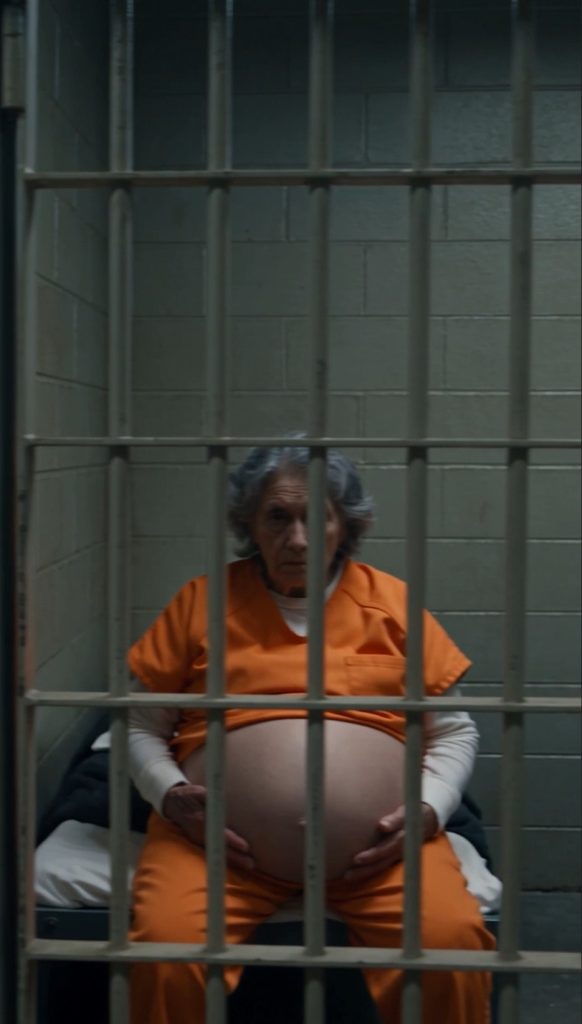
And someone in the building seemed to know why.
The women’s prison stood miles outside the city, surrounded by empty land and long stretches of road. It housed inmates considered especially dangerous, which meant security was relentless.
Visitors were rarely allowed. Most prisoners lived in individual cells. Cameras watched every corridor twenty-four hours a day, guards occupied every floor, and electronic keys controlled every locked door.
Every movement was documented.
Almost every guard was a woman.
Almost.
The only male officer was Mark, who usually worked nights.
Recently, one female officer had noticed something unsettling about him. He sometimes appeared in corridors where his duties gave him no reason to be, and whenever anyone questioned him, his expression changed.
His answers came too quickly.
Nobody thought much of it.
Not until Martha collapsed.
At seventy-one, Martha had spent more than eight years behind those walls. For the previous five months, she had been kept alone in an isolation cell.
That morning, during a routine check, she gripped the bars and whispered, “I don’t feel well.”
Seconds later, her body gave way.
The prison doctor was called immediately. Martha regained consciousness quickly, but tests were ordered anyway.
A few hours later, the head of the medical department sat frozen at her desk.
She read the results once.
Then again.
Martha was pregnant.
Approximately twelve weeks.
The staff insisted there had to be an error. They ran through every explanation they could think of, but none of them made sense.
“That’s impossible,” one guard said quietly. “Nobody has been inside her cell.”
An internal investigation began.
Security footage was reviewed frame by frame. Electronic lock records were checked. Shift schedules, visitor records, staff logs—everything from the previous months was examined.
Nothing.
The footage showed Martha alone almost constantly.
The administration kept the discovery quiet, convinced some technical or medical mistake would eventually explain it.
Then, one week later, Evelyn became sick.
She was sixty-eight.
She complained of constant nausea, and when the test results returned, the atmosphere inside the prison changed completely.
Evelyn was pregnant too.
She also lived alone.
This time, nobody used the word coincidence.
Investigators went deeper. They checked the night recordings again. The cameras appeared to function normally. The cell doors remained locked.
No unauthorized person appeared anywhere.
One afternoon, Sarah, one of the officers, approached another guard.
“Have you noticed anything strange lately?”
The woman hesitated before answering.
“These women keep getting pregnant… and Mark has been acting strangely.”
A movement at the end of the corridor made them both look up.
Mark had stopped walking.
His eyes moved between them.
“What are you two talking about?”
“Nothing,” Sarah said.
For several seconds, he simply stared.
Then he turned and walked away.
Sarah watched him disappear around the corner, unable to shake the feeling that something had just passed silently between them.
A month later, a third elderly inmate was found to be pregnant.
Rumors spread through the prison.
The inmates wanted answers. Some guards became frightened of working nights. Even senior staff struggled to explain how three women living under constant surveillance could become pregnant inside locked individual cells.
During one tense meeting, Sarah remained silent until everyone else had finished arguing.
Then she spoke.
“What if we haven’t actually been watching the real recordings?”
The room went still.
“What do you mean?”
Sarah leaned forward.
“Maybe someone is replacing the surveillance footage.”
She paused.
“Install another camera. Small. Hidden. And don’t connect it to the main security system.”
Across the room, Mark suddenly lifted his head.
For the first time, Sarah saw unmistakable fear in his face.
The next day, security secretly placed a tiny camera at the end of the isolation corridor. It covered several cells and operated completely independently.
Only three people knew it existed.
Mark wasn’t one of them.
The first night showed nothing.
The second was silent.
So was the third.
Then came the fourth night.
When the staff finally opened the hidden recording, nobody spoke.
Because the camera had captured something the official surveillance system had never shown them.
And what appeared on that screen was about to change everything inside that prison. 👇
On the screen, at 2:13 in the morning, Mark stepped into the isolation corridor.
Sarah stopped breathing.
He was not wearing his usual uniform jacket. Over his black shirt was a maintenance vest, and in one gloved hand he carried a small case. He walked past two cells, stopped beneath the main surveillance camera, and looked directly into its lens.
Then he smiled.
Someone in the room whispered, “Oh my God.”
Mark reached behind a metal utility panel Sarah had passed hundreds of times without noticing. His fingers disappeared inside it for less than ten seconds.
On the monitor beside the hidden footage, the official recording from that same time showed an empty hallway.
Perfectly empty.
Mark continued walking.
He stopped outside one of the isolation cells.
A light flashed green on the electronic lock.
The door opened.
Nobody in the security room moved.
Sarah felt her hand close around the edge of the desk so tightly that her knuckles hurt. One of the officers beside her covered her mouth.
Mark disappeared inside.
Seven minutes later, he came out carrying the small case.
The cell door locked behind him.
He returned to the utility panel, touched something inside, and walked away.
Seconds later, the official surveillance system continued displaying the same quiet corridor as though nothing had happened.
Sarah turned toward the supervisor.
“Call the police.”
The supervisor didn’t answer.
His face had gone pale.
“Call them,” Sarah repeated.
“We need to handle this internally first.”
Sarah stared at him.
Three women.
Three impossible pregnancies.
Months of questions.
And still, the first instinct was silence.
“No.”
The word came out quietly.
The supervisor looked at her. “Sarah.”
“No.”
She pulled the memory card from the hidden system and closed her fist around it.
“You kept the first case quiet. Then there was a second. Then a third. I’m not giving anyone another chance to make this disappear.”
A chair scraped behind her.
Everyone turned.
Mark was standing in the doorway.
For one terrible second, no one spoke.
His gaze dropped immediately to Sarah’s closed hand.
Something in his face changed.
Not surprise.
Recognition.
“You installed another camera.”
Sarah stepped backward.
Mark looked around the room, measuring the distance between himself and the door, the officers, the desk.
Then he laughed once under his breath.
“You have no idea what you’re looking at.”
“Stay where you are,” one guard ordered.
Mark’s jaw tightened.
“I said stay where you are.”
Instead, he moved toward Sarah.
Three officers intercepted him.
The struggle lasted only seconds, but the sound of it seemed enormous—the crash of a chair, shoes sliding across the floor, someone shouting for restraints.
When Mark was finally pushed against the wall, Sarah saw something fall from his pocket.
A plastic card.
It landed faceup.
A master access credential.
The supervisor stared at it.
“That key was deactivated six months ago.”
Mark went still.
Sarah looked at him.
And suddenly she understood.
“It wasn’t deactivated, was it?”
He said nothing.
Investigators arrived before sunrise.
By then, the prison no longer belonged to rumors.
Every server was seized. Every electronic access record was copied. Mark’s locker was searched, then his car, then his apartment.
What they found turned suspicion into evidence.
There were copied access credentials.
Backup drives containing altered security recordings.
A list of isolation-cell numbers.
Dates.
Night shifts.
And inside the small case seen in the hidden footage were sedatives he had taken from secured medical supplies.
The oldest records went back far longer than anyone expected.
Sarah sat across from Martha that afternoon.
For the first time since the investigation began, there was no glass between them.
Martha’s hands rested in her lap.
They were trembling.
Sarah struggled to speak.
“We know how he was getting in.”
Martha did not look surprised.
That hurt more than Sarah expected.
“You knew?”
The older woman stared at the floor.
“I knew somebody came in.”
Her voice was barely audible.
Sarah felt something inside her collapse.
“Why didn’t you tell us?”
Martha slowly raised her eyes.
“I’m seventy-one years old. I’m a prisoner. He wore a uniform.”
She swallowed.
“Who was going to believe me?”
Sarah had no answer.
Across the room, fluorescent lights hummed.
Martha rubbed one thumb over the other.
“He told me the cameras proved he was never there.”
The sentence hung between them.
“He said if I accused him, everyone would watch the recordings and think I was losing my mind.”
Sarah looked away because her eyes had filled too quickly.
Martha noticed.
“Don’t do that.”
Sarah turned back.
“Do what?”
“Look ashamed for something he did.”
For several seconds, neither woman spoke.
Then Sarah reached across the table.
She did not grab Martha’s hand.
She simply placed her own beside it.
Martha stared at the small distance between their fingers.
Then slowly, she closed it.
Evelyn spoke next.
Then the third woman.
Their accounts were painfully similar.
Mark had chosen nights when staffing was thin. He had learned how to loop short sections of footage through an old maintenance connection that had never been removed when the prison upgraded its cameras.
He had selected women in isolation because there would be no witnesses.
Older women because, as he later admitted during questioning, he believed confusion, shame, and disbelief would protect him.
That admission destroyed whatever remained of his defense.
But the hardest truth came that evening.
Investigators discovered Mark had known about the first internal inquiry almost immediately.
He had sat in meetings while officers discussed Martha.
He had listened as people called her pregnancy impossible.
He had watched them search footage he knew was false.
And he had continued.
Sarah was present when detectives escorted him through the prison for the last time.
His wrists were cuffed.
The hallway was lined with officers.
No one spoke.
Mark glanced toward Sarah as he passed.
“You think this fixes anything?”
Sarah did not move.
“No.”
His mouth twisted slightly.
She continued.
“But you don’t get to hide anymore.”
The expression disappeared from his face.
For the first time since she had known him, Mark looked small.
Not harmless.
Not forgiven.
Just powerless.
The elevator doors closed between them.
The silence afterward was so complete that Sarah could hear someone crying quietly at the far end of the corridor.
The investigation expanded beyond Mark.
The prison’s handling of the first pregnancy was examined. Supervisors who had dismissed warning signs were removed from duty. The unused maintenance access point was permanently sealed, and an independent security team replaced the compromised surveillance system.
Every isolation cell received emergency communication access independent of the guards.
No officer was ever again permitted to enter alone.
The women were transferred out of isolation and given independent medical care, legal representation, and trauma counseling outside the prison chain of command.
For the first time, their choices about their own bodies belonged entirely to them.
Months passed before Sarah saw Martha smile.
It happened during a visit to the new medical wing.
Evelyn was sitting beside her near a window, arguing about a crossword puzzle.
“You can’t put that,” Martha said.
“It fits.”
“It’s the wrong word.”
“It fits.”
“That doesn’t make it right.”
Sarah stopped in the doorway.
Evelyn looked up.
“Tell her.”
“I’m not getting involved.”
Martha laughed.
The sound was small and rusty, as though it had not been used in a long time.
Sarah felt her throat tighten.
On the windowsill were three tiny plants in paper cups.
One belonged to each woman.
None looked particularly healthy.
They were alive anyway.
Mark’s trial ended almost a year after the hidden camera recorded him entering that cell.
The footage was played in court.
So were the falsified recordings.
The access logs, sedatives, copied credentials, and testimony left nowhere for him to retreat.
When the sentence was read, Martha did not look at him.
Neither did Evelyn.
Sarah did.
Mark stared straight ahead while the guards approached him from either side.
His authority was gone.
His uniform was gone.
The keys were gone.
And when he was led through the courtroom door, no camera needed to be altered to show the truth.
He was never coming back.
Outside the courthouse, reporters crowded behind barriers, but the three women left through a private exit.
Sarah accompanied them.
Martha stopped before getting into the vehicle.
The afternoon sun made her squint.
She stood there longer than necessary, breathing cold air as though she had forgotten what it felt like when nobody was controlling how long she could remain somewhere.
Then she turned to Sarah.
“There’s something I never told you.”
Sarah waited.
Martha opened her bag and removed a folded piece of paper.
It was old.
The creases had nearly worn through.
Sarah unfolded it.
There were dates written in Martha’s careful handwriting.
Beside several dates were short notes.
Mark outside my corridor.
Camera froze.
Door light changed.
Footsteps after midnight.
Sarah looked up.
“You were keeping records.”
Martha nodded.
“Before I ever collapsed.”
Sarah stared at her.
“Why?”
Martha’s eyes moved toward Evelyn and the third woman waiting beside the vehicle.
“Because I thought maybe someday somebody would believe one of us.”
Sarah looked back at the paper.
At the bottom was one final sentence.
If something happens to me, look at the nights when he works.
Sarah’s eyes burned.
“Martha…”
The older woman shook her head gently.
“I didn’t faint because I was weak that morning.”
Sarah froze.
Martha gave the faintest smile.
“I had been feeling sick for days. I knew something was wrong. And I knew if I simply asked for help, someone might send me back to my cell.”
Her fingers tightened around the strap of her bag.
“So when I saw the medical officer coming down the corridor, I let myself fall.”
Sarah stared at her.
The collapse that had seemed like the beginning of Martha’s helplessness had been something else entirely.
It had been the first move she could make.
A seventy-one-year-old woman, locked behind a door, surrounded by cameras that lied, had found one remaining way to force the truth into daylight.
“You started the whole investigation,” Sarah whispered.
Martha shook her head.
“No.”
She glanced at the women beside her.
“We did.”
Evelyn reached through the open vehicle door.
“Are you getting in or planning to give a speech?”
Martha rolled her eyes.
Sarah laughed before she could stop herself.
So did Martha.
For one brief moment, outside a courthouse none of them ever wanted to see again, the sound belonged only to them.
Years later, Sarah kept a copy of Martha’s handwritten page in the top drawer of her desk.
Not as evidence.
The original belonged in an archive with the case.
Her copy was there for another reason.
Whenever a frightened woman sat across from her and struggled to explain something that seemed impossible, Sarah remembered five words written by someone nobody expected to fight back:
Look at the nights he works.
She learned to listen before deciding what could or could not be true.
Evelyn eventually finished the crossword she had argued about for weeks.
She had been wrong about the word.
Martha never let her forget it.
The three women remained close, though none of them spoke about the prison every time they met. Sometimes they discussed doctors. Sometimes lawyers. Sometimes sleepless nights.
And sometimes they talked about nothing important at all.
Those conversations mattered most.
One spring morning, Sarah visited them in a small courtyard attached to the medical residence where Martha and Evelyn were receiving long-term care.
The three paper-cup plants had survived.
Someone had moved them into proper pots.
Martha’s had grown tallest.
She sat beneath the sunlight with a blanket over her knees while Evelyn poured tea into mismatched cups.
Sarah sat beside them.
Nobody mentioned Mark.
Nobody mentioned cameras.
For once, there was nothing left to investigate.
A breeze moved through the leaves above them.
Martha reached for Sarah’s hand and held it without saying anything.
Sarah squeezed back.
Around them, doors opened and closed without fear, footsteps passed without making anyone flinch, and sunlight stretched warmly across the floor.
For the first time in years, none of them needed to look over their shoulder.
They simply sat together until the tea went cold, three small plants bending toward the light beside them, and the locked doors of the past finally somewhere far behind.