The instant his hand lifted, the entire table seemed to lose its sound. The candle flame bent sideways, my mother went white, and the woman across from me became completely still—as if she had been waiting for this exact moment.
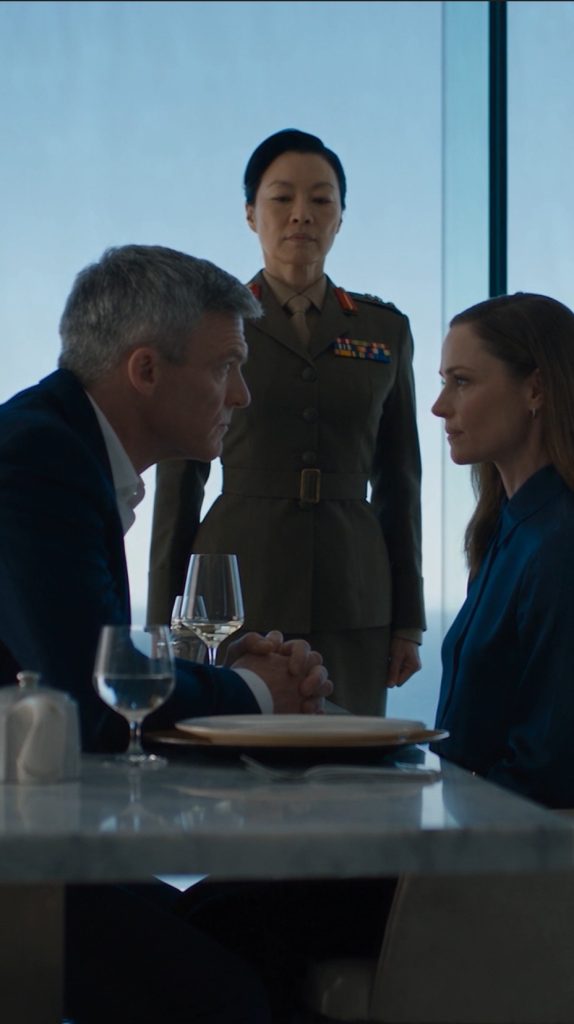
My father had chosen the Ocean House because he liked places that made him look successful. Floor-to-ceiling windows faced the Atlantic, brass lamps glowed over white linen, and every wineglass caught the light like something expensive enough to prove a point.
The hostess smiled carefully. “Mercer party.”
My father raised his chin. “That’s us.”
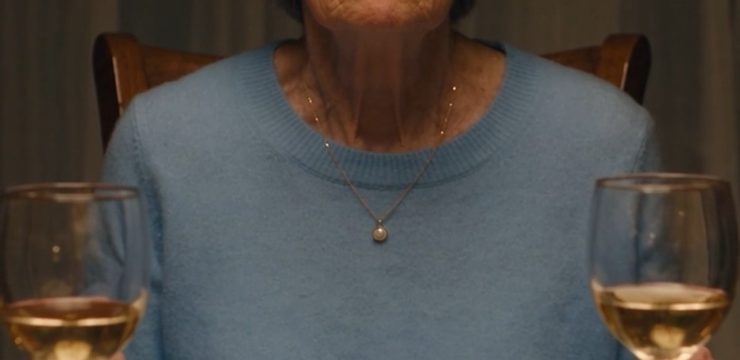
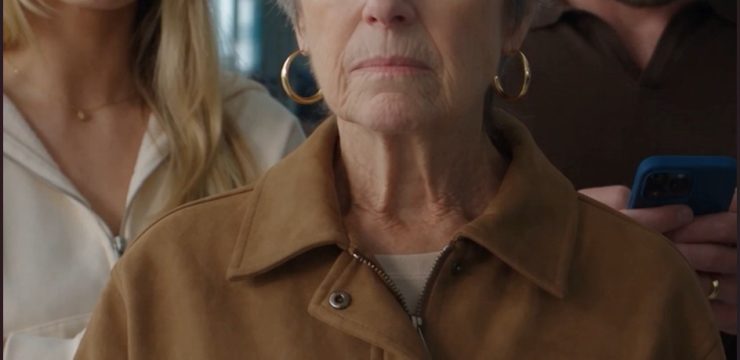
He walked ahead without looking back. My mother followed, holding her cream cardigan closed at the throat though the room was warm. Nathan came behind her, shoulders rounded, biting the inside of his cheek the way he had since childhood.
I stayed at the rear beside Quinn Park.
As far as my father knew, Quinn was only “a friend from work.” That was all I had told him. Not because I was ashamed of her or afraid of what he might think.
I had learned that some truths carried more weight when they arrived at the right moment.
We were seated beside the windows, where dark waves struck the seawall in heavy bursts. Garlic butter, lemon, candle wax, and money seemed to hang in the air.
Before anyone else touched a chair, my father sat at the head of the table.
He tapped the seat to his right. “Lila.”
I sat without answering. I was forty-two years old, and he still told me exactly where to sit.
Quinn took the chair across from me. Gray jacket. Hair pinned low. Back straight. Calm in the effortless way that made other people seem restless.
My father studied her once and dismissed her.
“So,” he said, snapping open his napkin, “what was it you do again?”
“Defense administration,” Quinn replied.
Technically true.
He grunted. “So paperwork.”
Quinn lifted her water glass. “Sometimes paperwork matters.”
I looked down before he could see my mouth twitch.
The next half hour unfolded exactly as expected. My father talked about discipline, leadership, and how the country had become too soft. My mother laughed half a second after each joke, checking his face first as if she needed permission.
Nathan nodded at the wrong moments, then tried to correct himself by nodding harder.
I counted exits.
Two doors near the kitchen. One main entrance. A narrow hallway by the restrooms. A fire alarm behind a potted palm.
I noticed a waiter carrying oysters with shaking hands and a little girl nearby swinging her legs beneath her chair.
Small details helped keep me steady.
Then the bread arrived late.
My mother leaned toward the empty chair beside her. “Oh no.”
“What?”
“The rolls,” she whispered. “I left them warming at home. I forgot to turn the oven off.”
Her face had already changed. I knew that look. She was imagining consequences before anything had happened.
At the head of the table, my father lowered his head to say grace. Fingers folded. Eyes closed. That solemn expression he wore whenever he wanted humility to look like authority.
I leaned toward my mother.
“Call Mrs. Lane. Ask her to switch it off.”
That was all. No accusation. No challenge. Just one quiet sentence meant to prevent disaster.
My father opened his eyes.
The room seemed to darken around him.
“What did you say?”
“Mom left something in the oven. I told her to call Mrs. Lane.”
His jaw tightened.
“We are saying grace.”
“I know.”
For one second, nobody moved.
Then his hand came up so fast the candle flame bent sideways.
Across from me, Quinn set down her glass.
And that was the moment everything in that room began to change. 👇
His palm struck my left cheek with a flat crack that seemed too loud for such an elegant room.
My mother gasped. Nathan’s chair scraped backward. Somewhere behind us, a fork hit a plate and spun once before going still.
I tasted blood where my teeth had cut the inside of my mouth. I did not raise my hands. I did not move away.
That seemed to enrage him more.
“You do not interrupt me,” he said, and the second blow came harder.
My head snapped toward the window. For an instant I saw only black water and my own reflection in the glass—a forty-two-year-old woman sitting exactly where her father had ordered her to sit.
Then he grabbed my shoulder.
Quinn rose.
She did not shout. Somehow, that made her voice carry farther.
“Take your hand off her.”
My father froze and looked across the table as if a chair had spoken.
“This is a family matter.”
“No,” Quinn said. “It became a criminal matter the second you hit her.”
He gave a contemptuous laugh. “And who exactly are you?”
Quinn placed her identification on the white tablecloth between the candles.
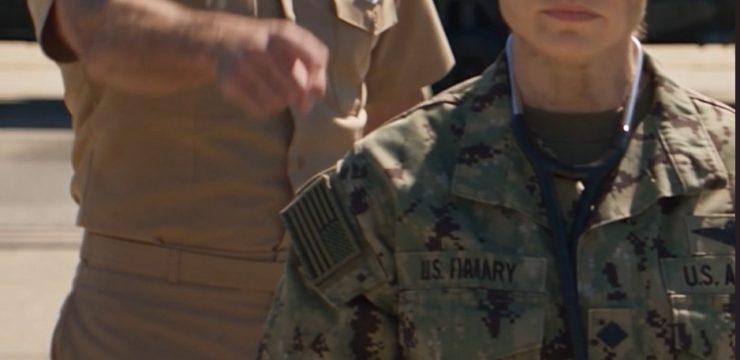
“Colonel Quinn Park.”
His face changed, but only slightly.
Then Quinn looked at me.
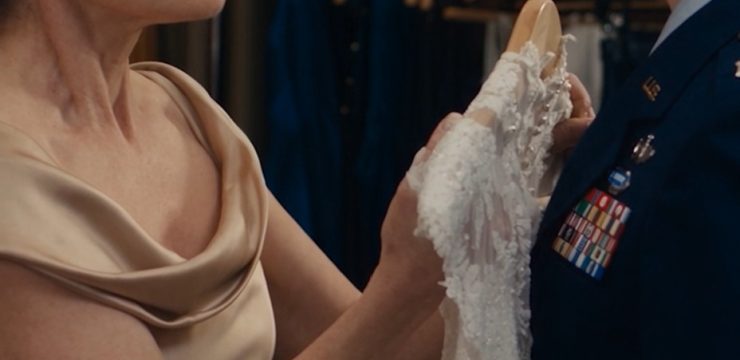
“And the woman you just assaulted is General Lila Mercer.”
The silence was so complete I could hear the surf striking the seawall beyond the glass.
My father stared at me.
Not with remorse.
With disbelief.
“You?”
One word. Every promotion ceremony he had skipped, every achievement he had dismissed, seemed to gather between us.
I wiped blood from my lip.
“Yes.”
Two people stood from a table near the bar. Local detectives. Quinn had asked them to stay nearby after Nathan called her three nights earlier.
My father saw them approaching and finally understood.
His knees buckled.
He caught the table, sending water across the linen. “Wait.”
My mother stood so quickly her cardigan slipped from one shoulder.
“Please,” she whispered. “Please, don’t—”
He turned on her instantly.
“Tell them. Tell them this is nothing.”
She stopped.
Her fingers trembled at her throat.
“Mercy,” she said, but she was looking at me now. “Lila… please.”
For one terrible second, I almost gave it to him.
Not because he deserved it.
Because she had spent years surviving by making his anger smaller afterward.
Nathan stepped beside her.
“Mom,” he said quietly. “Not this time.”
My father’s eyes snapped toward him.
Nathan flinched.
Then he held my father’s stare.
“I gave them the recordings.”
The color drained from my father’s face.
For eight months Nathan had been saving voicemails, photographing bruises, copying bank statements, and writing down dates. He had sent everything to Quinn because he did not know who else our family could trust without the news reaching my father first.
“You little coward,” my father said.
Nathan’s lips shook.
“No. I was scared. There’s a difference.”
The detectives moved in.
My father began talking fast—about misunderstandings, discipline, disrespect, his reputation. Each sentence sounded smaller than the last.
When one detective took his wrist, he jerked away.
Quinn’s expression did not change.
“Don’t make this worse.”
He looked at me as if I could still restore the world in which everyone bent around him.
“Lila.”
I had waited most of my life to hear my name from him without it sounding like an order.
It still did.
So I said nothing.
The handcuffs closed.
My mother covered her mouth. Nathan reached for her, but she stepped away and gripped the back of her chair until her knuckles went white.
My father was led through the restaurant past the brass lamps and polished glasses, past strangers who no longer saw a victorious man at the head of a table.
The door closed behind him.
Then my mother’s phone rang.
Mrs. Lane.
She stared at the screen before answering.
“Hello?”
A pause.
Her face folded.
“No,” she whispered. “I’m all right.”
Another pause.
I leaned toward her. “The oven?”
She looked at me.
“The oven was already off.”
Nathan lowered his head.
“What do you mean?”
She reached beneath her cardigan and pulled out a small brass key attached to blue thread.
“I asked Mrs. Lane to go over before dinner,” she said. “Not for the rolls.”
Her voice almost disappeared.
“For my suitcase.”
For six weeks, my mother had been moving pieces of her life next door one grocery bag at a time—documents, medication, photographs, a few clothes, the cash she could save without being noticed. Nathan had helped her. Mrs. Lane had kept the suitcase hidden.
Tonight was supposed to be the night she left.
“I thought if I could get through one last dinner without making him suspicious, I could be gone before morning.”
Her mouth trembled.
“Then I forgot the rolls.”
All evening I had mistaken her fear for surrender.
She had been terrified because she was escaping.
Quinn sat beside her.
“You still get to leave,” she said.
My mother closed her hand around the key.
This time, when she cried, she made no effort to hide it.
The statement at the station took hours. Fluorescent lights flattened everyone’s faces while Nathan handed over his recordings and I held an ice pack against my swelling cheek.
My mother nearly stopped twice.
Both times she looked at the key on the table.
Then she kept talking.
She told them about doors punched through, money withheld, threats disguised as jokes, and years spent learning how quietly a person could live inside her own house.
Near dawn, she signed her statement.
“I want the protective order,” she whispered.
I reached across the table.
She took my hand.
The months that followed were slower. Hearings. Lawyers. The restaurant footage. Nathan’s recordings. My mother’s records. My testimony.
My father fought until the evidence left him nowhere to hide.
He accepted a plea that left him with an assault conviction and an order forbidding him from contacting any of us. The house was sold during the separation, and for the first time in years, my mother had money he could not control.
When the final order was entered, she sat on a courthouse bench holding a paper cup.
“Is that it?” she asked.
“Yes.”
She nodded once.
Then her shoulders dropped an inch.
It was the smallest movement I had ever seen carry so much weight.
Nathan found an apartment three streets from hers. He started sleeping through the night without leaving the television on.
My mother rented a small place with yellow kitchen cabinets she would once have called impractical. She bought curtains without asking anyone which color they should be.
On the first Sunday after I returned from duty, she invited Quinn, Nathan, and me to dinner.
There was no head of the table.
Four chairs. Four equal places.
A basket of warm rolls sat in the center.
My mother caught me looking and laughed, then stopped as if surprised by the sound coming out of her own body.
“There’s something else,” she said.
From a kitchen drawer, she removed a bundle of envelopes tied with the same blue thread that had held the brass key.
I recognized my handwriting.
Letters from deployments. Birthday cards. Notes mailed after promotions.
All the things my father had told me she ignored because she “didn’t understand what I’d become.”
“I answered every one,” my mother said.
Inside were her replies—dozens of them, stamped and addressed, but never sent. My father had intercepted my letters when he could and stopped hers from leaving when he could not.
For years, each of us had believed the other had chosen silence.
My mother pushed the bundle toward me.
“I never stopped being proud of you.”
I could not speak.
So I leaned across the table and put my arms around her.
She held on with both hands.
Nathan rested his forehead against my shoulder. Quinn turned toward the window, giving us the privacy of pretending she was not crying too.
The kitchen timer chimed.
Every person at the table went still for half a heartbeat.
Then my mother stood, wiped her face, and smiled.
“That,” she said, “is just the rolls.”
We laughed until we had to catch our breath.
Outside, evening settled softly against the windows. Inside, my mother carried warm bread to a table where nobody sat at the head, nobody waited for permission to speak, and nobody feared the sound of a door opening.
For the first time in our lives, home was not a place we survived.
It was the place we had finally come back to.