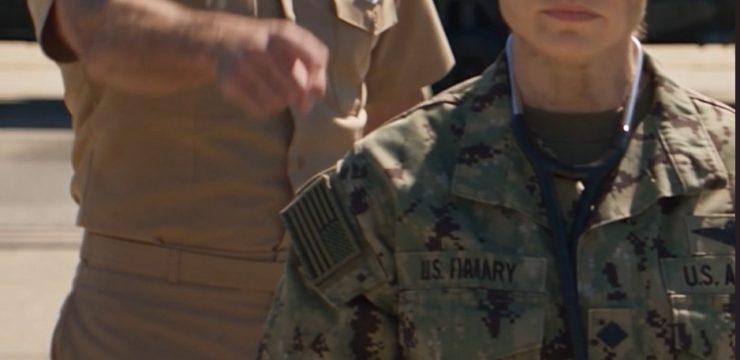
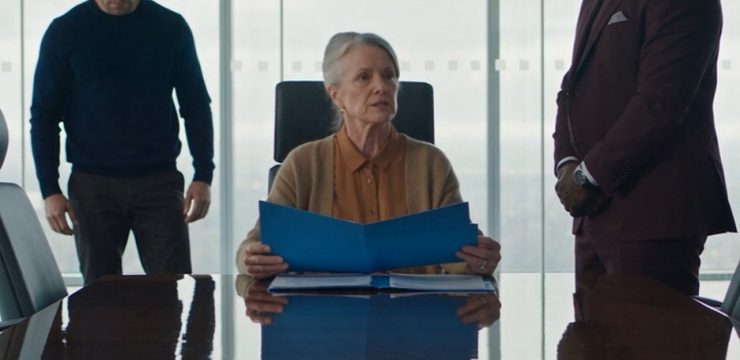
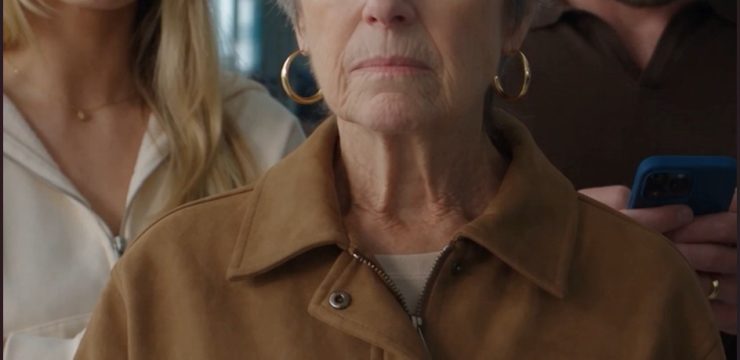
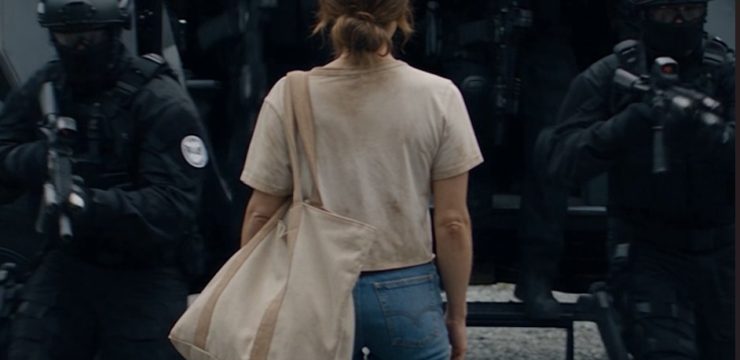
The chair was ripped from her hand before she could sit. Its metal legs shrieked across the cafeteria floor, and conversations stopped mid-sentence. Everyone nearby turned to watch an elderly woman being humiliated by a man who believed she had no right to be there.
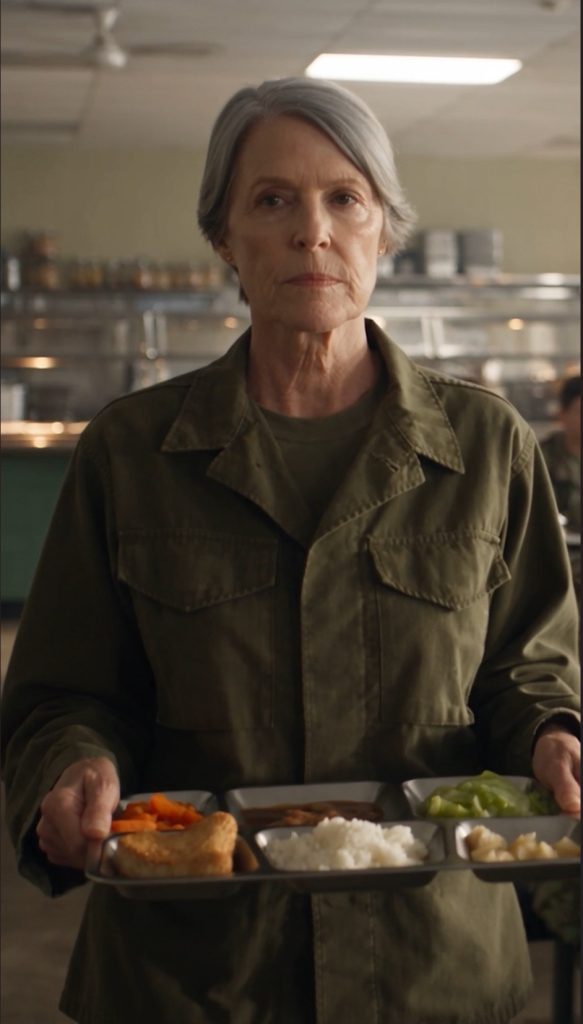
“Move away from this table before you embarrass yourself.”
Major Derek Mason stood before Margaret Hayes, holding the chair he had just taken from her. Her worn brown coat hung loosely from her shoulders, revealing nothing about her rank or authority.
Derek glanced at the officers surrounding him, a cruel smile spreading across his face.
“This section is for people who earned the right to sit here.”
Margaret steadied her lunch tray. “I only need somewhere to eat.”
A captain lowered his fork. Another officer looked away. Nobody challenged the major.
Derek leaned back, laughing. “There’s a table beside the trash return. That seems more appropriate for you.”
Several younger officers joined in. One laughed too loudly; another smiled simply because everyone else did.
Margaret studied their faces without speaking.
Then a chair scraped backward.
“You can take mine, ma’am.”
Lieutenant Emily Ross had risen halfway from her seat when Derek turned sharply.
“Lieutenant. Sit down.”
“Sir, there are plenty of empty seats.”
“I didn’t ask for your opinion.”
Emily hesitated, then slowly sat down. Derek gestured dismissively toward Margaret.
“Don’t turn my officers’ lunch into a retirement-home charity event.”
The laughter died.
For one brief second, Margaret’s fingers tightened around her tray. Emily noticed the movement before the older woman quietly regained her composure.
“Enjoy your lunch, Major.”
Derek smirked. “I always do.”
Margaret turned and walked away alone.
Behind her, conversations gradually resumed. Forks struck plates, boots crossed the polished floor, and coffee poured into paper cups as though nothing had happened.
She stopped beside the tray-return station, where a trash bin stood barely five feet from a small table. The sharp smell of disinfectant mingled with grilled chicken and coffee.
She sat down.
Across the cafeteria, Derek was still watching.
“Some people retire and still can’t stop pretending they matter,” he announced loudly.
This time, nobody laughed.
Margaret unfolded her napkin with deliberate care. Then she reached inside her coat and removed a plain black phone.
She typed a single short message.
Emily noticed. So did Derek.
“Probably complaining to somebody’s secretary,” he muttered to Captain Luke Harris.
Luke offered a weak smile.
Derek returned to his sandwich, satisfied with himself.
Margaret placed the phone face down and began eating.
But something about her troubled Emily. She had witnessed angry civilians confronting commanders, retired soldiers demanding recognition, and desperate parents refusing to leave military offices.
Margaret was different.
She wasn’t trembling with humiliation or burning with anger. There was something quieter in her expression.
Disappointment.
And somehow, that was harder to witness.
Her eyes moved calmly around the cafeteria, passing over the serving line, the junior officers, and finally Derek’s table. She barely touched her food.
She seemed to be observing more than eating.
“Something fascinating over there, Lieutenant?” Derek asked.
Emily immediately faced forward. “No, sir.”
“Good. Officers who get distracted easily usually stay lieutenants.”
The warning landed exactly where he intended.
For six months, Emily had been waiting for Derek’s recommendation. Her next assignment depended partly on his approval, and he knew how much power that gave him.
She lowered her eyes.
From her isolated table, Margaret heard everything.
Derek continued, criticizing a sergeant who had questioned his scheduling decision. Then he mocked a captain who had requested family leave.
Finally, he began ridiculing a warrant officer who had refused an unsafe shortcut during training.
Margaret’s fork stopped moving.
Emily glanced across the cafeteria again, remembering the brief message, the silent observations, and the disappointment in Margaret’s eyes.
The black phone still lay face down beside her tray.
And nobody at Derek’s table knew what she had written.
Not yet. 👇
Derek laughed as he described the warrant officer’s refusal to approve the training shortcut.
“Apparently, following the safety manual is more important than following orders now.”
Captain Luke Harris stared at his plate.
Emily’s jaw tightened. She knew the incident Derek was describing. The warrant officer had identified a genuine hazard, and the exercise had been delayed because he refused to overlook it.
He had done exactly what he was supposed to do.
“Sir,” Emily said quietly, “the warrant officer was following the established procedure.”
Derek stopped chewing.
“Excuse me?”
Emily felt every pair of eyes turn toward her.
“The safety concern was legitimate, sir.”
Derek slowly placed his sandwich down.
“You seem determined to embarrass yourself today, Lieutenant.”
Emily swallowed. Her next assignment, six months of waiting, and every conversation about her future seemed to hang in the silence.
But before she could answer, a chair scraped across the floor.
Margaret was standing.
She picked up her phone and walked toward Derek’s table, leaving her unfinished lunch behind.
“Major,” she said, “what happened to that warrant officer after he raised his concern?”
Derek turned, openly irritated.
“Lady, I thought we already settled where you belong.”
“You were discussing a safety objection. I’m asking what happened afterward.”
“That is military business.”
Margaret nodded once.
“Then perhaps you shouldn’t have been discussing it loudly enough for the entire cafeteria to hear.”
A young officer lowered his head to hide his expression.
Derek stood abruptly.
“I’m finished entertaining you. Leave this section immediately, or I’ll have someone escort you out.”
Margaret looked at him for a long moment.
Then her gaze moved to the cafeteria entrance.
“I’m afraid,” she said softly, “that conversation is about to become considerably more difficult.”
The double doors opened.
A woman in uniform entered with a command sergeant major beside her.
Brigadier General Sarah Whitcomb, the installation commander, rarely visited the cafeteria during the lunch rush.
But there she was.
Her eyes traveled across the room, settling first on Margaret, then on Derek standing over her.
“General Hayes,” Whitcomb said.
The words seemed to stop the air itself.
Margaret turned.
“General Whitcomb. Thank you for coming.”
Derek’s face changed.
He stared at the elderly woman in the brown coat, then at Whitcomb.
“General… Hayes?”
Whitcomb approached the table.
“Major Mason, you’re speaking to retired Major General Margaret Hayes. She’s here at my invitation as an independent adviser reviewing leadership culture and training safety across this installation.”
Derek opened his mouth.
Nothing came out.
The woman he had sent beside the garbage was a retired two-star general.
And she had been listening to him insult his own officers.
Margaret did not smile.
She did not seem interested in watching him suffer.
Instead, she turned toward Whitcomb.
“General, I believe there’s a training safety concern that requires immediate attention.”
Whitcomb’s expression hardened.
“Explain.”
Margaret gestured toward the table.
“Major Mason was describing a warrant officer who refused to approve an unsafe training shortcut. I would like to know whether that objection was properly documented and reviewed.”
Derek recovered enough to speak.
“Ma’am, there’s been a misunderstanding. This was informal conversation. I was joking.”
Margaret looked directly at him.
“Were you joking when you threatened this lieutenant’s career?”
The cafeteria fell completely silent.
Derek glanced toward Emily.
“She misunderstood a routine professional remark.”
Emily sat motionless.
Margaret’s voice remained calm.
“Lieutenant Ross, did you misunderstand him?”
Emily looked at Derek.
She knew what answering honestly could cost her.
Whitcomb noticed her hesitation.
“Lieutenant, you will be permitted to speak without Major Mason interrupting. Any retaliation against you for providing truthful information will be addressed separately.”
Emily slowly stood.
Her hands were trembling.
“No, ma’am. I didn’t misunderstand.”
Derek inhaled sharply.
Emily continued.
“Major Mason has repeatedly reminded me that my next assignment depends on his recommendation. Today he used that against me when I offered this woman my chair.”
Margaret watched her carefully.
“What about the training incident?”
Emily’s breathing became uneven.
“The warrant officer identified a hazard before the exercise. He refused to approve the shortcut until the proper safeguards were restored.”
Whitcomb turned toward Derek.
“Was the objection documented?”
“It was handled within the unit, ma’am.”
“That’s not what I asked.”
Derek looked toward Luke.
“Captain Harris can explain.”
Luke seemed to shrink inside his uniform.
For several seconds, he stared at the table.
Then he reached into his pocket.
“Ma’am,” he said, barely above a whisper, “I have a copy of the original safety objection.”
Derek turned sharply.
“Luke.”
The captain flinched.
Derek’s voice dropped.
“Think very carefully about what you’re doing.”
Luke closed his eyes.
For months, he had watched Derek use assignments, evaluations, and recommendations to silence anyone who disagreed with him.
He had convinced himself that keeping quiet protected his people.
But the lieutenant standing beside him was proof of how badly that silence had failed.
Luke unlocked his phone.
“The original concern was removed from the revised exercise packet. I kept a copy because I knew it should have remained in the record.”
Whitcomb held out her hand.
“Preserve that document, Captain. You’ll provide it to the investigating officer.”
Derek’s composure finally cracked.
“You’re taking their word against mine? Over a conversation with a retired officer who doesn’t even know how this unit operates?”
Margaret took one small step closer.
“I know exactly what happens when people are frightened to report a safety problem.”
She paused.
“And I know what happens when a commander starts confusing obedience with trust.”
For the first time, Derek looked away.
Whitcomb turned to the command sergeant major.
“Notify the deputy commander. Pending a formal investigation, Major Mason is relieved of his training oversight responsibilities. No upcoming exercise affected by these concerns proceeds without an independent safety review.”
Derek stared at her.
“General, I’ve served this Army for eighteen years.”
“And those eighteen years don’t exempt you from accountability.”
He looked around the table, searching for support.
No one moved.
The younger officers who had laughed at Margaret now stared at their hands.
Luke stood beside Emily.
Derek looked at the empty chair he had pulled away from the elderly woman.
Something in his face seemed to collapse.
He was no longer the loudest person in the room.
And for the first time, nobody was afraid to let him hear the silence.
The investigation did not end that afternoon.
Over the following weeks, officers were interviewed individually. Training records were examined. Scheduling decisions and leave requests were reviewed.
What emerged was not one unfortunate conversation.
It was a pattern.
The sergeant Derek had mocked had repeatedly been pressured to accept unreasonable scheduling changes.
The captain requesting family leave had been threatened with an unfavorable evaluation.
The warrant officer’s documented safety objection had been improperly removed from the exercise packet after Derek demanded that the training schedule proceed.
Emily’s account was supported by other officers who had witnessed similar threats.
Luke admitted where he had remained silent and where his own actions had helped conceal the problem.
His honesty did not excuse his mistakes. He received formal corrective action and was required to account for his role.
He accepted it.
Months later, the formal administrative process ended with substantiated findings of abuse of authority and retaliatory conduct against Derek.
He was permanently removed from his leadership position, given an adverse official reprimand, and separated from military service following the required proceedings.
His career did not end because an elderly woman had been insulted.
It ended because the truth about how he treated people could no longer be hidden.
When Emily learned the final decision, she sat alone in her office for several minutes.
She had expected to feel victorious.
Instead, she remembered the cafeteria, the laughter, and the moment she had reluctantly lowered herself back into her chair.
A quiet knock interrupted her thoughts.
Margaret stood in the doorway.
“May I come in?”
Emily immediately rose.
“Of course, General.”
Margaret smiled gently.
“Margaret is fine when we’re speaking privately.”
Emily tried to smile back, but her eyes had already filled.
“I should have done more that day.”
Margaret took the chair across from her.
“You stood up when nobody else would.”
“And then I sat down.”
“Because someone with power over your future ordered you to.”
Emily looked away.
“I hated myself for listening.”
Margaret waited until Emily faced her again.
“Courage isn’t always one perfect decision, Lieutenant. Sometimes it’s being afraid, making a mistake, and still choosing to tell the truth when another chance comes.”
Emily wiped her cheek.
“I thought he could ruin everything I’d worked for.”
“I know.”
Those two words were spoken with such quiet certainty that Emily stopped trying to explain.
Margaret reached into her old brown coat.
This time, she removed a folded envelope.
“I was supposed to give you this at lunch.”
Emily frowned.
“At lunch?”
Margaret nodded.
“Before Major Mason interrupted us.”
Inside the envelope was an official invitation for Emily to interview for a position on a command-wide training safety improvement team.
The letter was dated before the cafeteria incident.
Emily read it twice.
“I don’t understand.”
“Your professional record came to my attention before I arrived. I wanted to meet you because your work suggested you cared about doing things properly, even when doing so was inconvenient.”
Emily stared at the signature.
“You came there… to meet me?”
“I came to observe the installation and speak with several officers. You were one of them.”
Margaret’s smile softened.
“I didn’t know whether you’d recognize me. I certainly didn’t expect you to offer me your chair.”
Emily began to cry.
All those months she had believed Derek controlled the only door to her future.
Yet someone had already noticed her work.
Not because she had flattered a superior.
Not because she had remained silent.
Because she had earned the opportunity.
Margaret handed her a tissue.
“And there’s something else you should know.”
She unlocked the black phone.
“The message I sent that afternoon wasn’t a request for someone to rescue me.”
She turned the screen toward Emily.
The message to Whitcomb was still there.
“Please come to the cafeteria. A lieutenant has just risked her career to show a stranger some kindness. I believe you need to see what she’s facing.”
Emily covered her mouth.
Margaret gently lowered the phone.
“I was never worried about where I would sit. I was worried about what would happen to the people who couldn’t afford to stand.”
For a long moment, neither woman spoke.
Then Emily reached across the desk and took Margaret’s hand.
“Thank you for seeing us.”
Margaret squeezed her fingers.
“Thank you for reminding me why this work matters.”
The changes that followed were quieter than Derek’s downfall, but they reached further.
The warrant officer returned to training oversight with his safety concerns formally acknowledged and addressed.
The sergeant received a corrected schedule and an opportunity to report problems without passing through the same chain of intimidation.
The captain’s family leave request was reconsidered and approved.
Luke personally apologized to the warrant officer for staying silent when the original report was altered.
The warrant officer listened, then said simply, “Next time, speak before someone gets hurt.”
Luke nodded.
“I will.”
Emily accepted the opportunity to interview for the safety team. After a fair selection process, she earned the position and began working with officers who welcomed questions instead of punishing them.
And several weeks later, Margaret returned to the cafeteria.
She wore the same brown coat.
She carried the same plain lunch tray.
This time, however, she did not reach an empty table.
Emily was waiting near the windows, seated with Luke, the warrant officer, and several younger officers.
When she spotted Margaret, she stood.
Then she pulled out the chair beside her.
“There’s a place for you, ma’am.”
Margaret looked at the chair.
For an instant, she remembered the screech of metal across the floor and the laughter that had followed.
Then she noticed the others quietly making room.
Nobody needed to announce her rank.
Nobody needed to explain what she had accomplished.
She placed her tray on the table, removed her brown coat, and sat beside Emily.
Conversation resumed around them, gentle and unforced.
Outside, sunlight rested against the cafeteria windows.
And when another elderly veteran entered carrying a lunch tray, Emily noticed him searching for an empty seat.
She immediately raised her hand.
“Sir, there’s room over here.”
Margaret looked up.
The veteran smiled and approached.
Another chair was pulled into place.
Then another officer moved his tray to make more room.
Margaret watched them for a moment before returning to her lunch.
She had spent a lifetime believing leadership was measured by what happened when someone gave an order.
That afternoon, surrounded by the quiet sounds of people sharing a meal, she saw something better.
People making room for one another without being asked.
And for the first time since entering that cafeteria, Margaret Hayes simply sat down and enjoyed her lunch.