Before that help arrived, Jimmy had lost the person who was supposed to care for him. His former owner could not afford the expensive treatment he needed and abandoned him. The cost of medical care was a real obstacle, but the result for Jimmy was devastating. He was left to face a serious health problem without the familiar protection of a home.
Animals depend on us for the things they cannot arrange for themselves: shelter, attention, and medical care when something goes wrong. Jimmy could not explain what hurt or ask someone to make an appointment. He could only live with the weight of his condition until people stepped forward to help.
The officers who found Jimmy did not leave his suffering unanswered. They brought him to a private veterinary clinic. A rescue center was contacted afterward, opening the way for a larger effort to support his treatment. Those first decisions mattered. Jimmy was no longer facing his ordeal on his own.
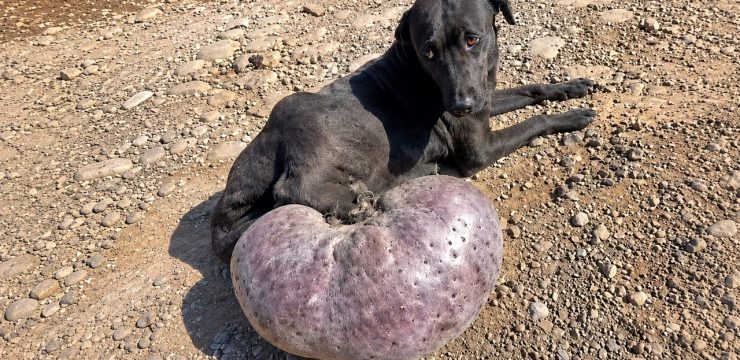
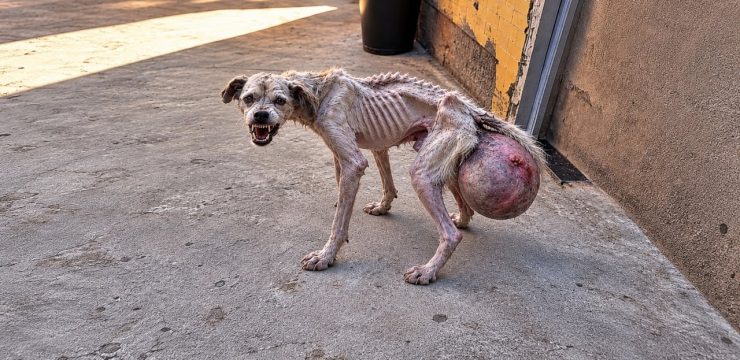
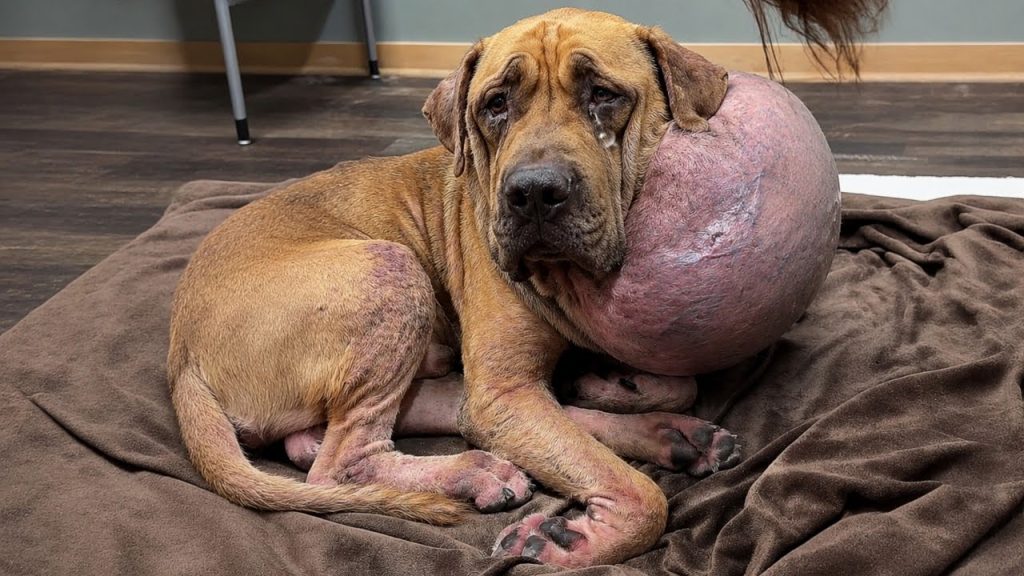
The enormous growth on his neck weighed several pounds. Its size was startling, but the greater concern was the toll his condition had taken on the rest of his body. Jimmy was extremely weak. Removing the tumor offered hope, yet his poor health meant surgery could not safely go ahead right away. Before anyone could focus on the operation, he needed to become strong enough to face it.
That made his rescue more than a single act of kindness. It became a period of careful support, with an uncertain road ahead. The clinic’s medical team worked to nourish Jimmy and improve his condition. Their care was practical and patient, rooted in the understanding that a successful operation would require preparation. There was no instant solution to everything he had endured.
At the same time, another difficult question remained: how would the rescuers pay for such an expensive procedure? The rescue center began raising money for Jimmy’s surgery. His need reached people willing to contribute, and the response from the community was generous. Individuals who might never meet Jimmy helped make his treatment possible.
Every contribution became part of a larger answer to his predicament. Together, supporters made room for hope where the cost of care had seemed overwhelming. Their kindness helped fund the operation that Jimmy so desperately needed.
Through it all, Jimmy remained a dog in distress, not a medical case. He appeared sad and in pain. Perhaps he missed the person who had once owned him; no one could know exactly what memories or feelings he carried. What was unmistakable was his need for relief and steady, compassionate care. His future depended on people looking beyond the size of the tumor and seeing the life it was affecting.
Little by little, the situation changed. With ongoing attention from the veterinary team, Jimmy’s condition improved enough for surgery. The donations also reached the amount required to cover the operation. Two barriers that had stood between him and treatment were finally lifted. The moment everyone had worked toward could arrive.
Jimmy underwent the surgery, and it was successful. The massive tumor that had burdened his neck was removed. After so much physical suffering, he had been given the opportunity to live without that overwhelming weight. It was a turning point made possible by skilled medical care, generous financial help, and the determination to keep supporting a dog who had been left behind.
Success in the operating room, however, was not the same as being fully recovered. Jimmy still needed care as his body healed. His story was entering a quieter stage, one in which the dramatic change of surgery would be followed by the ordinary, essential work of recovery. Improvement would need to be watched, encouraged, and protected.
There was another meaningful moment after the operation. The police officers who had first helped Jimmy came to visit him. Their return linked the beginning of his rescue to the progress he had made. They had encountered a dog in desperate condition and taken action. Now they could see him after the treatment that once seemed so difficult to arrange.
Jimmy also received a place to stay while he continued healing. A foster family welcomed him into their home to provide the special care he still required. There, he had people attending to his needs in a home environment, something important for a dog whose circumstances had been so uncertain.
Now, Jimmy’s recovery is showing encouraging signs. His health has continued to improve. He is able to go outside for walks, a simple pleasure that carries particular meaning after the burden he once lived with. He also returns for regular veterinary checkups, helping ensure that his recovery continues under professional supervision.
A walk may seem like a small thing beside a major surgery. For Jimmy, it speaks to a different kind of future: one shaped less by suffering and more by the steady routines of being cared for. There is no need to pretend that every question about his future has been answered. The progress already made deserves recognition on its own.
Jimmy’s journey began with abandonment and a medical problem too heavy for his weakened body. It moved forward because officers acted, caregivers stayed with him, strangers donated, and a foster family opened its home. None of those steps could have replaced the others. Together, they gave Jimmy something he had been missing: a real chance to heal.
He is still recovering, but he no longer has to carry that enormous tumor. His story reminds us that compassion is not always one grand gesture. Sometimes it is a series of people doing what they can, until a suffering animal finally has room for a better life.