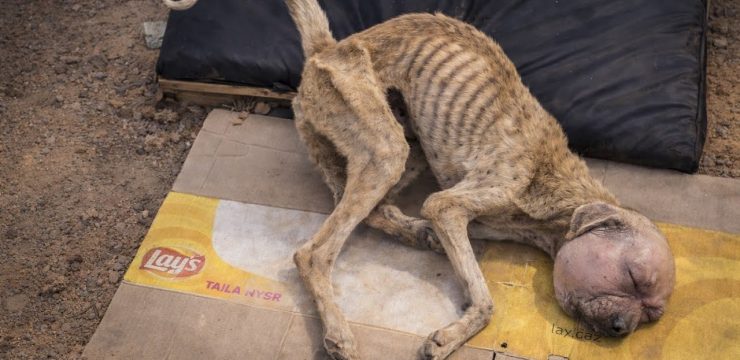
When rescuers found Fresita wandering the streets, much of her upper muzzle was gone. She was frightened, badly injured, and unwilling to let anyone come close. Yet beneath the terrible circumstances was a dog who had somehow managed to keep herself alive.
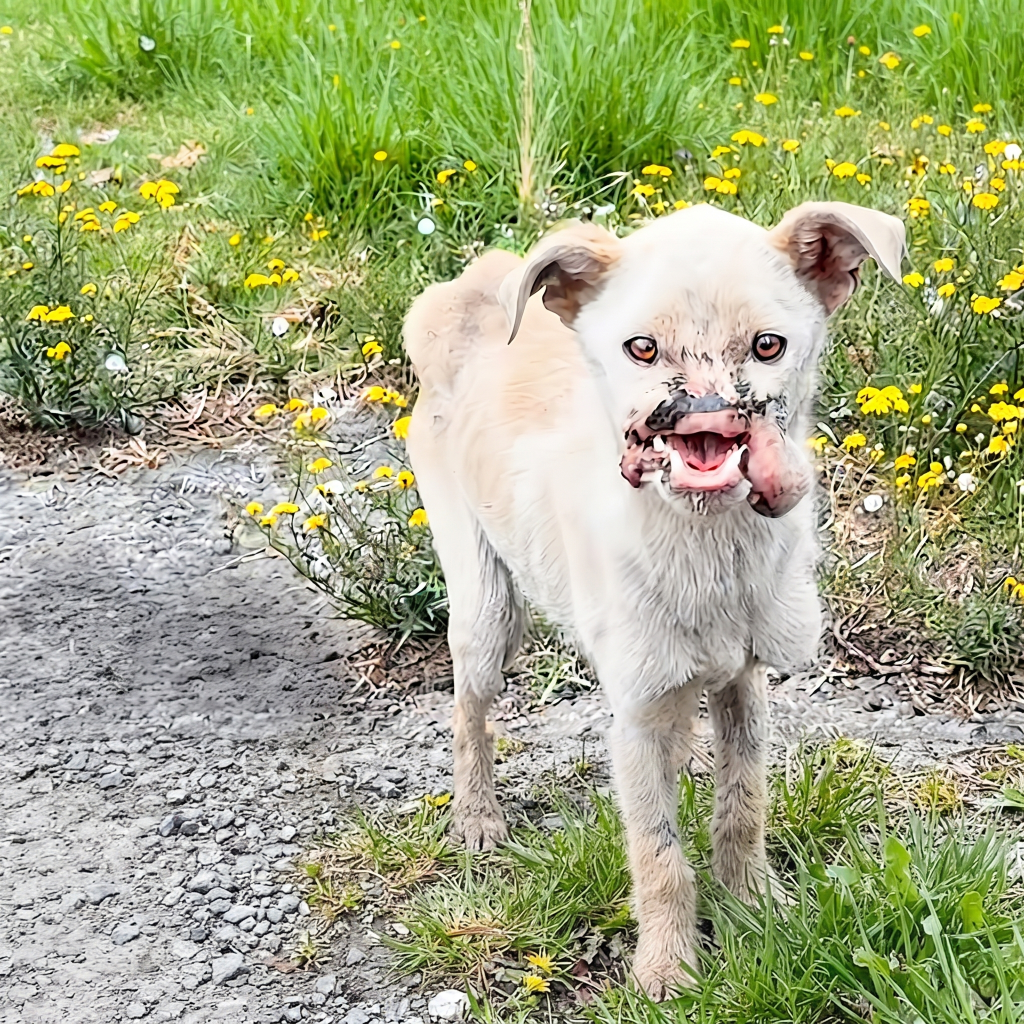
Her appearance revealed only part of what she had endured. What made Fresita’s story so moving was not simply the severity of her injury, but the life she was still fighting to live. She needed help, and she needed people willing to see beyond what had happened to her.
Animal rescuer Zadrigman found Fresita in this desperate condition. Approaching her was difficult. She was terrified of people and resisted their attempts to get near her. For a dog already coping with such a serious wound, accepting help was another challenge. Her fear made the urgency of her situation even more painful to consider.
Once Fresita received veterinary attention, the full seriousness of her injury became clearer. A deep wound extended across her muzzle and reached her tongue. Much of the upper portion of her muzzle was missing. The injury was reportedly caused by someone attacking her with a machete, an act of cruelty that is difficult to comprehend.
There is no need to dwell on the violence to understand its consequences. Fresita had been left with a permanent change to the most recognizable part of her face. Ordinary things that other dogs do without a second thought could no longer be taken for granted. And still, she had survived long enough for someone to find her.
That survival mattered. Before she received professional care, Fresita had somehow learned to stay alive despite the devastating condition of her muzzle. The details of how she managed are unknown. What is certain is that she had endured an extraordinary physical challenge before her rescuers could begin helping her recover.
A veterinary examination could identify the damage, but it could not simply undo it. Fresita’s nose could not be surgically reconstructed because her injury was too severe. That reality meant recovery would not restore the face she once had. Instead, her future depended on healing as much as possible and learning to live with the body she had now.
For anyone who has loved a dog, that distinction carries enormous weight. We often picture recovery as a return to the way things used to be. Fresita’s path would look different. Getting better did not mean looking the same. It meant gaining strength, becoming comfortable with daily life, and discovering what she could still do.
Over the following months, Fresita received medical care and the attention she needed. Her health improved dramatically. One especially meaningful sign was her weight: she eventually weighed twice as much as she had when she was rescued. That change spoke to the progress her body had made after such a difficult beginning.
The weight gain was more than a number. It marked a striking contrast between the vulnerable dog found on the streets and the healthier dog emerging through care. There was no way to erase the injury, but there was every reason to value the improvement taking place around it.
Just as important, Fresita learned how to manage everyday activities with her changed muzzle. She can now eat and drink on her own. Something so simple may sound unremarkable until one remembers what she had been living with. For Fresita, those ordinary abilities are precious signs of how far she has come.
Her progress has not been limited to eating and drinking. Fresita also runs and plays with other dogs. The same dog who once would not allow people near her now has room in her life for playfulness. Her injury remains visible, but it does not define every moment of her day.
And when a rescuer enters the room, Fresita greets that person with a happy, wagging tail. That small gesture offers a beautiful contrast to her early fear. It does not tell us everything she feels or erase what she experienced. It does show a dog responding warmly to the people who have cared for her.
Perhaps that is one of the most touching parts of her journey. Fresita did not have to become an entirely different dog to deserve affection. She needed the chance to heal, the support to adapt, and people who would recognize that a changed appearance had not diminished her worth.
There are still limits to what recovery can do. Her nose cannot be rebuilt, and the difference in her face will remain part of her life. But she has adapted remarkably well. She can meet everyday needs, enjoy other dogs, and greet familiar caregivers with enthusiasm. Those are not small things. They are pieces of a life worth celebrating.
Now another important chapter lies ahead. Fresita is ready for adoption, though she has not yet been described as having found a permanent home. Her rescuers hope for a family who will be patient with her and give her the love and time she deserves. That hope is both simple and profound.
The right family will need to understand that Fresita looks different from other dogs. They will also have the opportunity to know the lively, affectionate companion she has become. Her appearance tells part of her history, but it cannot tell the whole story of who she is today.
Fresita’s future is not yet settled. Still, she has already shown what can happen when an injured animal receives compassionate, skilled care and time to adjust. She survived what changed her face, recovered her strength, and found ways to enjoy life again.
What she needs next is not pity for how she looks, but a lasting place where she can be safe and loved. Fresita has done much to reach this point. A forever home would give her the chance to simply be a dog, cherished for the life she has fought so hard to keep.