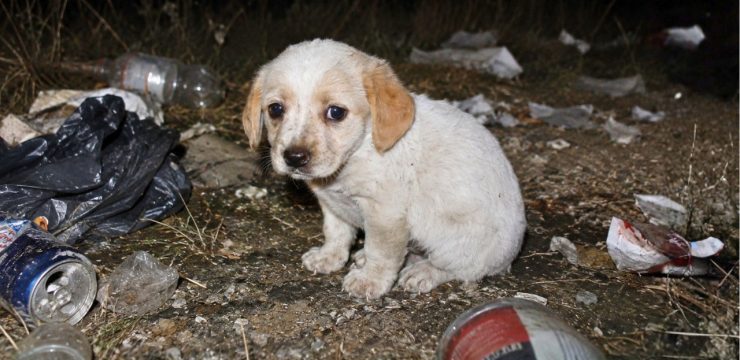
The trouble had come to their attention through a post about a puppy in need. It concerned a small female dog who needed help, and the rescuers responded.
They set out to find her. The drive was long, and arriving did not bring the relief they had hoped for. They still had to search through different places, looking for a little dog whose condition remained uncertain. For a while, she remained out of reach.
Searching for an animal in distress can demand a patience that is difficult to explain. There is only the decision to keep looking while an animal’s needs remain unanswered. For this team, that decision mattered.
At last, after repeated efforts, they found her.
She was visibly unwell. As the rescuers approached gently, they could see that she was weak and had injuries. Whatever had happened before they arrived, her present condition was enough to cause concern. She needed more than someone to notice her. She needed someone willing to take responsibility for getting her help.
They handled the delicate encounter with care and eventually lifted her into the vehicle. It was an important moment. The uncertainty of the search had given way to something concrete: the little dog was no longer beyond their reach. People were there to act on her behalf.
For many rescued animals, being brought into a vehicle might seem like the turning point of a story. A difficult search ends. The journey toward safety begins. But the difference between being found and being well can be painfully large, especially for an animal whose body is already struggling.
The team soon saw that difference for themselves.
The puppy showed no interest in food or water. Both refusals worried the people caring for her. They could not simply assume that she would feel better after a little rest, or that reaching a safer place meant the danger had passed. Her condition called for closer attention.
Then her energy appeared to diminish during the drive. What had already been concerning became urgent. Instead of continuing as planned, the rescuers changed course and took her to an emergency veterinary center. They understood that affection and good intentions, however sincere, could not replace the medical care she now needed.
There was a painful contrast in that journey. They had spent effort trying to locate one vulnerable puppy. Now that she was beside them, the greatest challenge was one they could not solve on the road. They could transport her, remain attentive, and seek help. The answers had to come from veterinary professionals.
At the clinic, the medical team received the little dog and began testing her. The results identified a serious threat: she was positive for canine parvovirus, often called parvo. It is a dangerous, contagious illness that affects dogs, particularly their intestinal systems, and demands prompt medical attention.
Suddenly, the refusal to eat or drink and her declining strength had an alarming medical context. Those symptoms had prompted the emergency trip; the test result now made clear why immediate treatment was necessary. This was not merely a tired puppy recovering from a difficult day. She was a patient facing a potentially life-threatening illness.
The diagnosis also changed what the rescuers could reasonably hope to accomplish on their own. Finding her, approaching her gently, and bringing her to a clinic were essential steps. But they could not determine the outcome by determination alone. The care ahead belonged in trained hands, and her response remained unknown.
There was another burden alongside the medical uncertainty. The rescue group had limited resources. Veterinary emergencies can put enormous pressure on people who are already giving what they can. Yet the team made clear that they intended to do everything possible to save this puppy’s life.
That commitment was not a promise that she would recover. No one had such an answer. It was a promise not to treat the difficulty of her situation as a reason to stop trying. For a little dog who had been difficult to locate and was now seriously ill, that distinction meant everything.
The rescuers asked for help with the cost of her treatment. They also invited people to suggest a name for her and to keep her in their prayers. Each request reflected a different part of the same concern: practical support for urgent care, and recognition that the small patient at the clinic was an individual life worth caring about.
A name had not yet been settled. Her medical future had not yet been settled, either. Those unanswered questions make this story different from a rescue tale that ends with a healthy dog resting comfortably in a new home. Such an ending would be comforting, but it was not something anyone could truthfully claim for her yet.
What could be said was important enough. A team had answered a call for help. They had traveled far, searched persistently, found an injured and weakened puppy, and carried her toward safety. When her condition grew more worrying, they did not ignore it. They sought emergency treatment and stood by their decision to help despite financial limitations.
Her next chapter remained uncertain. But she was no longer simply a puppy someone had mentioned in a post, somewhere waiting to be found. She was a living creature whose suffering had been taken seriously, whose illness had been identified, and whose chance to receive care had been defended.
Sometimes compassion cannot offer a guaranteed happy ending. It can offer something honest and necessary: the willingness to notice a vulnerable life, keep searching, and act when the need becomes urgent. For this little dog, that willingness opened the door to a chance she desperately needed.