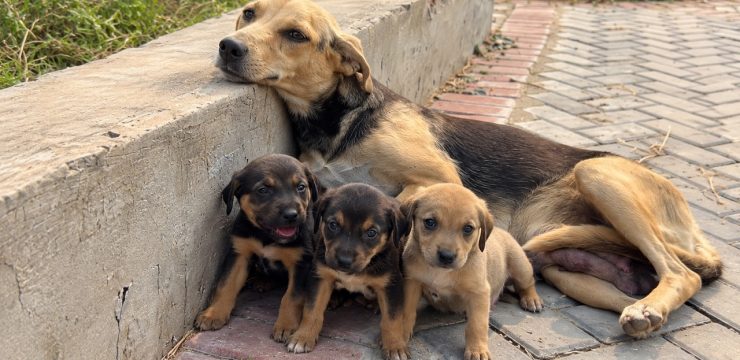
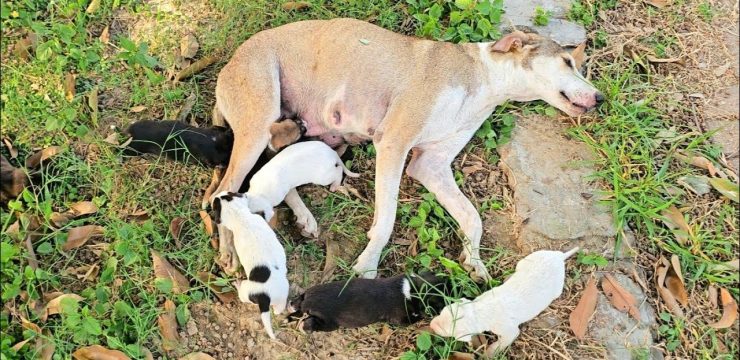
She was terrified of losing the only family she had.
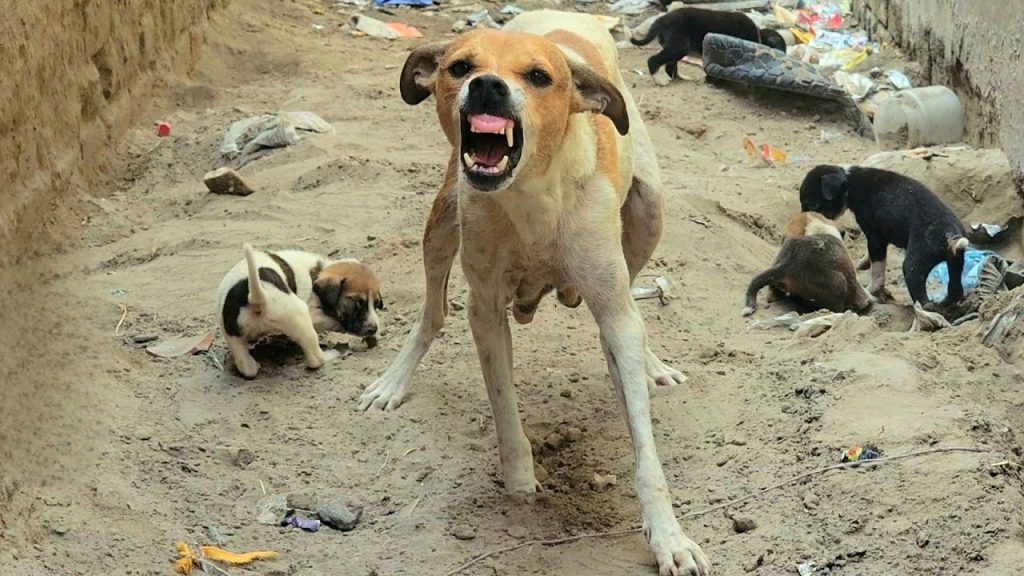
Alone on the streets with her puppies, a frightened mother dog faced a moment no loving mother should ever have to endure. When strangers approached her babies, she reacted with desperate fear, unaware that the people coming toward her were there to save them all.
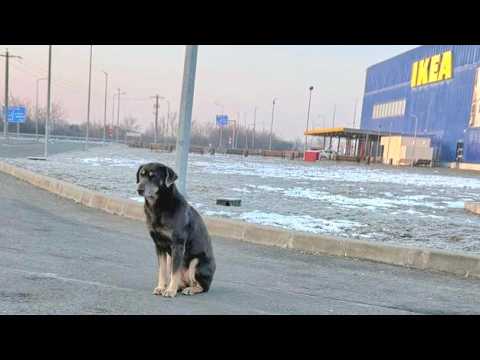
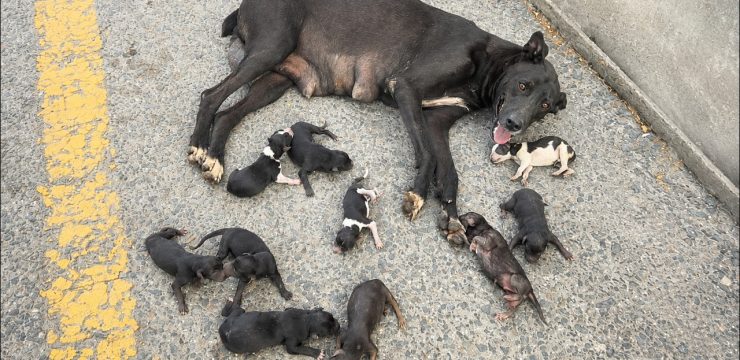
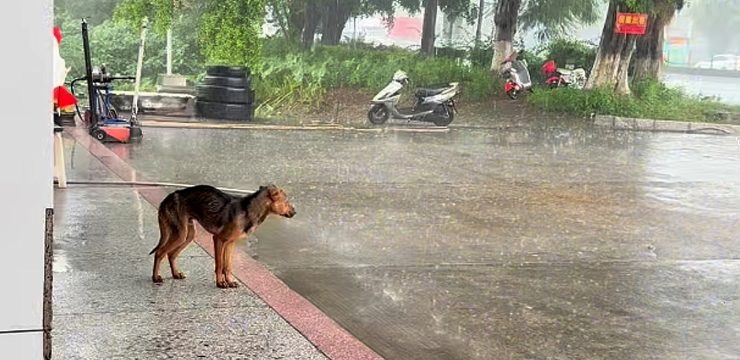
Life on the streets had left this devoted mother with little reason to feel secure. She had been surviving alongside her puppies, carrying the responsibility of protecting several vulnerable lives while facing the uncertainty of life without a home. There was no loving family looking after them, no dependable shelter, and no guarantee that the next person approaching would mean them any kindness.
For a mother dog in such circumstances, protecting her puppies was more than an instinct. It was the center of everything she did. Her babies depended on her, and she had no way of understanding whether the people around her would help or threaten the family she was struggling to keep together.
When the rescue team arrived, their intentions were compassionate. They wanted to bring the mother and her puppies to safety, keeping the little family together and giving them the protection they desperately needed. But the mother had no way of knowing that.
All she understood was that unfamiliar people were approaching her precious babies.
Fear immediately took over.
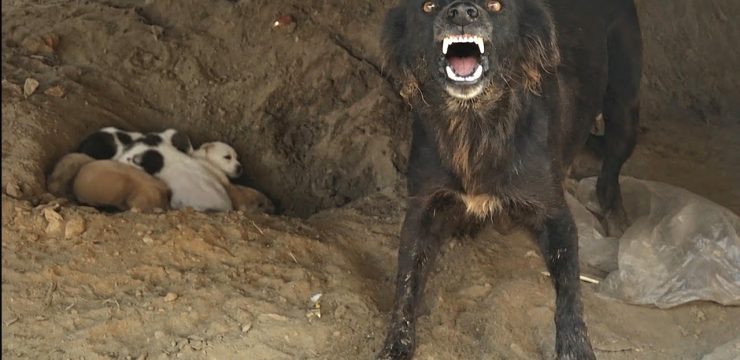
She positioned herself protectively in front of her puppies, barking as the rescuers came closer. Her body trembled, and she tried desperately to shield her little ones from the strangers she perceived as a threat. Every reaction reflected the same urgent instinct: she could not allow anything to happen to her babies.
To someone who did not understand her circumstances, the barking might have appeared threatening. But this was not a mother looking for a fight. She was frightened, confused, and overwhelmed by a situation she could not control.
The possibility of being separated from her puppies seemed to be the very thing she feared most.
There is something especially moving about watching a vulnerable animal summon whatever courage she has left for the sake of her young. This mother had already been living with the uncertainty of the streets, yet when she believed her puppies were threatened, she did everything she could to stand between them and danger.
She was frightened herself, but her concern remained focused on protecting them.
The rescuers understood that her behavior came from fear rather than aggression. They were not approaching a dangerous animal that needed to be challenged. They were approaching a worried mother who needed reassurance, patience, and a reason to believe that the people around her meant no harm.
That understanding made all the difference.
Instead of treating her barking as a reason to give up, the rescue team continued with gentleness and compassion. They allowed patience to guide their efforts, recognizing that earning the trust of a frightened animal could not be accomplished simply by having good intentions.
For the mother, the situation was deeply confusing. The people approaching her puppies were strangers, and she could not understand their purpose. She had no way of knowing that the rescuers were determined to protect her babies rather than take them away.
Most importantly, they had no intention of leaving her behind.
Their mission was to save the entire family.
As the rescuers continued their careful approach, the atmosphere gradually began to change. The mother’s initial panic started to ease. The strangers she had feared were not harming her puppies or trying to separate them from her. Their actions were gentle, and their concern extended to her as well as her babies.
Little by little, the frightening situation began to become something different.
The mother had been defending her family against what she believed was an immediate threat. Yet the very people she had been trying to keep away were offering the protection she and her puppies had been missing.
It was a powerful reminder of how easily fear can be misunderstood, especially in animals that have spent their lives facing uncertainty.
A frightened dog cannot explain her history or describe why she reacts as she does. She cannot ask someone to understand her worries. Instead, she communicates through the behaviors available to her, even when those behaviors make it harder for people to approach.
This mother’s barking and trembling were not signs that she was undeserving of help. They were signs of how desperately she wanted her puppies to remain safe.
The rescuers responded to that fear with something she needed just as much as physical protection: understanding.
They recognized the love behind her protective behavior. Rather than separating the mother from the little ones she was struggling to defend, they worked toward a rescue that included every member of her family.
That was the turning point.
The mother who had feared being abandoned was not being forgotten. Her puppies were not being taken away from her. The rescue team’s purpose was to bring them together into safety, allowing the family to remain united.
As her fear eased, the contrast between what she had expected and what was actually happening became especially touching. She had reacted as though she were about to lose everything precious to her, while the rescuers were there to help preserve exactly what mattered most.
For animals living on the streets, trust is not always easy to establish. A gentle approach may be necessary, but it does not automatically erase uncertainty. Sometimes the greatest kindness people can offer is the willingness to recognize fear for what it is and respond without anger or force.
That is what made this rescue so meaningful.
The rescuers did more than recognize a family in need. They understood that the mother’s bond with her puppies deserved to be respected throughout the rescue. Her determination to protect them was not an obstacle to compassion. It was a reason to approach her with even greater care.
By the end of the rescue, the mother and her puppies had been saved together. The separation she had seemed to fear never became the outcome of their encounter. Instead of losing her babies to the strangers approaching them, she received help from people who wanted the entire family to be safe.
The rescue did not establish what their long-term future would look like or whether a permanent home had already been found. But it brought an important change to their circumstances. They were no longer simply a frightened mother and her vulnerable puppies facing the streets without assistance.
They had been given a chance at safety together.
There is a quiet beauty in that outcome. No dramatic promise or extraordinary event is needed to make it meaningful. A mother was afraid for her children, compassionate people recognized her fear, and a family in need received help without being torn apart.
For anyone who has ever loved an animal as part of the family, the importance of that bond is easy to understand. The mother could not explain her fear in words, but her determination to protect her puppies spoke for itself.
And the rescuers answered with patience rather than punishment, kindness rather than confrontation.
Her experience is a reminder that frightened animals are not necessarily unfriendly animals. Sometimes they are simply trying to protect what little they have left. Behind defensive behavior may be a vulnerable creature who needs time, understanding, and a safe opportunity to accept help.
This devoted mother began her encounter with the rescuers believing her precious family might be taken from her. Instead, she discovered that the strangers she feared had come to protect them all.
Her puppies remained with her, and the family received the chance to move beyond the fear and uncertainty of life on the streets.
Sometimes compassion means more than offering rescue. It means understanding what an animal is afraid of losing and doing everything possible to protect it. For this mother dog, the greatest kindness was not simply being saved.
It was being saved together with the babies she loved so fiercely.