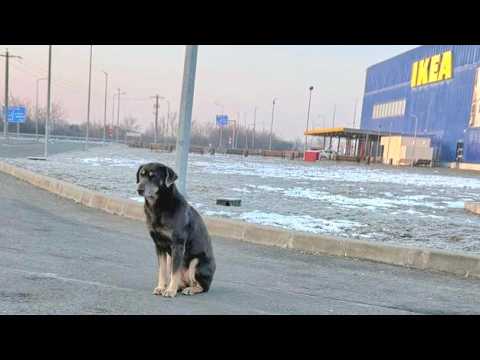
She had almost nothing to give her baby.
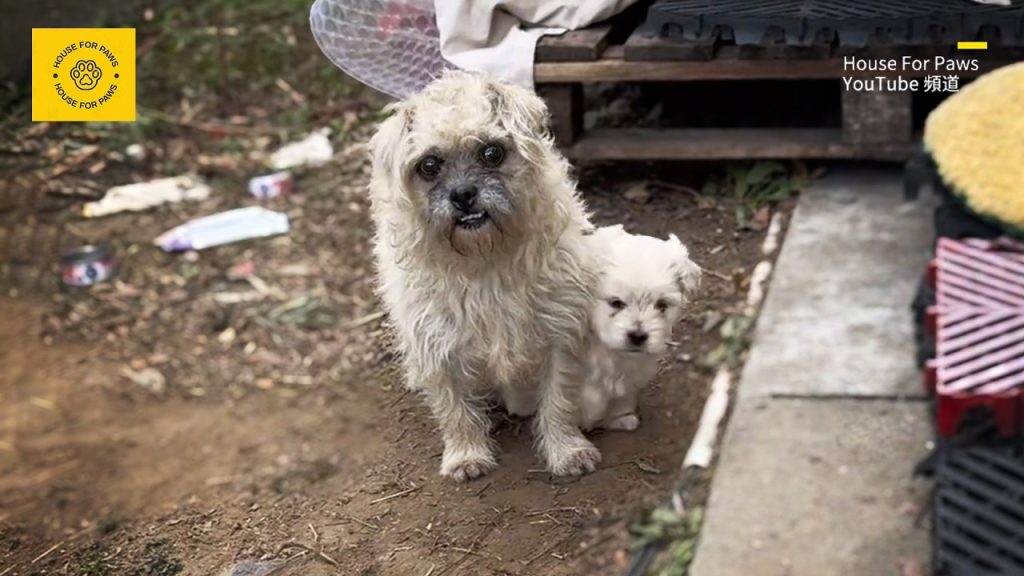
No safe home, no dependable food, and no protection from the hardships of living on the streets. Yet this struggling mother dog still had something precious left: her willingness to trust a human being. When she finally brought her only puppy to the person who had been feeding her, what happened revealed just how much a small act of kindness could mean.
The stray dog had become a familiar presence near a company building. She wandered through the area, searching for something to eat and approaching people with a cautious kind of hope. Life had clearly been difficult for her. Hunger was a constant concern, and each encounter with a stranger carried uncertainty. Still, she had not completely lost her faith in people.
Unlike dogs that immediately retreat when someone approaches, this gentle mother seemed willing to take a chance. She moved toward passersby carefully, without aggression or demands. There was something touching about her quiet persistence. She appeared to understand that a little human kindness might make the difference between another hungry day and a meal that could help her keep going.
One person who worked nearby began noticing her during lunch breaks. At first, there was nothing particularly unusual about their encounters. The dog was hungry, and the person had food. But watching her approach with such cautious hope made it difficult to simply walk away.
During one lunch break, that person offered her some leftover sausages. The hungry dog ate them eagerly, as though a proper meal had been missing from her life for far too long. It was a simple gesture, requiring little more than sharing what remained of lunch. Yet seeing how desperately she needed that food left a lasting impression.
What began with a few leftover sausages became a regular act of compassion. The person started preparing extra food specifically for the stray dog, making sure there would be something available whenever they met during lunch. The dog no longer had to depend entirely on chance for that particular meal.
Their connection grew through those ordinary encounters. The mother dog learned to recognize the person who fed her. She even began recognizing familiar footsteps before the person came into view. She would wait in the same place, anticipating the arrival of someone who had consistently treated her with kindness.
There were no grand gestures involved. No elaborate rescue plan had brought them together. Their relationship had developed through something as ordinary as sharing food with a hungry animal. But for a dog living without the security of a home, that consistency carried enormous meaning.
The person believed the dog's growing trust was simply a response to being fed. That explanation seemed natural enough. A hungry stray had found someone dependable, and she had learned that approaching this particular human brought comfort rather than rejection.
But there was another part of her life that the person had not yet understood.
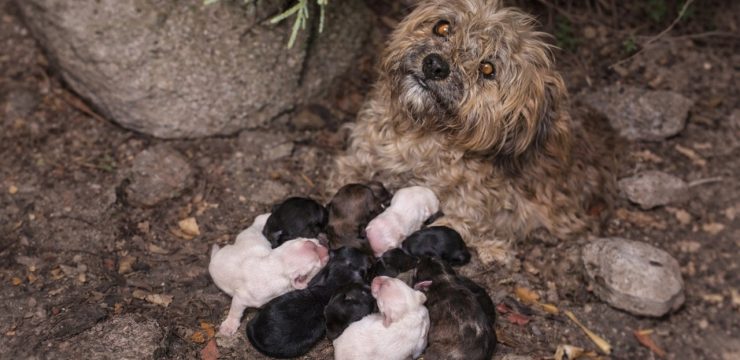
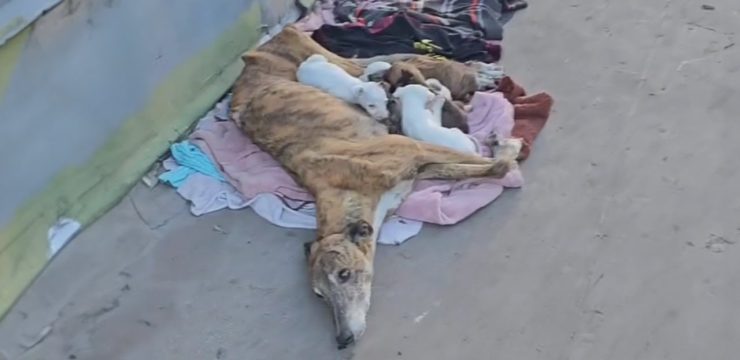
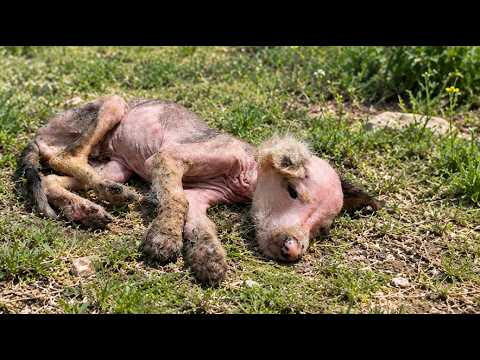
The mother dog had a puppy. Just one. And the small life depending on her made her circumstances even more difficult. Finding enough food for herself was already a struggle. Providing for a vulnerable puppy while living on the streets brought an entirely different kind of responsibility.
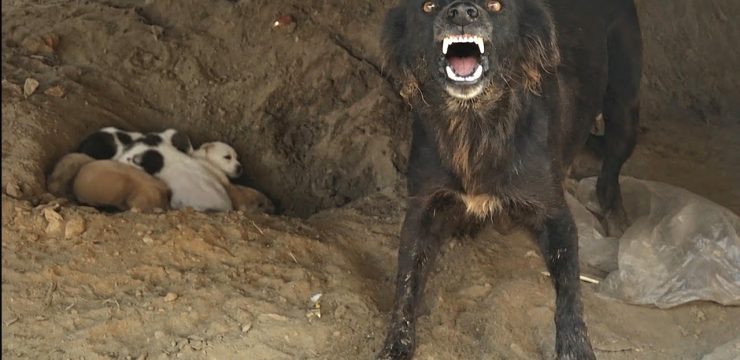
A mother dog can be remarkably devoted to her young, even when her own circumstances are uncertain. But devotion alone cannot provide shelter, dependable meals, or protection from every danger. For this stray, the challenges of survival were not hers alone to face.
Then came the encounter that changed the meaning of everything that had happened between them.
The mother approached the person who had been feeding her, but this time she was not alone. She had brought her only puppy.
What happened next was deeply moving. Instead of simply staying beside her baby, the mother pushed the little puppy toward the human she had come to trust.
It was a small movement with an extraordinary emotional weight. The same dog who had once approached strangers hoping for scraps of food was now placing her most precious responsibility before someone who had shown her kindness.
The gesture appeared to be an appeal for help.
No one could know exactly what the mother was thinking. Animals cannot explain their decisions in words, and their feelings should never be treated as something we can understand with absolute certainty. Yet the meaning of that encounter was difficult to ignore. She had brought her vulnerable puppy to a person whose gentle treatment she had learned to rely upon.
It was no longer simply about a hungry dog receiving lunch. A mother had brought her only baby into the relationship of trust that had grown between her and a compassionate stranger.
There is something especially touching about the simplicity of that moment. The person had never needed to make a promise to the dog. They had simply continued showing up with food, treating her as a living creature worthy of consideration. Through repeated kindness, a frightened and hungry street animal had found someone she could approach without fear.
And when she appeared with her puppy, that trust took on a much greater significance.
The mother could not change the circumstances into which her baby had been born. She could not make street life safe or guarantee that food would always be available. What she could do, however, was bring the puppy to the one person whose actions had given her reason to hope.
For the person who had been feeding her, the encounter offered a new understanding of their quiet friendship. Those shared lunches had meant more than satisfying an immediate hunger. They had created a connection strong enough for a vulnerable mother to approach with her only child.
The puppy's eventual future is not established by this encounter alone. There is no confirmed adoption or permanent home to complete the story with an easy, joyful ending. But the mother's decision to bring her baby forward remains meaningful without adding an outcome that has not been confirmed.
Her experience reminds us that kindness does not always announce its importance when it happens. A leftover sausage may seem insignificant to the person offering it. Preparing an extra portion of lunch may feel like an ordinary habit. Yet to an animal facing uncertainty, those gestures can become something dependable in a world where very little else is guaranteed.
The most moving part of this mother's story is not simply that she needed help. It is that she had learned to trust someone enough to bring her puppy close, despite the difficulties she had experienced on the streets.
She had no words with which to ask for a better life for her baby. She could only approach the person who had treated her gently and push her little one forward.
Sometimes compassion begins with something almost too small to notice. And sometimes, without ever realizing it, we become the person a vulnerable animal turns to when what matters most is at stake.