The schoolyard was sweltering. Children darted around in T-shirts, some had already soaked themselves with water just to find a moment of relief. The hallways were thick with heat, windows flung wide open, fans humming uselessly in the corners. It was the kind of day where nobody wanted to move, let alone wear a single extra layer.

That was the day Sofia, the school nurse, noticed him.
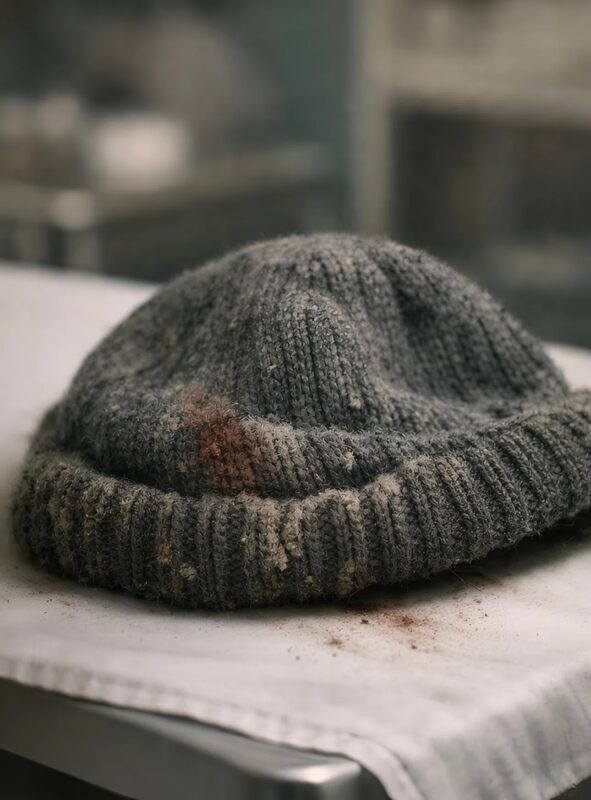
He walked into her office during a routine checkup, and something about him made her pause mid-sentence. Among all the flushed, sweaty kids in summer clothes, this boy stood out like a ghost from another season. Thick dark pants. A heavy knit sweater. And pulled nearly down to his eyebrows — a dense, woolen winter hat. The same one he had apparently worn every single day since returning from spring break. Same color. Same worn lint on the fabric. Same shape.
Sofia studied him quietly, careful not to alarm him.
“Hey there,” she said softly. “Aren’t you feeling hot? You can take that hat off in here if you’d like. It’s just us.”
The reaction was immediate. His small shoulders shot upward. Both hands flew to his head, gripping the hat with a fierceness that no child should ever need for something so simple.
“No,” he said, barely above a whisper, eyes fixed on the floor. “I can’t take it off.”
Sofia didn’t push. She had worked with children long enough to know that forcing the moment would only close every door. She finished the checkup calmly, but she couldn’t shake the knot forming in her stomach. Every time the hat shifted even slightly, the boy flinched. He would immediately reach up and pull it back down, as if what was underneath needed to stay hidden at all costs.
After the boy left, she sought out his homeroom teacher.
“He never takes it off,” the teacher confirmed with a tired sigh. “Not once since he came back. During gym class, when the coach asked him to remove it, he had a full panic attack. We made a decision as a staff not to force the issue anymore. We didn’t want to make things worse.”
That evening, Sofia pulled his file and dialed the family’s number.
A man answered. His voice was clipped, guarded.
“He’s fine,” he said before she could finish her first sentence. “There’s no problem.”
Sofia pressed gently. She mentioned the hat, the heat, the possibility of a skin condition or an injury underneath.
The silence on the other end was heavy and cold.
“That’s our business,” the man replied. “He does what he’s told. Don’t interfere.” When Sofia mentioned she had noticed a stain on the fabric — something that looked like it could be dried blood — the voice hardened further. “I said everything is under control. Don’t call here again.”
The line went dead.
Sofia sat motionless for a long time, phone in hand, a quiet dread settling over her.
A few days later, during the middle of class, a teacher burst into the medical room.
“He’s not well. He’s holding his head. He can barely sit upright.”
They brought the boy in. His face was drained of color, lips trembling, hands pressed hard against his skull. He swayed slightly when he tried to stand — the kind of swaying that comes from pain a child has been carrying far too long.
Sofia knelt in front of him, keeping her voice as steady and gentle as she could manage.
“I want to help you. There’s no one else here. It’s safe. Will you let me take a look?”
He stared at the floor. Then, barely audible, he said: “I can’t. Dad said not to. He said if I take it off, it’ll be worse for me.”
“You’re hurting right now,” Sofia said carefully. “I won’t do anything to frighten you. I just want to see.”
After a long, agonizing silence, the boy gave the smallest nod.
Sofia put on gloves. She reached for the edge of the hat — and immediately understood why he had said it wouldn’t come off. The fabric had adhered to his scalp. She dampened it slowly with antiseptic, working with painstaking care, trying not to cause him any additional pain. He whimpered softly but held still. The teacher standing beside Sofia pressed her hand over her mouth.
When the hat finally came free, the room went completely silent.
Sofia froze.
The boy’s scalp was covered in wounds. Round, deliberate marks scattered across his head — some fresh, red, and inflamed, others in various stages of healing. The kind of injuries that don’t happen by accident. The kind that are hidden on purpose.
“Dad said I had to endure it,” the boy whispered into the stillness. “And my brother gave me the hat so nobody would see.”
By the end of that afternoon, Sofia had made every call that needed to be made. Child protective services. The proper authorities. Everyone who needed to know, knew.
That evening, the boy was taken to receive medical care. Afterward, he was placed somewhere safe — somewhere he would never again have to press his hands against his head in fear, never again have to endure in silence.
Sofia carried this case with her long after it was officially closed. Because that is the nature of moments like these — they stay with you. They remind you that sometimes the most alarming things in a child’s life are the ones carefully hidden in plain sight, disguised as nothing more than an odd habit, a stubborn quirk, a little boy who simply refused to take off his hat.