The morning after my grandfather’s funeral, my mother pressed two black garbage bags into my hands and told me to leave the only home I’d ever known.
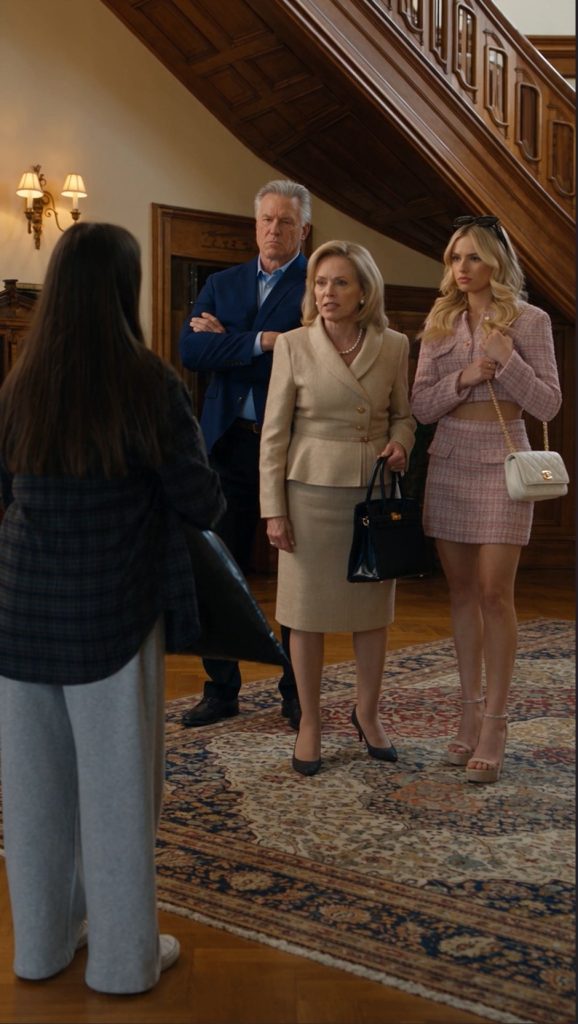
Seventeen years after abandoning me, she’d returned with a moving truck, my father, and my younger sister.
What none of them knew was that Grandpa had been expecting them.
“Pack your things, Clara,” Mom said. “Your grandfather’s gone. This house belongs to us now.”
I stood in the hallway wearing Grandpa’s old flannel shirt. I’d spent the night crying into his pillow, still searching for the familiar scent that made me feel safe.
Now my mother was measuring the foyer with her eyes.
My sister Chloe, twenty, hurried upstairs without embracing me.
“I want the master bedroom!” she called.
Dad waved the movers toward the entrance. When one questioned whether he owned the property, Dad answered sharply, “It was my father’s house. I’m his son.”
The man glanced at me.
I remained silent.
Three days before he died, Grandpa had held my hand and whispered, “When they come, let them inside. Let them talk. Then open my study.”
He’d managed a faint smile.
“The loudest person in the room isn’t always the one with the power.”
I hadn’t understood.
But standing there, listening to strangers carry boxes through our doorway, I remembered another arrival.
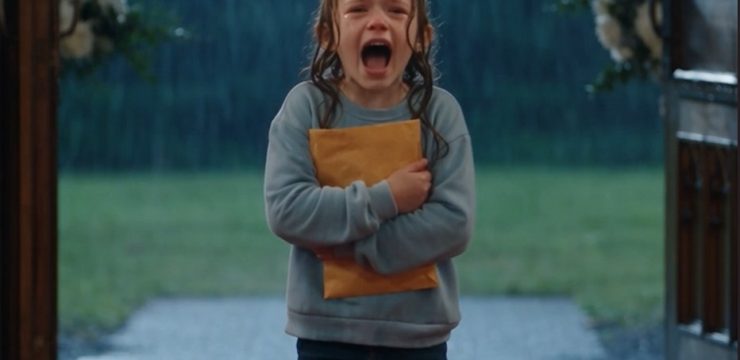
I was five, holding a blue suitcase decorated with yellow butterflies. Mom promised she’d collect me on Sunday.
I waited beside the window in my favorite yellow dress, refusing Grandpa’s pancakes because I didn’t want syrup on my clothes.
Sunday passed.
Then Wednesday.
Then Friday.
My parents never returned.
Grandpa eventually found me crying on the porch swing.
“Did I do something wrong?” I asked.
His expression crumpled.
“No, sweetheart. Not one thing.”
For seventeen years, he made sure I believed him.
He learned to braid my hair, attended every school performance, grew strawberries because I loved them, and taught me to drive his old blue pickup.
At graduation, he stood in the front row crying behind a disposable camera.
He was everything my parents had chosen not to be.
And now, less than twenty-four hours after we buried him, they were dividing his belongings.
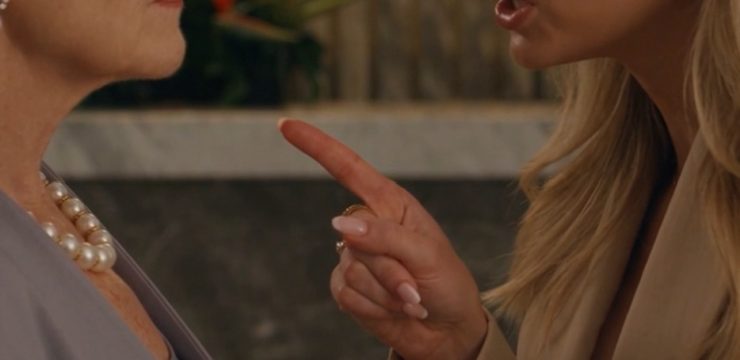
“Clara!” Mom snapped. “Stop standing around and pack.”
“Where am I supposed to go?”
“You’re twenty-two. Figure it out.”
Upstairs, Chloe called, “Do you think Grandpa’s antique bed is valuable?”
“Don’t touch it until it’s appraised!” Dad shouted.
I stared at my mother.
“You really think you can just come back?”
She straightened her pearl necklace.
“We made a difficult decision. Your grandfather spoiled you.”
“You left me for seventeen years.”
“Don’t be dramatic.”
Dad stepped closer. “We had responsibilities.”
I looked toward Chloe.
“You had responsibilities to her.”
His jaw tightened.
“Chloe was different.”
Different.
That single word made me feel five years old again, waiting beside a window.
Mom pushed the garbage bags against my chest.
“Always so sensitive. Now move.”
I lowered them carefully.
“No.”
Silence settled across the foyer.
Dad’s face darkened. “Watch your tone.”
I looked toward Grandpa’s study.
“There’s something you need to see.”
Mom laughed. “What could you possibly show us?”
Then came a metallic click.
The study door opened.
Arthur Bennett, Grandpa’s attorney, stepped into the hallway carrying a leather folder.
Mom went pale.
“Richard. Diane,” he said quietly. “I’ve been expecting you.”
Dad demanded an explanation.
“I’m carrying out your father’s final instructions.”
Arthur opened the folder.
“He anticipated the moving truck. Clara’s eviction. Even someone claiming the master bedroom.”
Chloe froze on the stairs.
Dad reached for the papers, but Arthur pulled them away.
“Clara is the person your father entrusted with his final wishes.”
Mom’s voice trembled. “What does that mean?”
Arthur looked at the garbage bags beside my feet.
“The house, land, and everything inside were placed in a trust years ago. Clara is the sole beneficiary.”
Dad stared at him.
Then Arthur spoke again.
“But the house is only the beginning.”
He withdrew a sealed envelope bearing my mother’s name.
For the first time, Dad looked genuinely afraid.
And when Arthur raised the envelope, I realized Grandpa had left behind a truth my parents feared far more than losing the house. 👇
My father’s hand shot forward.
“Give me that.”
Arthur didn’t move.
The envelope trembled slightly between his fingers, though his expression remained composed. Behind him, the grandfather clock ticked steadily, each second strangely loud in the silence.
“Richard,” Arthur said, “I suggest you sit down.”
“I’m not sitting anywhere.”
Mom took one hesitant step toward him.
“What’s in the envelope?”
Dad didn’t answer.
He was staring at the handwriting on its front, and something about his face unsettled me. I’d spent seventeen years imagining how he might look if he ever regretted leaving me.
I had never imagined fear.
Arthur turned toward me.
“Clara, your grandfather wanted you to hear this. But he also made it clear that the decision to proceed belongs to you.”
Dad’s eyes snapped toward mine.
“Clara, whatever he’s told you—”
“He hasn’t told me anything.”
“Then don’t let him.”
It was the first time I’d heard my father ask me for something instead of ordering me around.
Arthur opened the envelope.
Inside were several folded pages and a photocopy of a bank statement.
“Seventeen years ago,” he began, “your grandfather discovered that Richard had been withdrawing money from an account established for Clara’s future.”
My mother gripped the staircase railing.
“That money was family money,” Dad said.
Arthur looked at him.
“It was held in trust for your daughter.”
I felt the floor shift beneath me.
Grandpa had never told me about an account.
Arthur continued.
“The withdrawals began shortly before Clara was brought here. Her grandfather confronted Richard, and Richard promised to replace the funds.”
Dad rubbed his forehead.
“We were struggling financially.”
“Then why,” Arthur asked, “did you tell your father you would only repay the money if he agreed to raise Clara permanently?”
Nobody moved.
I heard a mover outside close the truck door.
I looked at my father.
“What?”
He turned away.
Arthur unfolded another page.
“Your grandfather kept records of their correspondence. He also preserved the written agreement Richard and Diane signed when they transferred Clara’s care to him.”
Mom’s voice came out thin.
“We didn’t have a choice.”
Arthur looked at her.
“You had several.”
My heart hammered.
All those years, I’d imagined my parents leaving because I cried too much, needed too much, or somehow made their lives harder.
But they hadn’t simply walked away.
They had negotiated my absence.
“Did you leave me because of money?” I whispered.
Mom’s mouth opened.
Nothing came out.
Dad finally looked at me.
“We thought you’d have a better life here.”
“You told me you’d come back Sunday.”
His expression tightened.
“Clara—”
“I wore my yellow dress.”
The words escaped before I could stop them.
“I sat by the window all day. Grandpa made pancakes, and I wouldn’t eat because I thought you’d be there any minute.”
Mom lowered her eyes.
“I remember that dress,” she murmured.
Something inside me broke open.
“You remember?”
She nodded once.
“Then how could you leave?”
Her fingers moved to her necklace, but this time she couldn’t seem to straighten it.
Dad stepped forward.
“Enough. This happened years ago. We came here to settle the estate, not relive every mistake.”
Arthur closed the envelope.
“You came here because you’re facing foreclosure.”
Dad stopped breathing for a moment.
Chloe descended two stairs.
“What foreclosure?”
Mom turned sharply.
“Chloe, go outside.”
“No.”
It was the first time she’d sounded uncertain rather than entitled.
Arthur opened another document.
“Richard contacted your grandfather six months ago requesting a loan against this property. When the request was denied, he began making inquiries about the estate and whether the house would pass to him.”
Dad’s cheeks flushed.
“You had no right to investigate my finances.”
“Your father asked me to protect his property and his granddaughter.”
Arthur glanced toward the open front door.
“And given today’s events, his concerns were justified.”
Dad grabbed his phone.
“This is ridiculous. I’ll contest everything.”
“You’re entitled to seek legal advice,” Arthur replied. “But the trust documents were properly executed years ago. The assets do not pass through your father’s estate.”
He placed another paper on the hallway table.
“And you’ve just ordered movers to enter a property you do not own, despite having no authorization.”
Dad stared at the document.
Then he looked at me.
“Clara, tell him this is your family.”
For one terrible second, I wanted to.
Not because I believed him.
Because some small, stubborn part of me still wanted my father to choose me.
But his eyes kept flickering toward the staircase, the furniture, the walls.
He wasn’t looking at a daughter.
He was looking at a house slipping away.
“No,” I said.
His face hardened immediately.
“You ungrateful little—”
“Richard.”
Arthur’s voice cut through the room.
“Your father left a final statement. I think you should hear it before you say another word.”
He took a handwritten letter from the folder.
Dad went still.
Arthur began reading.
“My son, I spent seventeen years hoping you would find your way back to the little girl you left on my doorstep. I thought perhaps shame kept you away. Perhaps you needed time.”
My throat tightened.
“But when you called asking about the house, you never once asked how Clara was doing. You didn’t ask whether she was happy, whether she’d finished school, or whether she was frightened about losing me.”
Arthur paused.
Outside, the wind shifted through Grandpa’s maple tree.
“You asked how much the property was worth.”
Mom sat abruptly on the bottom stair.
Arthur continued.
“I cannot make you love your daughter. I cannot undo the years she spent waiting for you. But I can make certain you never again have the power to take her home away.”
Dad’s expression crumpled into something ugly.
“You always cared more about her than me.”
For a moment, Arthur said nothing.
Then he turned over the letter.
“Your father anticipated that response, too.”
He read the final sentence.
“I loved you all your life, Richard. But loving you does not require me to excuse what you did.”
Dad’s shoulders dropped.
Chloe looked from him to our mother.
“Did you know?” she asked.
Mom stared at her hands.
“About the money?”
Silence.
“Mom?”
“Yes.”
Chloe stepped backward as though the answer had struck her.
“You told me Clara wanted to live with Grandpa.”
I looked up.
My chest tightened.
“What?”
Chloe’s eyes filled.
“You told me she didn’t like living with us. That she’d chosen him because he spoiled her.”
Mom whispered, “You were little.”
“You kept saying it.”
Chloe’s voice shook.
“Every time I asked why we never visited, you said Clara didn’t want us there.”
I stared at my sister.
Seventeen years of silence suddenly looked different from the other side.
She had been three when they left me.
Old enough to lose a sister.
Too young to understand why.
Dad reached toward her.
“Chloe, sweetheart—”
She pulled away.
“Don’t.”
That one word seemed to end something between them.
Arthur gathered his papers.
“Richard, Diane, I need you to leave the premises. The movers are to remove anything they’ve brought inside. Nothing belonging to this property is to be taken.”
Dad looked toward the front door.
Then toward me.
“Clara, please.”
It was almost painful to hear him say my name gently.
“We’ll lose our house.”
I swallowed.
“You came here to take mine.”
He opened his mouth, then closed it.
There was nothing left to argue.
Arthur called the moving company supervisor and explained the ownership situation. The men quietly carried the unopened boxes back outside.
Dad tried to challenge the trust through an attorney the following week, but the documents held. Without Grandpa’s property to borrow against, the financial problems he’d hidden continued, and my parents eventually lost their home.
I didn’t celebrate.
I remembered what it felt like to believe a roof and a family could disappear without warning.
But I didn’t rescue them, either.
Grandpa had spent seventeen years teaching me that love didn’t mean accepting cruelty.
And I was finally beginning to understand.
That afternoon, after the moving truck pulled away, Chloe remained on the porch.
She looked smaller without her sunglasses.
“I really thought you hated us,” she said.
I sat beside her on the wooden swing.
“I thought you’d forgotten me.”
She shook her head.
“I remembered your blue suitcase. And your yellow dress. I used to ask Mom when you were coming home.”
I stared at her.
“You remember that?”
“Not clearly. Just pieces.”
She wiped her cheeks.
“I thought you left me.”
For a long moment, neither of us spoke.
Then I reached across the space between us.
She took my hand.
It didn’t repair seventeen years.
But it gave us somewhere to begin.
Over the following weeks, Chloe visited without our parents. Sometimes we talked for hours. Other times we simply sat at Grandpa’s kitchen table, awkward and unsure, learning ordinary things about each other.
She discovered I hated coffee.
I learned she was terrified of thunderstorms.
And one evening, she admitted that she had never felt she could disappoint our parents without losing their approval.
I knew that fear.
We had inherited it differently.
Autumn settled over the house.
Arthur helped me understand the trust, the taxes, and the responsibilities Grandpa had left me. He never rushed me through a document, and sometimes he stayed for dinner when the house felt too quiet.
One afternoon, he handed me a small brass key.
“Your grandfather asked me to give you this after everything settled.”
I stared at it.
“What does it open?”
Arthur smiled.
“The bottom drawer of his desk.”
I’d avoided the study since the funeral.
Everything inside still smelled faintly of old paper and Grandpa’s aftershave.
I found the drawer beneath a stack of gardening catalogs.
Inside was a wooden box.
And inside that box were seventeen envelopes.
Each carried a year written in Grandpa’s careful handwriting.
Six.
Seven.
Eight.
All the way to twenty-two.
My hands shook as I opened the first.
It contained a photograph of me missing my front teeth, smiling beside a lopsided birthday cake.
Behind it was a letter.
“Dear Clara, today you turned six. You asked me again whether your mother would come back. I told you I didn’t know. I wish I could promise you everything will stop hurting, but I can promise you won’t face it alone.”
I covered my mouth.
The next envelope held a photograph from a school play.
Another contained the first strawberry I’d ever grown, carefully pressed between sheets of paper.
There were little stories I’d forgotten.
The time I insisted the moon followed our pickup.
The afternoon I tried to braid his hair.
The day I announced I wanted to become someone who helped people feel less alone.
By the time I reached the final envelope, tears had blurred the words.
It was marked twenty-two.
Inside was a photograph I’d never seen.
Grandpa stood outside the house seventeen years earlier, holding five-year-old me in his arms.
I was asleep against his shoulder.
On the back, he’d written:
“The day I thought I was becoming a father again.”
I pressed the photograph against my chest.
Then I opened his last letter.
“My darling Clara, you always believed I rescued you when your parents left. But there’s something I never told you.”
I stopped breathing.
“That year, I was lonelier than I knew how to admit. After your grandmother died, this house became a place where I simply waited for another day to pass.”
The paper trembled in my hands.
“Then you arrived with your butterfly suitcase, asking whether we could plant strawberries together.”
I laughed through my tears.
“You gave me a reason to open the curtains again. A reason to learn new things. A reason to be better than I was yesterday.”
I could barely see the final lines.
“You were never the burden they made you believe you were. You were the greatest gift I was ever given. I didn’t save your life, sweetheart. We saved each other.”
I folded over his desk and cried.
Not the desperate crying of the night he died.
Something deeper.
Grief finally making room for gratitude.
That winter, Chloe came over on Sunday mornings.
We made pancakes.
The first time, I told her why I’d refused to eat them as a child.
She went quiet, then reached for the syrup and gently pushed the plate toward me.
“You don’t have to wait for anyone anymore.”
I looked at the empty chair where Grandpa used to sit.
Then I took a bite.
In spring, we planted strawberries beside the porch.
Arthur helped us repair the garden fence, complaining cheerfully about his knees. Chloe brought her terrible coffee, and I bought lemonade instead.
The house filled slowly with ordinary sounds again.
Footsteps.
Laughter.
Music from the kitchen.
One warm Sunday, Chloe arrived carrying a small blue suitcase she’d found among our parents’ old belongings.
Yellow butterflies covered its faded surface.
One wheel was broken.
I stood in the doorway, unable to speak.
“I thought you might want it,” she whispered.
I ran my fingers over the handle.
For seventeen years, that suitcase had represented the day everyone left.
Now my sister was standing on the same porch, choosing to stay.
I brought it inside.
We placed it on the shelf beside Grandpa’s photograph, not as a reminder of abandonment, but as proof that a story could begin in sorrow without ending there.
That evening, Chloe and I ate strawberries on the porch swing while the sun slipped behind the trees.
The house glowed softly behind us.
And when a breeze lifted the sleeves of Grandpa’s old flannel shirt against my arms, I leaned back, listened to my sister laugh, and finally felt the quiet certainty he’d spent seventeen years trying to give me.
I was home.