Margaret had always been the kind of woman who pushed through discomfort without complaint. At 70 years old, she had raised a family, buried a husband, and weathered more storms than most people could imagine. So when the nagging ache in her abdomen first started, she did what she had always done — she ignored it and kept moving.
She told herself it was nothing serious. Maybe it was something she ate. Maybe it was the kind of persistent, dull soreness that comes with getting older. The pain would flare up and then quiet down again, and for a while, that pattern gave her a false sense of reassurance. She figured her body was simply reminding her that the years had not passed without leaving their mark.
But the pain did not go away. It grew.
Soon it was waking her up at night, a deep pressing sensation inside her abdomen that made it impossible to get comfortable. She found herself eating less because meals seemed to make it worse. The morning walks she had taken faithfully for years — through her quiet neighborhood, past the same oak trees she had watched grow tall over the decades — suddenly felt like too much. She was exhausted in a way that sleep could not fix.
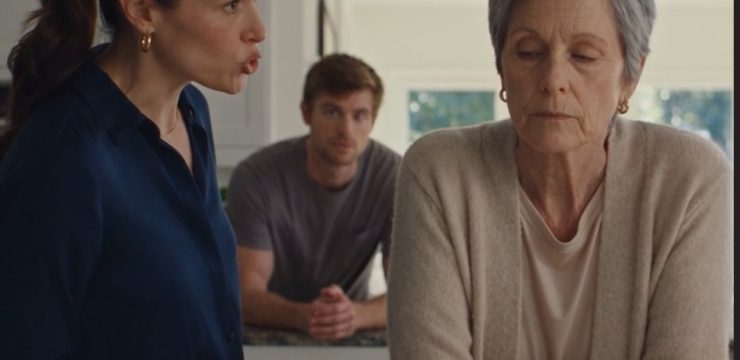
Her daughter noticed before Margaret was willing to admit it herself.
“Mom, you have to go to a doctor. This isn’t something you should keep waiting on,” she said, her voice carrying both firmness and fear.
Margaret waved it off the first time. And the second. At her age, she reasoned, something always hurt. That was just the reality of a life well lived. But when one morning she woke up and could barely sit upright from the pain radiating through her midsection, she finally picked up the phone.
The doctor who saw her was thorough and attentive. He listened carefully, asked detailed questions about the duration and nature of the pain, and conducted a physical examination with quiet professionalism. When he had gathered enough information, he leaned back and said, calmly but seriously, “We need to start with an ultrasound. It will tell us a great deal about what’s happening.”
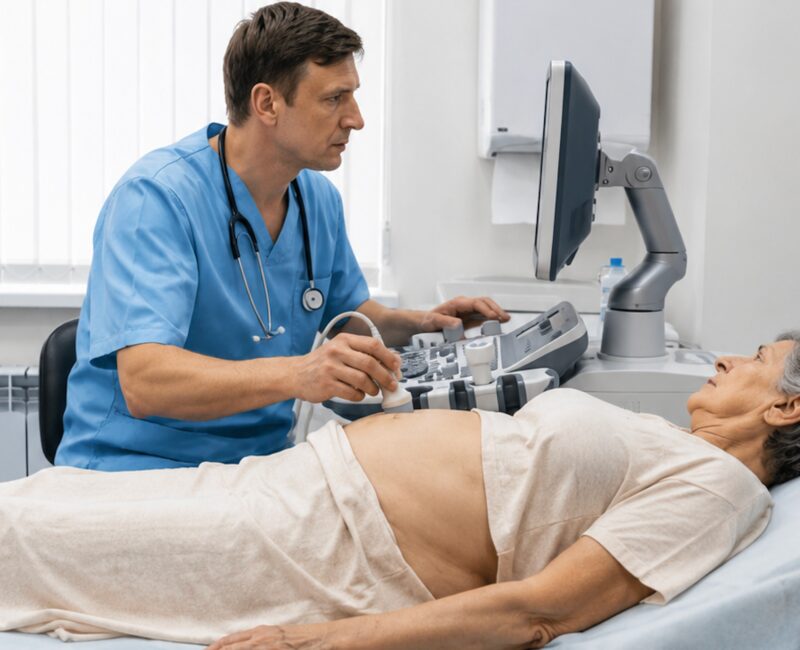
Margaret arrived at the imaging department the following day. The room had the sterile, hushed quality that medical spaces always carry — bright overhead lighting, cool air, the faint hum of equipment. The technician was kind and efficient. She helped Margaret onto the examination table, applied the cool gel to her abdomen, and began slowly moving the probe across her skin while watching the monitor.
The first few minutes passed without incident. The specialist kept his gaze fixed on the screen, his face composed and unreadable, as medical professionals are trained to be.
Then something shifted.
He leaned forward. His brow furrowed. He moved the probe slightly and stared harder at the image on the monitor, as though looking at something that refused to make sense to him. He pulled off his glasses, cleaned the lenses carefully, and looked again.
“My God,” he whispered. “That can’t be possible.”
Margaret felt a cold chill move through her. She turned her head toward him.
“What is it? Is something terribly wrong?”
He did not answer immediately. He adjusted the settings on the machine, repositioned the probe, and studied the image from a new angle. Then, almost reluctantly, he said, “I need to bring someone else in to look at this.”
He stepped out and returned within minutes with a colleague. The two doctors stood side by side in front of the monitor. One of them pointed to something on the screen. The other raised her eyebrows slowly. They spoke in quiet, careful tones that Margaret could not fully make out.
“Are you seeing what I’m seeing?”
“Yes. Yes, I am.”
Margaret’s heart was pounding.
“Please,” she said. “Will someone tell me what is going on?”
The room fell into a tense, heavy silence. The kind of silence that makes a person’s mind race to the darkest possibilities.
Finally, one of the doctors turned to face her. He spoke gently but deliberately, choosing his words with care.
“Margaret, in all my years of practice, I have genuinely never seen anything like this.”
She braced herself. “Is it cancer?”
“No,” he said. “It is not cancer.”
“Then what is it?”
He took a slow, steady breath.
“The ultrasound is showing signs of a pregnancy.”
Margaret stared at him without speaking for a long moment.
“I’m sorry,” she finally said. “Could you say that again?”
“You are pregnant, Margaret.”
She blinked. Then, almost instinctively, she let out a soft, disbelieving laugh. “There has to be a mistake. Run it again.”
They did. Multiple times. Additional tests were ordered. Specialists were brought in for consultations. Every single result pointed to the same extraordinary conclusion.
There was no mistake.
The news spread quietly but swiftly through the clinic. Doctors who had spent decades in medicine admitted they had never personally encountered a case like it. A pregnancy at Margaret’s age sat so far outside the boundaries of what medicine considers possible that many of the staff struggled to process it. Words like “extraordinary” and “unprecedented” were used carefully and often.
When Margaret shared the news with her family, the initial response was disbelief. Her daughter thought she had misunderstood something, or perhaps that the doctors had confused her charts with another patient. But the documentation was clear. The confirmations were thorough. There was no room left for doubt.
For Margaret, absorbing the reality of what had happened took time. She had walked into that clinic fearing the worst diagnosis imaginable. She had mentally prepared herself for a conversation about illness or decline. What she received instead was news so unexpected, so completely outside the realm of anything she had anticipated, that it took days before it truly began to sink in.
Life, in its most stunning and humbling moments, reminds us that there are still things beyond what any of us — no matter how experienced, no matter how wise — can fully predict or explain.
And that is exactly what the doctor meant when he whispered those words in the quiet of that examination room:
“My God… that can’t be possible.”
Sometimes, impossibly, it can.