“You’re only the mother of a soldier.”
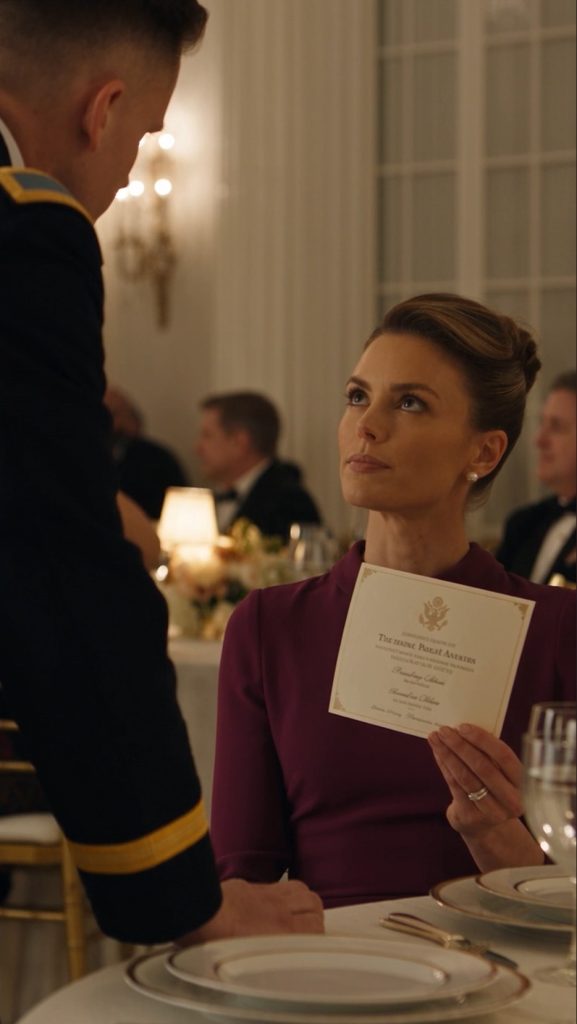
The words were barely louder than the music, but they struck with enough cruelty to silence the people nearby. A woman invited to sit among the evening’s honored guests was being ordered to the back of the ballroom—and the officer humiliating her had no idea who he was speaking to.
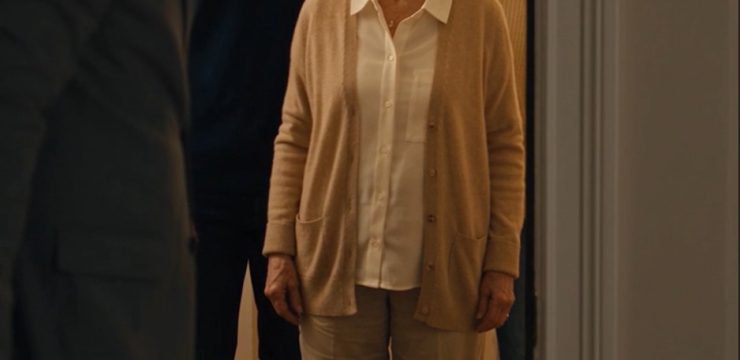
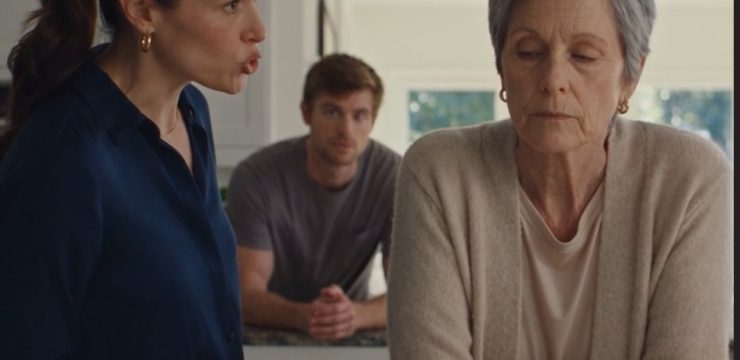
Colonel Derek Maddox stood beside Eleanor Bennett’s chair, his eyes passing over her modest navy dress, pearl earrings, and silver hair.
“You need to move, ma’am. This table is reserved for honored guests.”
Eleanor glanced at the place card beside her untouched napkin.
“I believe this is my assigned seat.”
Derek ignored the card. “What rank was your son?”
Something shifted behind Eleanor’s calm expression. Her fingers went still.
“He isn’t serving anymore.”
A faint, dismissive smile crossed Derek’s face.
“Then you have even less reason to be sitting here.”
Above them, chandeliers glittered. A string quartet played softly while servers carried champagne between tables crowded with officers, veterans, donors, and military families.
Eleanor looked directly into his eyes.
“Are you certain?”
Derek’s jaw tightened. He summoned a banquet employee and pointed toward the rear of the hall.
“Move her to the back.”
The employee hesitated. Two nearby guests fell silent.
Then came Derek’s final insult.
“You’re only the mother of a soldier.”
Eleanor said nothing. She picked up her purse, carefully rose, and walked away as her chair scraped softly against the floor.
Derek returned to his table near the stage, smiling before he even sat down.
At the final row, a young banquet employee pulled out a chair.
“I’m very sorry, ma’am.”
Eleanor noticed his name tag.
“You didn’t make that decision, Caleb.”
“I still don’t like it.”
“That speaks well of you.”
He managed a small, uncomfortable smile.
From her new seat, Eleanor could see almost everything.
The annual Fort Liberty military families memorial gala filled a convention hotel in Fayetteville, North Carolina. American flags framed the stage, gold stars adorned the centerpieces, and photographs of fallen service members lined the entrance hall.
Eleanor had arrived twenty minutes early, carrying her invitation. She had come alone, without an escort, and requested no special announcement.
Apparently, that had been enough for Derek to decide she didn’t belong.
Caleb returned with water, glancing toward the front.
“Your place card really said that table?”
“It did.”
His expression hardened.
“Don’t get yourself in trouble,” Eleanor told him gently.
Across the ballroom, Derek was already laughing with powerful guests.
Brigadier General Marcus Hale sat nearby, speaking with executives from a defense manufacturing company. Derek listened attentively, leaning forward whenever someone important spoke.
He had spent months preparing for this evening.
A new military family scholarship foundation was being established, with an executive director position that promised prestige, influential connections, and a salary far beyond his military earnings.
Derek wanted that position after retirement.
He had learned the donors’ names, remembered their spouses, discussed their children’s universities, and cultivated every connection that might help him secure it.
Tonight, he believed his future was sitting at that table.
He never looked toward Eleanor again.
A woman beside Eleanor leaned closer. A small gold pin marked her as a Gold Star family member.
“I saw what happened,” she whispered. “Did they change your seat?”
“It seems they did.”
“I’m Susan Parker.”
“Eleanor Bennett.”
Susan’s expression changed.
“Bennett?”
“Yes.”
For a moment, Susan studied Eleanor’s face with unusual intensity.
“Have we met before?”
“I don’t believe so.”
Susan opened her mouth, apparently ready to ask something else.
But the quartet stopped.
An announcement instructed everyone to take their seats.
At the front, Derek straightened his dress uniform and settled comfortably beside the people he hoped would shape his future.
At the back, Susan was still looking at Eleanor.
And the question she hadn’t finished asking suddenly seemed far more important than anything about to be said onstage. 👇
Susan reached across the table, her fingertips trembling slightly.
“Was your son Daniel Bennett?”
Eleanor turned toward her.
For the first time that evening, her composure faltered.
“Yes,” she whispered. “Staff Sergeant Daniel Bennett.”
Susan drew a sharp breath.
“My son was Aaron Parker.”
Eleanor’s hand tightened around the edge of her napkin.
She knew that name.
She had known it for twelve years.
Before either woman could speak again, Brigadier General Marcus Hale stepped onto the stage.
“Good evening, everyone. Tonight, we gather to remember the men and women whose sacrifices changed our families forever.”
The ballroom quieted.
Hale paused, looking across the rows of military families.
“We also gather to make a promise. That their children will never have to face the future alone.”
Derek sat straighter.
This was the announcement he had been waiting for.
The foundation.
The donors.
The opportunity that could define the rest of his career.
Hale continued.
“This scholarship foundation began with a private gift from a Gold Star family. Its founding trustee asked that her contribution remain anonymous during our initial fundraising.”
Derek glanced toward the executives seated beside him.
One of them smiled politely.
“But tonight,” Hale said, “she has agreed to stand before us. Not because she wants recognition, but because she believes the families we serve deserve to know why this foundation exists.”
At the back of the room, Eleanor lowered her eyes.
Susan was still holding her hand.
Hale looked toward the front table.
“It is my privilege to welcome Mrs. Eleanor Bennett, mother of Staff Sergeant Daniel Bennett, and the founding chair of this scholarship foundation.”
Applause began.
Then faltered.
The chair bearing Eleanor’s name was empty.
Derek looked at it.
He looked toward the stage.
And then, very slowly, he turned around.
Eleanor was standing at the back of the ballroom.
For several seconds, Derek did not move.
The woman he had ordered away from the honored guests was the person whose foundation he hoped to lead.
Hale’s expression changed as he located her.
“Mrs. Bennett? Is everything all right?”
Eleanor nodded.
“Yes, General. Just a small change in seating.”
She began walking toward the stage.
Guests turned to watch her pass.
Derek rose before she reached his table.
“Mrs. Bennett,” he said hurriedly, stepping into the aisle. “There seems to have been an unfortunate misunderstanding.”
Eleanor stopped.
“Does there?”
“I wasn’t informed of your identity.”
She studied his face.
“You asked about my son, Colonel.”
Derek swallowed.
“I meant no disrespect.”
“You told me I didn’t belong.”
A silence spread across the nearby tables.
Derek glanced toward Hale, who had stepped down from the stage.
“General, I believe the banquet staff made an error with the seating arrangements.”
Caleb, standing near the service entrance, went pale.
Eleanor saw him.
She also saw Derek’s expression, the quick calculation behind his apology.
He wasn’t trying to correct what he had done.
He was trying to survive it.
Eleanor had spent twelve years learning that grief could make a person either more compassionate or more bitter.
Now she faced a choice.
She could accept Derek’s explanation, return to the front table, and let the young employee carry the blame.
Or she could speak.
She turned toward Hale.
“The staff made no mistake, General. My place card was correct.”
Hale’s gaze settled on Derek.
“Colonel?”
Derek straightened instinctively.
“I exercised my judgment regarding the seating protocol.”
“By moving her to the back?”
“I wasn’t aware of her position with the foundation.”
Hale remained silent.
Eleanor took a breath.
“That is precisely the problem.”
Her voice was quiet enough that the nearest guests leaned forward to hear.
“You believed I was an ordinary military mother. And you decided that made me unworthy of sitting beside you.”
Derek’s face reddened.
“That’s not what I—”
“You told me I was only the mother of a soldier.”
No one moved.
Then Caleb stepped forward.
“General, I heard him.”
Derek turned sharply.
“Stay out of this.”
Caleb stopped, frightened by the command.
But Susan rose from her chair.
“So did I,” she said.
She moved into the aisle, her gold star pin catching the light.
“And I watched Mrs. Bennett walk past every table in this room while Colonel Maddox returned to his dinner.”
Hale looked at Derek for a long moment.
“Colonel, did you say those words?”
Derek opened his mouth.
Nothing came out.
Finally, he looked away.
“Yes, sir. But I did not understand who she was.”
Hale’s expression hardened.
“You understood she was a mother.”
The words seemed to remove something from Derek that his uniform could no longer restore.
One of the executives quietly pushed back his chair.
Another folded his hands and looked toward the stage.
Derek stared at them, realizing that the people he had spent months trying to impress were no longer willing to meet his eyes.
Eleanor stepped closer.
“My son spent his last years making sure the soldiers around him never felt less important than anyone else.”
Her voice thinned.
“I won’t have his name attached to a foundation led by someone who treats their families that way.”
Hale nodded.
“As the foundation’s founding chair, Mrs. Bennett has raised a serious concern about your suitability. I share it.”
He faced Derek.
“Your candidacy for executive director is withdrawn from consideration, effective tonight. Your conduct will also be formally referred to your command for review.”
Derek stood motionless.
Months of carefully cultivated relationships had collapsed because of a choice he had made in less than a minute.
“General,” he began, “my retirement—”
“Your retirement is a separate matter, Colonel. This evening is about the families you were invited to honor.”
Derek looked toward Eleanor.
For the first time, he seemed to understand that another apology could not restore what he had lost.
She did not humiliate him further.
She simply walked past.
Onstage, Hale adjusted the microphone for her.
Eleanor placed her invitation on the lectern.
Her hands were trembling now.
“I didn’t come here expecting to speak about myself,” she began.
She looked toward Susan.
“My son Daniel served with men who became his brothers. One of them was Aaron Parker.”
Susan covered her mouth.
Eleanor paused until she could continue.
“Daniel and Aaron were killed during the same deployment. For years, I’ve carried letters describing their friendship.”
She unfolded a small, worn piece of paper from her purse.
“In one letter, Daniel wrote about Aaron’s little girl. He said Aaron talked about her college graduation as though it were something he could already see.”
Eleanor smiled through gathering tears.
“Daniel wrote that if anything ever happened to them, somebody ought to make sure their children still had those chances.”
The ballroom was completely still.
“That is why this foundation exists.”
She looked out at the rows of gold star pins.
“Not because these families need our pity. Because their children deserve the futures their parents dreamed of giving them.”
When she finished, the applause rose slowly.
Susan was crying openly.
And Caleb, standing beside the service entrance, was clapping with both hands.
The scholarship announcements followed.
A young woman in a simple blue dress walked toward the stage when the first recipient’s name was called.
“Hannah Parker.”
Eleanor looked up sharply.
Susan reached for the empty chair beside her.
“My granddaughter,” she whispered.
Hannah was Aaron’s daughter.
The little girl Daniel had written about.
She had applied through the foundation’s independent scholarship process, where applications were reviewed without identifying information. Eleanor had known the recipient’s name but never realized the connection.
Now Hannah stood beneath the flags, holding the certificate that would help her finish college.
Eleanor could barely speak.
After the ceremony, Hannah approached her.
“My grandmother told me who you are.”
Eleanor took her hands.
“Your father loved you very much.”
Hannah nodded, trying to smile.
“I know.”
Then she reached into her small evening bag.
“I brought something.”
It was a photograph, creased at the corners.
Two young soldiers stood shoulder to shoulder beneath a bright, unforgiving sun.
Daniel and Aaron.
On the back, in Daniel’s handwriting, were seven words.
We’ll make sure the little ones get there.
Eleanor covered her face.
For twelve years, she had remembered her son’s promise as an unfinished dream.
Now the daughter he had worried about was standing in front of her, preparing to graduate from college.
Susan stepped beside them.
“He never got to see her grow up,” she whispered.
Eleanor looked at Hannah.
“No. But he helped make sure she could.”
The three women held one another while the ballroom gradually emptied.
Caleb approached quietly with Eleanor’s original place card.
“I thought you might want this.”
She accepted it.
“Thank you for speaking up tonight.”
He looked down.
“I was scared.”
“I know.”
Eleanor touched his sleeve.
“Courage isn’t always loud, Caleb.”
He smiled, this time without hesitation.
The hotel manager, who had witnessed his actions, later commended him formally. He remained employed, and Eleanor made certain nobody blamed the banquet staff for Derek’s conduct.
In the following weeks, the foundation’s trustees formally confirmed Derek’s removal from consideration. The command review documented his treatment of Eleanor and his attempt to blame the staff.
He retired without the prestigious second career he had imagined.
No grand public punishment followed.
His own words had simply become part of a record he could no longer control.
The foundation chose an experienced military family advocate as its first executive director, with Eleanor’s support.
Susan began volunteering with its family outreach program.
And Hannah continued her studies, writing Eleanor letters about her classes, her plans, and the small victories her father would have celebrated.
One afternoon several months later, Eleanor invited Susan and Hannah to her home.
Rain tapped softly against the kitchen windows.
They drank tea at the table where Daniel had once done his homework, leaving pencil marks in the wood that Eleanor had never wanted to polish away.
Hannah noticed a framed photograph on the mantel.
Daniel, younger than she had ever seen him, was laughing at something outside the frame.
“He looks happy,” she said.
“He was,” Eleanor answered.
Then, after a moment, “He was also terribly untidy.”
Susan laughed.
Eleanor laughed with her.
It felt strange at first, laughing while speaking about the boys.
Then it felt right.
Before leaving, Hannah hugged Eleanor tightly.
“Do you think they’d be proud of us?”
Eleanor glanced toward Susan.
Neither mother answered immediately.
At last, Eleanor smiled.
“I think they’d be very glad we found each other.”
When the visitors had gone, Eleanor returned to the kitchen and placed the photograph of Daniel and Aaron beside her son’s old letters.
Outside, the rain had stopped.
Evening sunlight moved gently across the table.
For years, that house had seemed filled with the absence of one beloved voice.
Now it held the memory of laughter, the promise of future visits, and two families who had finally found their way to one another.
Eleanor touched the photograph once, turned off the kitchen light, and went to make up the guest room for Hannah’s next visit.