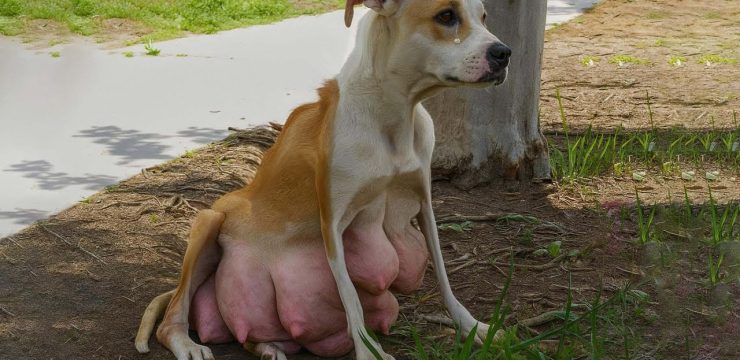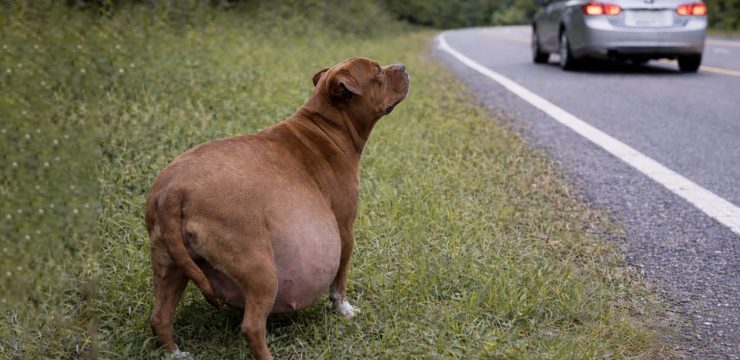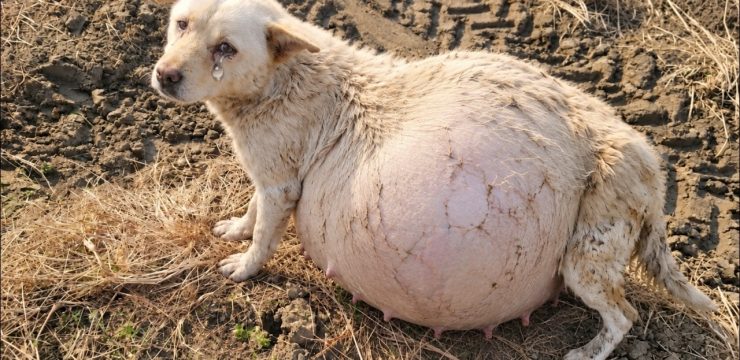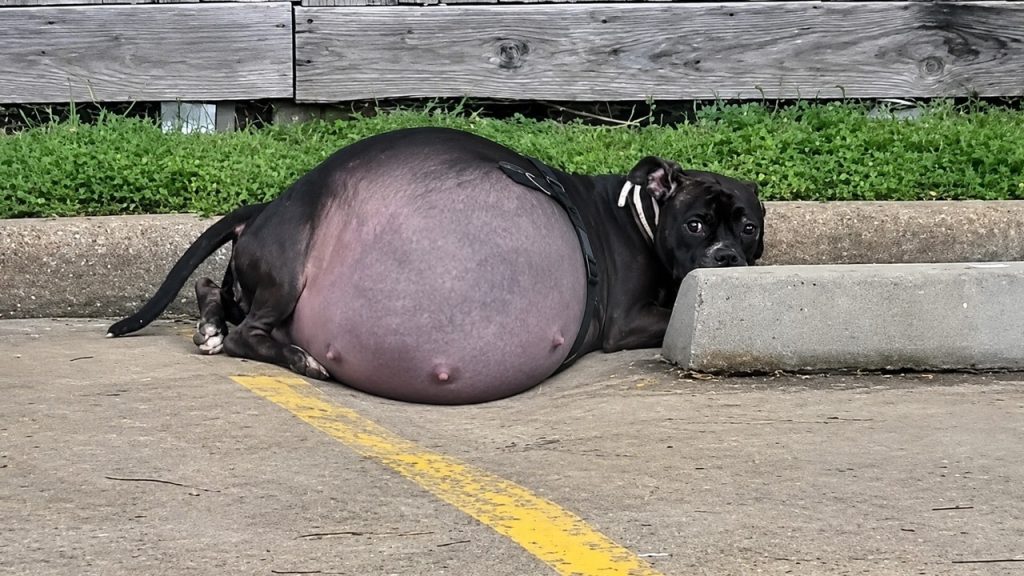
There was a painful contrast in her appearance. Her frame was emaciated, yet her abdomen was distended beyond what seemed possible for such a weakened dog. People passing by could easily misunderstand what they saw. To experienced animal rescuers, however, the swelling suggested something more serious than pregnancy. Bonita needed medical attention, not another day of being overlooked.
Her condition spoke of prolonged hardship without telling anyone exactly what she had endured. Dirt covered her coat, and fleas had made her body their home. She was so weak that even remaining still seemed to reflect the toll of her suffering. Beneath the neglect was a gentle dog whose needs had gone unanswered for far too long.
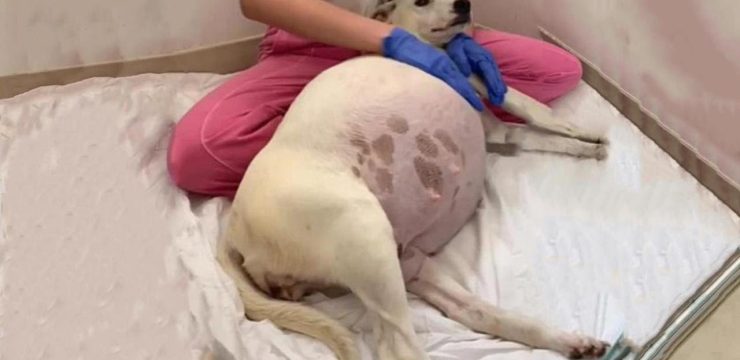
The rescuers recognized the danger and brought her to a veterinary clinic. There, the concern that had begun on the street became an urgent medical reality. Bonita’s swollen abdomen was filled with fluid. The veterinarians suspected a serious underlying illness, possibly heart failure or another disease, but the cause was not established in the account of her rescue. What was certain was the distress that the swelling had caused.
During her first procedure, the veterinary team drained six liters of fluid from her abdomen. Six liters. For an animal already weakened by neglect and poor condition, the amount was difficult to comprehend. The procedure addressed the enormous pressure inside her belly, but it was only one part of the care she would need. Removing fluid was not the same as resolving the problem that had allowed it to collect.
Bonita also needed relief from the filth and parasites covering her skin and fur. Her first bath revealed another upsetting reminder of how much she had been through. The water turned red as dirt and evidence of heavy flea infestation washed away. It was a harsh image, not because of anything dramatic that happened in that moment, but because an ordinary act of cleanliness had become so desperately necessary.
Through these difficult treatments, Bonita remained gentle and cooperative. She had every reason to be exhausted. Her body was frail, and the medical care she needed was demanding. Yet the people helping her were able to work with a dog whose quiet nature remained visible even in the midst of pain. There was something moving about that gentleness.
A single procedure could not give Bonita her strength back. Her recovery required medication to help control the fluid buildup and a specialized diet to support her condition. Veterinary treatment remained essential, while the rescuers supplied the patient attention and kindness that had been missing from her life. Progress depended on continuing that care, even when improvement could not be measured by one dramatic moment.
Day by day, Bonita began to change. Her rescuers saw more than the physical effects of treatment. They saw a dog learning that the people around her were there to help. Trust did not need to arrive all at once to matter. Each step toward feeling safer was meaningful after so much uncertainty and discomfort.
As her care continued, the swelling in her abdomen gradually disappeared. The belly that had once drawn mistaken assumptions on the street returned to a normal appearance. Her body no longer told the same alarming story at a glance. The change was striking, but it carried a deeper meaning: Bonita was no longer simply enduring a condition that had dominated her every moment.
Other signs of recovery followed. Her eyes regained their brightness, and her coat became smooth and healthy. The dog who had once been covered in dirt and fleas began to look like an animal receiving the attention she deserved. None of those changes erased the hardship that came before. They showed what careful treatment, protection, and steady compassion could make possible.
Perhaps the most touching changes were the ordinary ones. Bonita learned to sleep peacefully. A quiet rest, something easily taken for granted, had become part of her life. Her tail began to wag with joy. She could play in the garden, enjoying the kind of simple activity that had seemed so distant when she was found weak and motionless on the street.
Those moments mattered precisely because they were so simple. A comfortable sleep does not make headlines. Neither does a happy tail wag or a dog finding pleasure in play. But for Bonita, these everyday experiences marked an enormous distance traveled. Her world had changed from pain and uncertainty to one where comfort, care, and happiness were possible.
It would be easy to describe her transformation only through what could be seen: a smaller belly, a healthier coat, brighter eyes. Yet her journey was also about the way people chose to respond to suffering. The rescuers did not accept the easy explanation that she was pregnant. They looked more closely, recognized a crisis, and made sure she received medical help.
Bonita’s story does not require an invented ending or a promise that every medical concern has vanished. The recovery described is already meaningful. A dog once struggling beneath an enormous swollen abdomen became a dog who could rest, wag her tail, and play. She received treatment for a serious condition and ongoing care from people determined to help her heal.
When she was first seen on that busy street, her appearance invited a mistaken assumption. What she needed was someone willing to look beyond it. Bonita’s second chance began with that recognition and grew through medical skill, patience, and compassion. Her brighter eyes and peaceful sleep are reminders that a suffering animal is never just a condition to be treated. She is a life worth caring for.