I was seventy years old when I walked into my own beach cottage and found twenty-one people already sleeping, eating, and making vacation plans inside it.
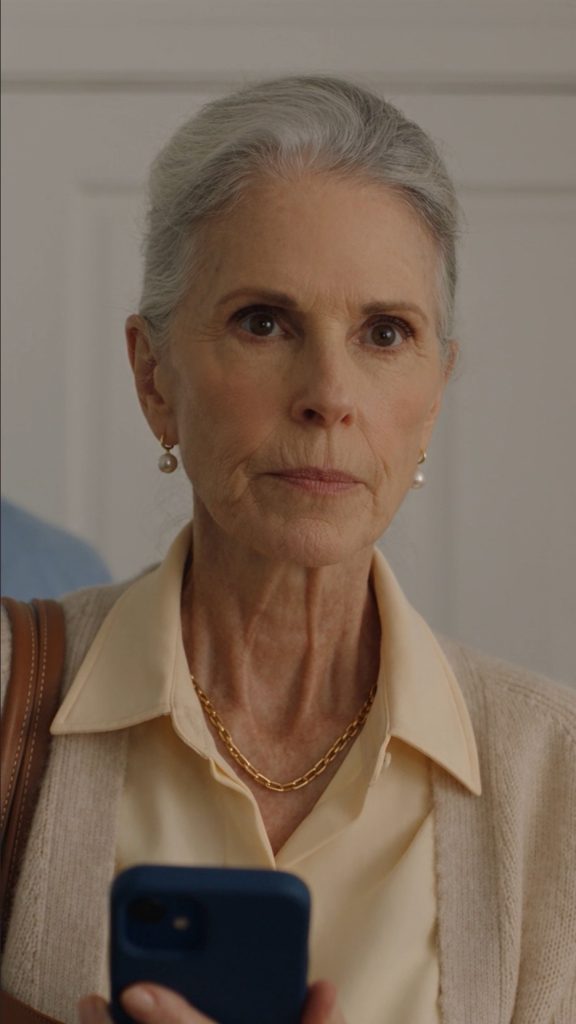
Six unfamiliar cars filled my driveway, every bedroom had been claimed, and wet bathing suits were draped across furniture my late husband Henry and I had owned for decades. Then my son looked at me and said, “Mom, you were supposed to come tomorrow.”
For a moment, I honestly thought I had misunderstood him. I stood in the doorway with my overnight bag over one shoulder while music blasted from the deck and children I had never seen ran through the hallway carrying plastic beach toys. Someone had pushed our wedding photograph partly behind a Bluetooth speaker, covering half of Henry’s face. The entire house smelled like sunscreen, coffee, fried shrimp, and somebody else’s vacation.
My vacation home.
My house.
I had driven down one day early because I wanted one quiet evening before my son Robert, his wife Megan, and my two teenage grandchildren arrived. The plan I knew about was simple: four nights, four family members, and time together at the cottage Henry and I had owned for thirty-seven years. Robert had learned to swim there, Henry taught him to fish from the old pier, and later our grandchildren slept in the same little upstairs room their father once filled with jars of shells. After Henry died four years earlier, I visited less often because every room remembered him too clearly.
The hardest room was the sunroom facing the ocean. Henry spent his final summer there after cancer made walking to the beach too exhausting. Every morning I brought him coffee, and he sat beneath those windows with a blanket over his knees watching the tide. Sometimes we talked, sometimes we did not, and near the end silence became enough.
That was where I expected to sit alone that evening.
Instead, someone had apparently planned to sleep there.
I walked into the kitchen and stopped cold. A young man I did not recognize was drinking coffee from Henry’s chipped navy mug with the faded white anchor. He immediately noticed my expression and asked if the mug belonged to me. Before I could answer, Megan appeared in a white beach cover-up holding a bowl of watermelon.
“Oh,” she said. “You’re here.”
I looked at her. “I appear to be.”
Megan glanced at the young man holding Henry’s mug and said, “Everything here is basically family stuff.” Then I looked past her at Robert, my forty-seven-year-old son, standing beside the island and refusing to meet my eyes. That was when I understood something I had been too generous to notice before. In their minds, my belongings had slowly stopped being mine and become available.
“How many people are staying here?” I asked.
Megan answered before Robert could.
“Twenty-one.”
Fourteen adults and seven children. Her parents, her sister and brother-in-law, cousins, friends from Atlanta, another couple I had never met, plus all their children. Every bedroom had been assigned, the pullout sofa was taken, air mattresses were upstairs, and someone had claimed the sunroom.
I looked at Robert. “You knew?”
“We thought it would be fun.”
“Who is we?”
“Megan and me.”
Then he repeated the sentence that changed the meaning of everything.
“You were supposed to come tomorrow.”
Not I’m sorry.
Not We should have asked.
I had arrived too early at my own house.
When I asked how twenty-one people had even gotten inside, Robert admitted he had used the emergency lockbox code I gave him years earlier for storms and agreed family visits. He said the lockbox was not “just for emergencies” anymore. I reminded him that access had always existed because I allowed it.
Then I asked Megan what she had told all these people.
“The family beach house.”
“It is my beach house.”
The kitchen went quiet.
Megan told me there was not really space for “another person” that night because the bedrooms had already been assigned. I stared at her, because apparently I had become another person in my own home. Then I remembered something she had said three weeks earlier without knowing I was outside the open kitchen window.
“When it’s ours, the first thing going is that ugly little sunroom.”
Robert had reminded her that I loved that room.
Megan had answered, “She won’t be there.”
Then she started talking about opening the wall, expanding the kitchen, making the back side glass, and eventually renting the cottage for income. I had stood outside my own home listening to them plan renovations around a future in which I no longer existed. Not if the house became theirs.
When.
That conversation had already pushed me to call my attorney, Samuel Greene. For years, Henry and I assumed the cottage would eventually pass directly to Robert. After hearing Megan talk about demolishing Henry’s sunroom and after months of questions about property values, taxes, rental income, and renovations, I quietly changed that plan.
I did not disinherit my son.
I did not punish my grandchildren.
But the cottage would no longer pass automatically to Robert.
Samuel had also prepared a document revoking Robert’s unrestricted access during my lifetime. I had not signed it yet because part of me hoped I was overreacting. Then I walked into twenty-one people occupying every bed and heard there was no room for me.
I pulled out my phone.
Megan gave a nervous laugh. “Are you calling a hotel?”
“No.”
I called Samuel.
“I want you to send the letter.”
He asked if I was certain.
I looked at Robert, at Megan, and at Henry’s photograph partly hidden behind someone else’s speaker.
“Yes.”
Then I gathered all twenty-one guests and calmly explained that I believed most of them genuinely thought they had been invited with the owner’s permission. Several nodded. I told them I believed them, but that the gathering had never been authorized by the owner.
“That is me.”
I asked everyone to gather their belongings and find somewhere else to stay. Megan’s father looked horrified, her sister apologized, and people immediately began packing. When a little girl started crying because she thought she had done something wrong, I knelt beside her and told her she had not.
By 8:30, only Robert, Megan, and my grandchildren remained.
Samuel’s notice arrived on Robert’s phone.
His unrestricted access was over.
He cried when he realized I was taking back the key his father had once given him, and I hugged him because love does not disappear simply because trust changes. But I did not return the access.
They left shortly after nine.
At 12:42 that morning, my phone buzzed.
Megan.
Her first message said: You made your point. But Robert was not the one making plans for the house.
Then another appeared.
If you really want to know why I thought it was basically ours, ask your son what he signed in October.
I sat upright.
October.
Months before twenty-one people filled my house.
My son had signed something involving property he did not own.
My phone was still glowing in my hand when I called him.
He answered on the first ring. There was no sleep in his voice, only breathing, and behind it the low hum of an engine idling somewhere in the dark.
“Robert. What did you sign?”
A turn signal ticked, then stopped. “I’m in the parking lot of the Seaside Inn,” he said finally. “Megan’s asleep. The kids are asleep.” His voice caught on the last word. “I’ll come at sunrise, Mom. I’ll bring all of it.”
“Tell me now.”
“Not over the phone. Please. I need to be looking at you when you find out.”
He hung up before I could answer, and I sat alone with the sound of the tide and the empty beds upstairs.
I didn’t sleep. At five I made coffee and carried it into the sunroom the way I used to for Henry. I poured it into his navy mug and set it on the windowsill where his hand used to rest, and I watched the sky turn from ink to pewter to pale gold.
Robert’s car pulled in at 6:10. He came up the steps in yesterday’s shirt, holding a blue folder flat against his chest like a shield. In the sunroom doorway he saw the mug on the sill, and something in his jaw gave way.
He handed me the folder without a word.
Harbor Line Design & Build. Renovation Agreement. Removal of rear sunroom. Structural wall opening. Kitchen expansion. Glass rear elevation. Deposit: eighteen thousand dollars. Signed October 14th.
Robert’s signature sat at the bottom. Beneath it, printed neatly: Owner’s Representative.
“Owner’s representative,” I said.
“Megan told me you’d agreed. She said you told her on the phone that the room made you too sad, that you didn’t want to deal with it anymore.” He pressed the heel of his hand into one eye. “I should have called you. I knew I should have called you.”
“Why didn’t you?”
His mouth opened. Nothing came out. Outside, a gull landed on the deck rail and screamed at the morning.
I turned the page. Behind the contract was a printed email chain, Megan to a man named Dale Pruitt.
My mother-in-law is in early cognitive decline. My husband handles her affairs. She can become confused and agitated, so we’d prefer she not be contacted directly.
The folder slid against my knees.
“I found that last week,” Robert whispered. “I printed it at the library because I didn’t know what else to do with it.” He swallowed. “She told a stranger you were losing your mind. And I signed my name next to it.”
Before I could speak, tires crunched on the gravel.
A white pickup truck. Harbor Line Design & Build painted on the door.
The color left Robert’s face. “The final measurement. She scheduled it for this morning. She thought you’d be—”
“Not here,” I said.
A second car pulled in behind the truck. Megan’s.
I stood in Henry’s sunroom with that folder in my hands and understood the choice in front of me. If I pushed this into the open, my son’s name would be on every page of it. If I stayed quiet, I could shield him, and Megan would simply wait and try again.
I thought of Henry on the old pier, teaching a small boy to bait a hook. He had never once taught Robert to hide.
I opened the front door.
Dale Pruitt was a broad, sunburned man with a tape measure clipped to his belt. He looked at me, then down at his clipboard. “Morning, ma’am. I’m here to meet the owner’s representative about—”
“I’m the owner,” I said. “And I’m not confused.”
Megan came up the walk fast, sunglasses on, car keys still clenched in her fist. “Dale, I am so sorry, she wasn’t supposed to—”
“You told me she couldn’t be contacted,” Dale said slowly. “You told me she had dementia.”
Megan’s smile held for exactly one second. Then it didn’t.
“She’s seventy,” she said, turning to Robert as if that settled everything. “Everyone knows how this ends. I was planning ahead. Somebody in this family had to.”
Robert stood beside me on the porch. For most of his life I had watched him step aside when voices rose. He didn’t step aside now.
“You told a stranger my mother was losing her mind,” he said quietly. “You told your parents she invited them. You told me she agreed.” His voice shook, but it held. “I’m done signing things for you, Megan.”
Dale took the agreement from his clipboard and tore it straight down the middle. “No owner signature, no contract. Deposit goes back where it came from.” He looked at Megan for a long moment. “And anyone who asks about this job gets a copy of those emails.”
Nobody moved. The wind pushed at the screen door. Megan looked from Robert to me to the truck, searching for the angle that would save her, and I watched the exact moment she understood there wasn’t one.
Her father came an hour later to drive her back to Atlanta. He stood on my porch turning his hat in both hands, unable to lift his eyes. “She told us you’d invited everyone,” he said. “I’m ashamed I never called to thank you myself. I would have known.”
When his car disappeared down the road, the silence it left was enormous. Robert sat on the porch steps. I sat beside him. For a long time neither of us said a word.
“I don’t know how to fix this,” he finally said.
“You started last week,” I told him. “At the library.”
Near noon, I sent photos of every page to Samuel. He called back within twenty minutes.
“Have you read the last page?”
I hadn’t. I turned to it. Beneath the printed terms, in Robert’s cramped handwriting, initialed twice: No work may begin without the written signature of the property owner. The sunroom is not to be touched without her consent.
“Megan never read the final page,” Samuel said. “That clause is the reason this contract was never enforceable. Your son made sure of it.” He paused. “There’s something else. When you called me three weeks ago asking me to prepare that revocation, it was already drafted. Robert phoned me in October. He said, ‘If my mother ever wants to take my key back, make it easy for her. She won’t want to ask twice.’”
I lowered the phone slowly.
Robert was standing in the sunroom doorway. He had heard enough.
“You asked for that letter,” I said. “The one I sent you last night.”
“I couldn’t stop her out loud,” he said. “So I tried to stop her on paper.” His eyes filled. “I couldn’t look at you yesterday because I knew what I’d let into your house.”
I crossed the room and held my son the way I had held him at seven, when the waves frightened him. He folded against me, all forty-seven years of him, and shook until the shaking finally stopped.
My grandchildren arrived that evening. Lily carried a jar of shells she had gathered on the walk from the inn. Owen held out a folded drawing from the little girl who had cried: a blue house, a stick-figure grandmother, and in careful crayon letters, YOU WERE NICE TO ME.
I lifted our wedding photograph from behind the empty space where the speaker had been and set it on the sunroom sill, where the last light could reach Henry’s whole face.
We ate dinner on the deck, the four of us. No music. Only the ocean, doing what it had done every summer for thirty-seven years.
Before bed, Robert knocked softly on the sunroom door. He didn’t ask for the code. He simply opened his palm, and his father’s old key lay in it.
“This is yours,” he said.
I closed his fingers gently back around it.
“Keep it,” I said. “Just knock first.”
He laughed through his tears, the first real laugh I had heard from him in years, and I picked up Henry’s mug, still warm, and sat down beneath the windows while my son sat beside me, and together we watched the tide come home.