The emergency key turned in the front door before I had time to convince myself I was imagining it.
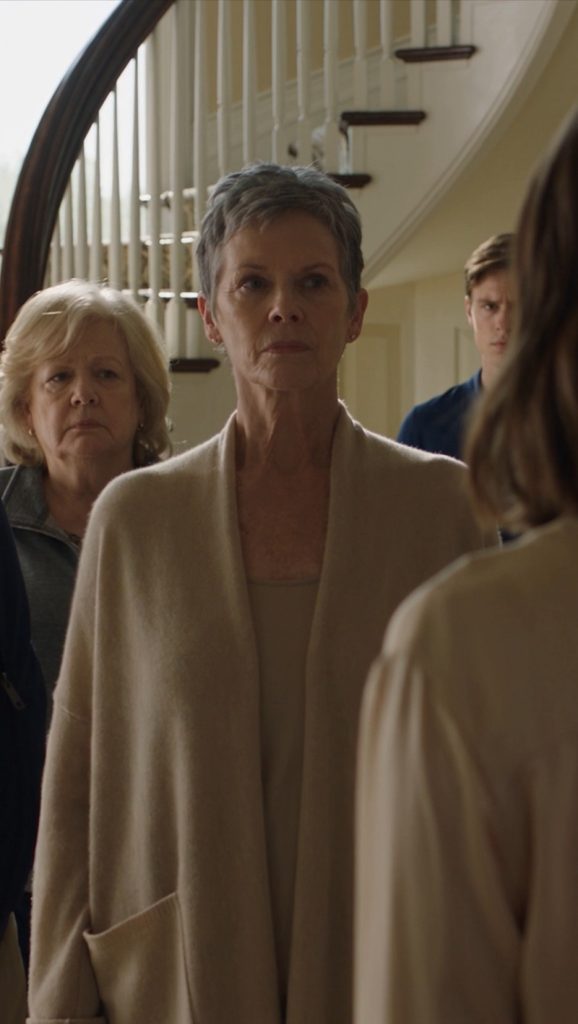
Three days earlier, I had said no. Clearly. Firmly. Yet now suitcases were rolling across my heart-pine floors, and the people I had refused were walking into my home as though my answer had never mattered.
Kendall entered behind her parents. My son, Carter, followed last, eyes fixed somewhere near the floor.
Beside me, on the console table, sat a blue estate folder none of them knew about.
Rita barely looked at me before studying the staircase.
“We’ll take the corner bedroom,” she said.
Not ask. Take.
Douglas pushed his suitcase deeper into the foyer and wanted to know which room was my study. My desk, apparently, occupied too much space. He thought the room would make a better television room.
Kendall gave me that carefully controlled smile she used whenever she wanted my anger to look unreasonable.
“Let’s keep this calm, Donna. Everyone’s tired.”
My hand tightened around the banister Warren had restored himself.
For a few seconds, I could only stare at them.
They were discussing my bedrooms. My furniture. My house.
And Carter—the child Warren and I had raised inside these walls—would not look at me.
Only three days earlier, Kendall had sat at my kitchen table with herbal tea and explained that her parents needed somewhere “stable.” Rita and Douglas had sold their townhouse, spent more of the proceeds traveling than they intended, and still had not found another home they liked.
“You have four unused bedrooms,” Kendall had said. “This should be simple.”
“They can rent an apartment.”
She frowned. Her parents did not want to “waste” money on rent.
Their financial decisions, I told her, did not make my bedrooms available.
Finally, I said it plainly.
“Your parents are not moving into my home.”
That was when her tone changed.
“Then we’ll have to reconsider how often the children come over.”
Harper was nine. Miles was six.
After Warren died, their weekends had become the pulse of the house—backpacks dropped by the door, crayons on the table, toy dinosaurs under chairs, pancake arguments echoing through rooms that otherwise felt painfully empty.
Kendall knew exactly what those children meant to me.
And she used them anyway.
“You would keep Harper and Miles from me because I won’t house your parents?”
“You’re being dramatic.”
I looked at Carter.
I waited.
He stared toward the window.
“Maybe it would only be temporary, Mom.”
That hurt more than the threat.
Carter knew what this house carried. He had watched Warren strip paint from that staircase by hand. He had done homework on those steps while his father repaired walls and windows we could barely afford to fix.
Harper had first entered this house wrapped in a yellow blanket.
Hospice workers had carried Warren’s equipment upstairs before he died.
This was never just property.
But somewhere along the way, being a sixty-eight-year-old widow with empty bedrooms had made other people believe those rooms belonged to the future.
Their future.
Later that day, the family group chat confirmed how little my refusal meant.
“Mom and Dad will take the corner suite,” Kendall wrote. “We’ll move Donna’s office furniture downstairs.”
Rita replied with a heart.
Douglas asked whether my back porch could support a hot tub.
I typed four words.
“No, they will not.”
The next afternoon, Carter asked me to meet him at a coffee shop on King Street.
He was sitting in the back, gripping an untouched cup.
“They’ve already packed,” he admitted.
Kendall had told her parents everything was settled.
Then Carter finally told me why he had been silent.
Kendall had threatened to move to Tucson, where her sister lived, and take Harper and Miles if he opposed her.
“I can’t lose my kids, Mom.”
For years, I had rescued my only child whenever life became painful.
But rescuing a thirty-seven-year-old man from saying no to his wife would not save his marriage.
It would only teach everyone that enough pressure could change my answer.
Before leaving, I asked one question.
“Does Kendall still have access to your emergency key?”
His eyes flicked toward mine.
“I’ll handle it.”
Those words frightened me.
So I drove straight to the attorney’s office where Warren and I had once signed our estate papers.
I reviewed the trust connected to my house. I asked questions until I understood exactly what could be changed.
Then I signed an amendment.
I told no one.
Now, two mornings later, they were standing in my foyer with their luggage.
Douglas looked around the house he was already planning to rearrange and laughed.
“This place will belong to Carter someday,” he said. “So why make everything difficult?”
Something inside me went completely still.
I reached for the blue folder.
Carter went pale before I even opened it.
Slowly, I removed the cream-colored legal document inside, my signature beneath the raised seal.
His eyes found the heading.
“Mom…”
Kendall’s smile disappeared.
And nobody in that foyer was prepared for what the next line on that document would mean. 👇
The paper trembled once between my fingers, though my voice did not.
“Upon my death, this house will no longer pass to Carter.”
The silence that followed seemed to change the temperature of the room.
Douglas’s hand fell away from the handle of his suitcase. Rita’s mouth opened slightly. Kendall stared at me as though she had misheard the only sentence that mattered.
Carter did not move.
I continued.
“The house will be sold. The proceeds will go into a protected trust for Harper and Miles, for their education, their first homes, and whatever they need to begin their adult lives safely. No one else will have ownership of this house through my estate.”
Kendall took one step toward me.
“You changed your will because of an argument?”
“No.”
I lowered the document.
“I changed my estate because all of you walked into my life behaving as though my death had already happened.”
Her face lost what little color remained.
Douglas gave a sharp, disbelieving laugh. “That’s ridiculous. Carter is your son.”
“Yes.”
I looked at him.
“And I am still alive.”
The old clock in the dining room ticked behind us. Somewhere outside, tires whispered over the damp Charleston street.
Then Kendall turned on Carter.
“You knew about this?”
He shook his head, but she was already moving closer, her voice tightening.
“You went behind my back with her.”
“I didn’t know.”
“Don’t lie to me.”
“I said I didn’t know.”
Something in his voice made everyone stop.
It was not loud.
That was what made it different.
For the first time since they had entered my house, Carter raised his eyes.
Kendall saw it too.
Her expression shifted.
Not fear exactly.
Recognition.
The man she had counted on to retreat was no longer retreating.
“This doesn’t change anything,” she said. “Mom and Dad have nowhere to go.”
Rita turned sharply toward her.
“What do you mean, nowhere?”
Kendall froze.
It lasted less than a second, but I saw it.
So did Carter.
Rita stepped away from her suitcase. “You told us Donna had already agreed.”
“I told you it was being worked out.”
“No.” Rita’s voice thinned. “You told us she wanted to downsize. You said she was tired of maintaining this place.”
My stomach tightened.
Douglas looked from his daughter to me.
Then he said the thing Kendall clearly did not want said.
“You told us Carter would have the house within a few years anyway.”
Carter’s face changed.
A strange stillness came over him.
“What does that mean?”
Douglas rubbed a hand across his mouth.
“Kendall said your mother had talked about moving somewhere smaller. That eventually the property would transfer to you. She said there was no point in us signing a lease when we could stay here until everything was settled.”
I looked at Kendall.
She would not meet my eyes.
Carter did.
His voice was barely above a whisper.
“Did you tell them Mom was leaving this house?”
Kendall folded her arms. “I was trying to solve a problem.”
“Did you?”
Silence.
“Kendall.”
“Yes.”
The word landed harder than shouting.
Carter stepped backward until his shoulder touched the wall.
For a moment, he looked almost like the boy who used to stand on those stairs after breaking something, waiting for Warren to come home.
Only this time, there was no father coming through the door to tell him what to do.
He had to decide for himself.
Kendall’s eyes filled, but her voice sharpened instead of softening.
“Fine. I made assumptions. Because someone had to think about the future.”
“My mother’s death is not a housing plan.”
Carter said it quietly.
Kendall stared at him.
Then came the threat I had heard before.
“If you’re going to take her side, maybe the kids and I really should go to Tucson.”
Carter closed his eyes.
I watched his chest rise once.
Fall.
When he opened them again, his hands had stopped shaking.
“No.”
Kendall blinked.
“What?”
“You don’t get to use Harper and Miles every time someone tells you no.”
Her face hardened.
“You think you can stop me?”
“I think I should have stopped this a long time ago.”
The room went completely silent.
Then Carter reached into his pocket, removed his phone, and placed it on the console beside the blue folder.
“I saved your messages,” he said. “The ones about taking the kids if I didn’t make Mom agree. The ones where you told me to keep quiet until your parents had their suitcases inside.”
Kendall stared at the phone.
Her power did not shatter dramatically.
It drained out of the room.
That was worse.
Rita sank onto the bottom stair.
Douglas looked suddenly older, all the swagger gone from his shoulders.
And Kendall stood in the center of my foyer with nothing left to hide behind.
I picked up the emergency key from where she had dropped it beside her purse.
“You are all leaving now.”
No one argued.
Douglas carried the suitcases back outside.
Rita paused at the door. She looked at the banister, then at me, shame settling into the lines around her eyes.
“I believed what I wanted to believe,” she said.
I gave a small nod.
It was not forgiveness.
But it was the truth.
Kendall walked out without looking at me.
Carter remained.
The open doorway framed him in the gray morning light while his wife stood beside the car with her arms wrapped around herself.
“Go,” I told him.
His jaw tightened.
“Mom—”
“Go deal with your marriage. Deal with your children. Deal with your life.”
My voice softened, but only slightly.
“I love you too much to keep doing it for you.”
His eyes filled.
He nodded once.
Then he left.
I changed the locks that afternoon.
For the first time in years, I did not feel guilty for protecting something that belonged to me.
The weeks that followed were not neat.
Carter moved into a small apartment near Harper and Miles. He and Kendall separated. Lawyers became involved, and the children remained close enough that their routines did not vanish beneath the adults’ anger.
Kendall’s threats stopped once they were no longer private.
Rita and Douglas rented a furnished apartment.
Two weeks later, Rita mailed me a handwritten note. There was no excuse in it, only an apology for walking into another woman’s home and behaving as though grief had made her weak.
Douglas sent nothing.
I found that I could live with that.
The first Saturday Harper and Miles returned, Harper stood inside the doorway clutching her backpack with both hands.
“Are we still allowed to sleep over?”
The question nearly broke me.
I crouched in front of her.
“This is your grandmother’s house,” I said. “You never needed to inherit it to belong here.”
Miles was already halfway toward the kitchen.
“Do you still have the dinosaur pancake cutter?”
I laughed before I could stop myself.
The sound startled me.
Then it filled the foyer.
Months passed.
Carter did not ask me to change the trust back.
He did not ask about money.
He came on Sunday mornings sometimes and repaired small things without announcing that he was repairing them. Once, I found him tightening the loose hinge on the back gate while Harper held the screws in her palm.
He looked so much like Warren from a distance that I had to turn toward the kitchen window until I could breathe normally again.
One evening, Carter stayed after the children had fallen asleep upstairs.
We sat at the kitchen table where Kendall had first told me her parents needed my bedrooms.
He rubbed his thumb against a scratch in the wood.
“I kept thinking being a good husband meant preventing every fight.”
I waited.
“All I did was make everyone else pay for my silence.”
His eyes lifted.
“Especially you.”
I reached across the table.
Not to rescue him.
Just to take his hand.
“I needed you to stand beside me.”
“I know.”
“And they needed you to stand up for yourself.”
His fingers tightened around mine.
“I know that too.”
There was something else in the blue estate folder I had never shown him.
I went to the study and brought it back.
Not another legal document.
An envelope.
Warren’s handwriting crossed the front.
Donna.
Carter stared at it.
I had found it at the attorney’s office tucked behind the original trust papers. Warren had written it years before his illness, when estate planning still felt like paperwork for a distant future.
I opened it and read the final lines aloud.
He had written that the house was never meant to become a burden disguised as an inheritance. If one of us survived the other, the survivor was to use it, sell it, change it, fill it with strangers, grandchildren, music, or silence—whatever made life feel like life again.
And then one final sentence.
Don’t let anyone love the house so much that they forget to love the person still living in it.
Carter covered his mouth.
For several seconds, neither of us spoke.
Then he laughed once through tears.
“That sounds like Dad.”
“Yes.”
I folded the letter carefully.
“It does.”
That was the beautiful thing I had not understood when I signed the amendment.
I had thought I was protecting myself from people who believed they owned my future.
Warren had already protected me years ago—not with a restriction, not with a complicated clause, but by leaving me permission to keep living.
The following spring, I stopped calling the upstairs rooms “unused.”
One became a room where Harper kept paints and books.
Miles claimed another corner for dinosaurs, though they migrated everywhere.
I turned the smallest bedroom into a reading room for myself and painted the walls a color Warren would have complained was too bold.
Rita visited once to return a casserole dish Harper had left at her apartment.
She stood on the porch instead of walking in.
That mattered.
“May I come inside?”
I looked at her for a long moment.
Then I opened the door wider.
“Yes.”
Carter eventually learned that peace was not the absence of conflict.
Sometimes peace was saying the difficult thing early enough that no one had to destroy a family to hear it.
Kendall remained the children’s mother, and I never asked Harper or Miles to carry adult judgments they were too young to understand. Whatever happened between their parents belonged to the adults.
My job was simpler.
Love them.
Keep the porch light on.
Make pancakes.
Listen.
And remember that boundaries did not make love smaller.
They gave it somewhere safe to live.
On the first warm evening of summer, the house was loud again.
Miles raced through the hallway holding a plastic dinosaur over his head. Harper sat cross-legged on the staircase drawing while Carter worked on a loose porch board outside.
I stood at the bottom of the stairs with my hand resting on the smooth banister Warren had restored all those years ago.
For once, touching it did not make me think first of what I had lost.
I thought of what had remained.
Upstairs, a child laughed.
Outside, Carter called for a screwdriver.
Evening sunlight stretched across the heart-pine floor, warm and gold, reaching all the way to the blue estate folder resting closed inside my desk.
I left it there.
Then I walked toward the voices of the people I loved, and for the first time since Warren died, the house did not feel like something I had been left behind to guard.
It felt like home.